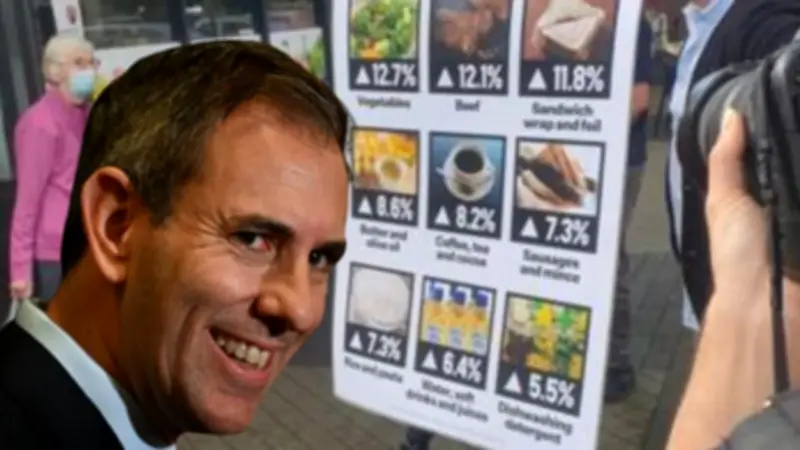
A sign displayed outside a fruit and vegetable store in western Sydney four years ago has resurfaced as a stark reminder of Australia's ongoing cost of living crisis. In 2022, then-shadow treasurer Jim Chalmers and shadow minister Katie Gallagher posed next to a placard titled "Your Shopping Trolley Under Scott Morrison," which highlighted percentage price increases of everyday staples under the then-Liberal government.
The 2022 Placard and Its Message
At the time, the Coalition government faced political backlash over rising grocery costs driven by the war in Europe, broken pandemic supply chains, and devastating east coast floods. The Morrison government attributed the crisis to "international factors beyond our control," but Dr. Chalmers blamed "a failure of domestic economic resilience." The placard showed that vegetables had spiked 12.7%, beef 12.1%, and butter and oil 8.6% over the previous year.
Four Years On: Cumulative Price Increases
Since 2022, Australia has endured 16 interest rate hikes, with inflation peaking at 7.8% in November 2022. The Reserve Bank raised the cash rate from 0.1% to 4.35%. While inflation cooled in 2024-25, leading to three rate cuts, it is now rising again, and mortgage holders face further hikes. According to ABS CPI data to March 2026, cumulative price increases since the 2022 poster are brutal: beef up 22.8%, vegetables up 24.5%, and butter and oil up 38.5%.

The government argues that direct dollar comparisons are unfair because inflation naturally causes year-on-year growth. It points to a slowdown in the rate of price hikes: vegetables grew only 1.9% in the year to April 2026, compared to 11.7% in May 2022. Oils and fats fell by 0.2% in the past year, and cleaning products grew just 1%. However, lower inflation rates mean prices are still increasing on top of already inflated levels.
Expert Insights on Grocery Inflation
Retail expert Professor Gary Mortimer from Queensland University of Technology warned that grocery prices can "very quickly" inflate due to input costs. He cited recent spikes in cocoa (up 600% from $2,000 to $12,000 per tonne) and coffee grains, which led to higher chocolate and Easter egg prices. He also noted that the war in the Middle East has pushed up oil prices, affecting food production and transport costs.
Professor Mortimer cautioned that the full impact of the fuel crisis on food prices has yet to be felt, with potential big spikes in the next six to 12 months. Trucking companies have absorbed some costs, but these are expected to filter through to retail prices, along with increases in insurance, electricity, and utilities.
Government Response
Treasurer Jim Chalmers stated that helping with the cost of living is a top priority, citing higher wages, tax cuts, cheaper medicines, childcare, and help with energy bills and rents. He recognised that Australians are still under pressure, and fighting inflation was central to the budget. The government is delivering more tax cuts from July, help with fuel costs, and support for housing and hospitals.
In April 2026, inflation fell to 4.2% from 4.6% in March, but the trimmed mean inflation rate rose to 3.4%, indicating underlying price pressures. Markets expect the RBA to keep rates on hold at 4.35% in June, but at least one more hike is anticipated this year. Dr. Chalmers ruled out extending the fuel excise reduction beyond July 1, though it remains under review.
Human Impact: Salvation Army Report
A new Salvation Army report reveals the severe impact of the cost of living crisis. Key findings include: 91% skipped meals in the past year, 82% went an entire day without eating, 60% ate expired or spoiled food, nearly 1 in 5 ate from bins, and 35% of parents reported their children going to school hungry.
One Queensland woman said, "It has been a daily stress, always working out how to ration food to make sure the kids have enough." A NSW woman added, "It has stopped my children and me from leaving the house... we simply can't afford even a simple outing." A Victorian woman shared, "I feel like a failure to my children... Christmas, birthdays, or even the tooth fairy are just major sources of stress."
The 2022 sign, once a campaign tool, now serves as a haunting symbol of Australia's persistent economic challenges.