Colombia’s far-right presidential candidate Abelardo de la Espriella won the first round of the presidential election with 43.7% of the vote, setting up a runoff against leftwing senator Iván Cepeda. With all ballots counted, De la Espriella secured just over 10.3 million votes, while Cepeda received 40.9% (about 9.6 million votes). The runoff is scheduled for 21 June.
De la Espriella’s rise
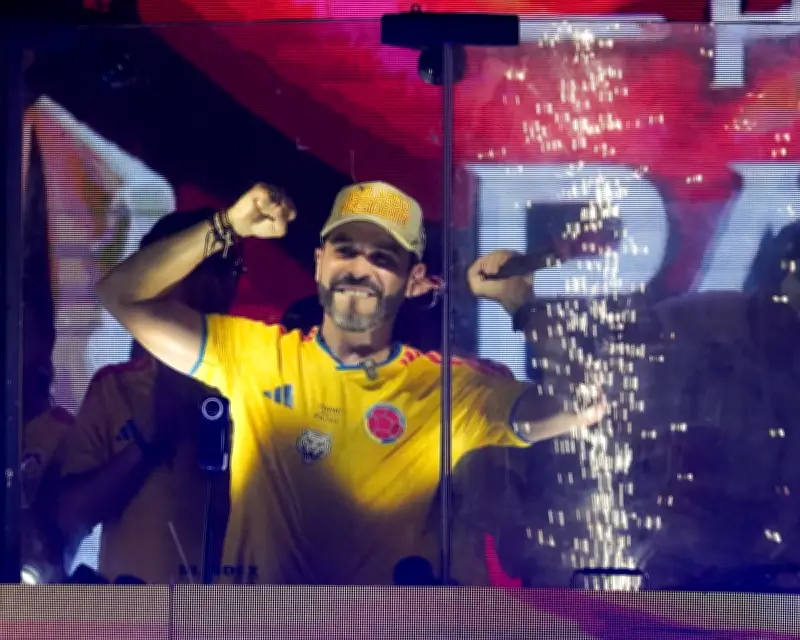
De la Espriella, a criminal lawyer and millionaire businessman who has never held public office, calls himself el Tigre (the Tiger). He celebrated the result in a video alongside his wife and children, all wearing Colombian national football team shirts. He said: “Compatriots, defenders of the homeland, more than 10 million Colombians placed their trust in el Tigre and joined the pack ... In 21 days, we are going to change the history of Colombia forever.”
An outspoken admirer of Donald Trump, El Salvador’s Nayib Bukele, and Argentina’s Javier Milei, De la Espriella has built his campaign on a promise to end President Gustavo Petro’s “total peace” policy and replace it with a mano dura (iron-fist) strategy inspired by Bukele’s controversial crackdown on gangs. Even his neatly trimmed beard and habitual use of baseball caps have drawn comparisons with Bukele’s style.

Election context
Colombia remains one of the few Latin American countries still governed by the left, alongside Mexico and Brazil. The election comes after a wave of far-right victories in Argentina, Chile, Ecuador, Bolivia, and Honduras. Although polls had detected De la Espriella’s rapid rise, most still showed him trailing Cepeda, who for months seemed to hold a solid lead.
De la Espriella appears to have consolidated much of the vote that previously went to rightwing senator Paloma Valencia, who polled above 20% at one point but finished with just 6.9% on Sunday. Valencia acknowledged the result and endorsed De la Espriella in the runoff.
Petro disputes results
President Gustavo Petro posted on X that “as president, I do not accept the preliminary results” released by the National Civil Registry, the independent public body responsible for organising Colombia’s elections. Without showing evidence, he claimed the count included “800,000 additional people” and said he would only “consider and accept” the results of the official scrutiny process, during which the National Electoral Council reviews physical tally sheets—a procedure that can take days or weeks.
Lawyer Juan Carlos Galindo Vácha, who previously headed the National Civil Registry twice, accused Petro of spreading “disinformation”. He said: “Historically, in presidential elections, the difference between the preliminary count, which is unofficial, and the official scrutiny process is less than 1%. That alone undermines any claim by President Petro that there was fraud in the count.” He added: “The president should show greater respect for the citizens who take part in the electoral process, whether as polling officials or electoral observers. He should not make these wild claims that even he does not understand.”
Cepeda echoes allegations
Cepeda delivered his speech shortly after Petro’s post and echoed the president’s allegations, likewise without presenting evidence. The senator said there was “information regarding a certain number of polling stations” in which “atypical voting patterns” had allegedly occurred. “Only once the electoral commissions have fully clarified this matter will we comment on tonight’s results,” he added.
Security concerns
De la Espriella’s campaign focused on Colombia’s worsening security crisis, now considered the worst since the 2016 peace agreement with the Farc. He advocates ending Petro’s “total peace” policy—of which Cepeda is widely regarded as the architect—and replacing it with a policy of total confrontation. De la Espriella has attracted controversy by attacking journalists and, at one point, telling a radio host that he was winning over female voters because of the size of his genitals.

Despite widespread concern about security, election day itself passed peacefully. The past few months have been marked by a surge in guerrilla attacks, homicides, kidnappings, forced displacement, and massacres. Last year, rightwing senator and presidential hopeful Miguel Uribe Turbay was shot during a campaign event by a Farc dissident group and later died.