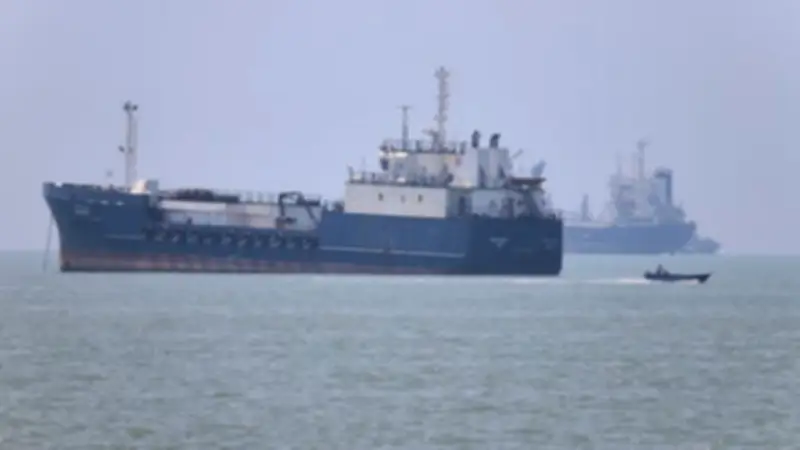
Despite its best efforts, Iran will not be able to impose permanent tolls on the Strait of Hormuz, according to experts. The strategic waterway, through which roughly 130 ships transit daily, has been a flashpoint in the ongoing US-Iran conflict. While Iran has signaled its intent to control the strait and potentially charge fees, legal and practical barriers make this unfeasible.
Legal Framework Prohibits Tolling
Under the United Nations Convention on the Law of the Sea, the Strait of Hormuz is classified as an international strait where all ships enjoy a right of transit passage that coastal states cannot suspend. Although parts of the strait fall within Iranian territorial waters, the main traffic separation scheme lies in Omani waters. Traffic separation schemes are routes established by the International Maritime Organisation to manage traffic in busy chokepoints. Iran cannot lawfully impose a toll on transit passage, as it would violate international law.
Practical Enforcement Challenges
Even if Iran attempted to impose a toll, enforcement would be extremely difficult. Unlike the Suez or Panama Canals, which are narrow, controlled waterways within a single state's territory, the Strait of Hormuz is approximately 39 kilometers wide at its narrowest point, spanning both Omani and Iranian waters. The scale makes it nearly impossible to physically stop, inspect, and control vessels that refuse to pay. The Suez Canal, for example, is only about 200 meters wide and operates a tightly controlled convoy system with compulsory pilotage, making evasion virtually impossible. No such infrastructure exists in the Strait of Hormuz.

Precedent and International Response
Shipping companies and states are unlikely to accept a permanent toll on an international strait, not just due to cost but because of the dangerous precedent it would set for freedom of navigation worldwide. Oman and other Gulf states have warned that tolling arrangements would undermine free passage. According to maritime law experts, "Iran would not be charging ships for a service, as occurs in the Suez or Panama canals; it would be charging vessels for exercising a pre-existing right of transit." Coercion through military means, as seen during the current conflict where Iran attacked over 40 merchant vessels, is not sustainable in peacetime and would attract significant diplomatic pressure and sanctions, including from China.
Iran's Leverage vs. Long-Term Control
Iran has used its ability to disrupt shipping as leverage in negotiations, but leverage does not equate to long-term control. The recent 60-day interim deal included wording that Iran would use its "best efforts" to ensure safe passage "with no charge, for 60 days only." However, this does not grant Iran the right to impose permanent tolls. As one analyst noted, "While Iran can disrupt shipping, it is unlikely to permanently toll the Strait of Hormuz."