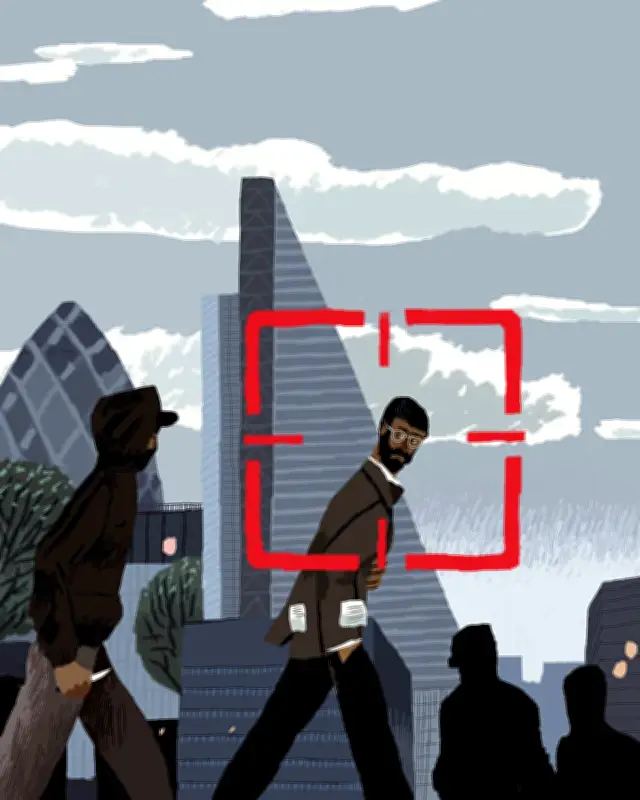
Violent attacks on dissidents living in the United Kingdom have surged in recent years, with foreign states including Iran, China, and Russia accused of orchestrating assaults, kidnappings, and intimidation campaigns on British soil. The trend has prompted warnings from parliamentarians and lawyers that the UK has become a “hunting ground for authoritarian regimes.”
Stabbing of journalist highlights Iranian targeting
In March 2024, Pouria Zeraati, an Iranian journalist, was stabbed three times in the leg outside his home in Wimbledon, south London. The attack was later linked to the Iranian regime as punishment for his work covering Iran. Zeraati survived, but the incident is one of dozens of violent episodes attributed to foreign states in the past decade. Russia, China, India, Saudi Arabia, and Iran have all been blamed for targeting critics and dissidents in the UK, with methods including physical assaults, attempted kidnap, stabbings, and an acid attack.
MI5 investigations jump 48%
State-threat investigations run by MI5 have increased by 48% in a year, and there have been more than 20 threat-to-life cases related to Iran since 2022. In May 2025, arson attacks on properties connected to Prime Minister Keir Starmer were linked to Russia. Two men were also jailed in June 2025 for surveilling Hong Kong pro-democracy campaigners in the UK on behalf of China, in what was described as a “shadow policing” operation.

Diaspora communities report threats and inadequate police response
The Guardian spoke to diaspora communities from Hong Kong, Iran, Pakistan, Saudi Arabia, and India, who reported receiving threats, sexualised harassment, economic coercion, state-linked legal cases, and violent attacks. Many described sparse and inadequate responses from UK authorities. “The UK government is not prepared to stand up to anybody,” said Ben Keith, a barrister specialising in cross-border cases. Clive Stafford Smith, an American lawyer helping victims, added: “The FBI have advised victims not to travel to the UK … because the British government does not take meaningful action when dictators go hunting their dissidents.”
Iranian activists live in fear
Nahid Bahmani, a member of the central committee of the Kurdish opposition party Komala, said police informed her husband Abdullah Mohtadi last year that they had foiled a terrorist plot against him. The couple has had to move house every few years. “This is not simply a physical relocation,” Bahmani said. “It creates a deep psychological insecurity. You never feel that you belong anywhere.” One Iranian activist living in London said: “I am in a permanent state of anxiety, and anxiety creates paranoia. At night, any noise sends me straight to check my CCTV.”
Pakistan activist threatened via Instagram
Roshaan Khattak, an exiled Pakistani activist and former Cambridge University researcher, said he received an Instagram message in November 2025 threatening to kill him no matter where he was. The message included details of his Pakistan mobile numbers and passport. “Don’t forget even Cambridge and UK is not safe,” it read. Khattak said police were dismissive: “Either they mock you or they’re like, who are you? Or what is Balochistan? Is it in Qatar?” A Pakistan high commission spokesperson said: “Pakistan firmly rejects any malicious suggestions that it engages in transnational repression.”
Legal framework criticised as ineffective
The UK overhauled its legislation with the 2023 National Security Act, including offences around espionage, sabotage, and foreign interference. However, Lord Alton, chair of the Joint Committee on Human Rights, said the UK still lacks a clear strategy and accurate data on attacks. Alicia Kearns, Conservative MP and former chair of the foreign affairs committee, accused the Labour government of “rewarding one of the states most responsible” by granting China a new embassy in London. A Home Office spokesperson said: “Attempts by a foreign state to coerce, intimidate, harass, or harm individuals on UK soil are considered a threat to our national security, and will never be tolerated.”