Prediction market platforms like Kalshi and Polymarket are rapidly expanding across the United States, operating and advertising heavily in states where gambling has long been illegal, while public health resources for problem gambling remain critically underfunded, experts warn.
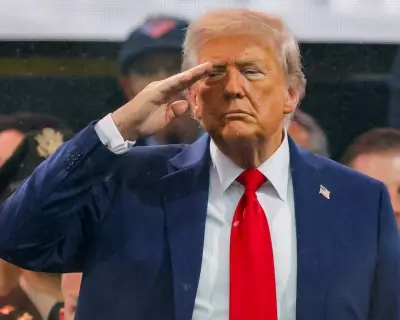
Donald Trump has endorsed the industry, arguing that the Commodity Futures Trading Commission (CFTC) should maintain exclusive authority over prediction markets, preventing states from regulating them. The platforms classify themselves as offering 'event derivatives' rather than gambling, a distinction that allows them to bypass state gambling laws.
Industry Growth and State Challenges
Since the US Supreme Court struck down the federal ban on sports betting in 2018, the digital gambling industry has boomed. Sports betting is now legal in 39 states and Washington DC. Prediction markets have surged in prominence, with Kalshi marketing aggressively around the NBA finals and Polymarket's logo featured at UFC fights at the White House.

More than a dozen lawsuits in several states challenge the platforms' interpretation, arguing they should fall under state gambling laws. Regulators and lawmakers contend that prediction markets are essentially gambling and require state oversight.
Public Health Resources Falling Behind
Timothy Fong, an addiction psychiatrist and gambling researcher at UCLA, said resources for problem gambling are 'phenomenally way way behind.' In California, the state spends about $9 million a year to address problem gambling through its Department of Health, compared to hundreds of millions for tobacco and alcohol-related harms.
'When you expand access and availability and normalization of it, you're going to have more participation,' Fong said. 'When you have more participation and engagement in risky products, you're going to have more problems, you're going to have more side effects.'
No Federal Funding for Addiction
There is currently no dedicated federal funding stream for gambling addiction prevention or treatment. In Utah, which has some of the strongest anti-gambling laws, there are no federal or state-funded resources for problem gambling. Despite this, prediction markets operate there with presidential support.
The National Council on Problem Gambling's (NCPG) helpline has received nearly 18,000 calls from Utah residents since 2016. In May 2025 alone, it recorded 319 calls from Utah, the highest monthly total since 2017. Fong noted that the actual number of people suffering is likely larger, as many 'never pick up the phone' and 'just suffer quietly.'
Experts Call for Action
Cole Wogoman, NCPG's director of government relations, said the helpline can 'only offer resources if the resources are there.' In Utah, callers may receive budgeting guidance and information about peer-support groups, but little else. Gamblers Anonymous has only one in-person meeting in Utah, located in St. George.
Elliott Rapaport, founder and CEO of Birches Health, which offers online therapy for gambling addiction, said any activity that 'combines money, uncertainty and risk' can lead to compulsive behaviors. He noted increased outreach from people in states where gambling is not legal because 'you don't have the state safety net.'
The NCPG has backed the Points Act, introduced in Congress in March, which would create the first federal funding stream for gambling addiction prevention and treatment. 'It's long past due the federal government takes this addiction seriously,' said Wogoman.