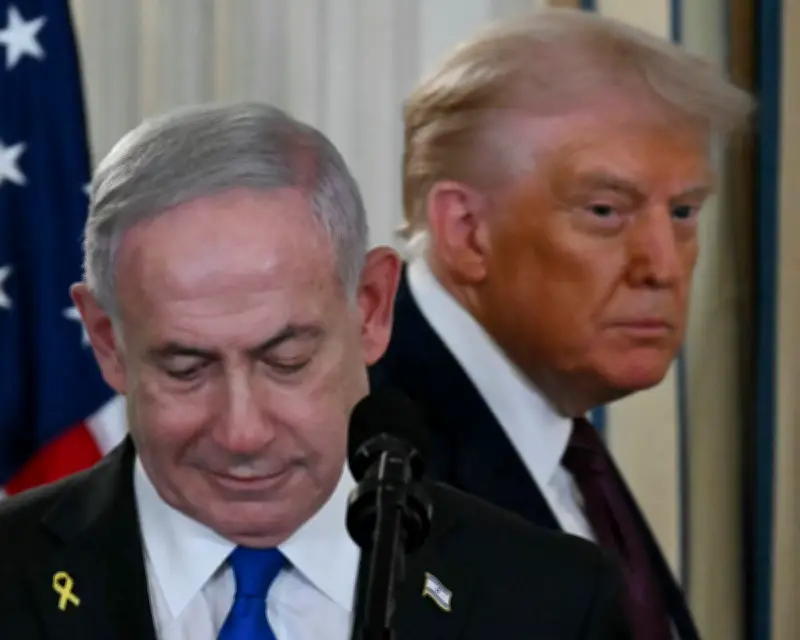
Benjamin Netanyahu, the Israeli prime minister, emerges as the principal casualty of the preliminary ceasefire agreement that halted the US-Israel-Iran war, according to foreign affairs commentator Simon Tisdall. Tisdall argues that Netanyahu's doctrine of extreme, often lawless violence has failed, leaving him politically isolated and facing potential career-ending consequences.
Netanyahu's legacy of violence and failure
Tisdall writes that Netanyahu will be remembered as the man who put the Middle East to the sword, applying disproportionate brute force to conflicts with Hamas, Hezbollah, and Iran. The unprovoked war against Iran, described as the ultimate expression of the Netanyahu doctrine, has also failed. While US President Donald Trump may survive the humiliation of the Versailles ceasefire memorandum, Tisdall contends that Netanyahu's political obituary reads like a criminal indictment.
Netanyahu resisted a two-state solution with the Palestinians, failed to prevent the Hamas atrocities of 7 October 2023, and then visited genocidal vengeance on Gaza. He clung to power by giving far-right politicians key roles and undermined the 2015 nuclear pact with Iran, leading directly to the disastrous conflict.

Collapse of the US-Israel special relationship
The main reason for Netanyahu's political oblivion, Tisdall argues, is the poisoning of the vital US-Israel relationship. Netanyahu and Trump are barely on speaking terms, and the White House blames him for drawing the US into an unwinnable war. The US public, already alienated by Israel's war on Gaza, now fears Netanyahu is sabotaging peace by continuing the war in Lebanon.
Tisdall traces the breakdown of the bipartisan consensus to 2015, when Netanyahu campaigned against Barack Obama's Iran rapprochement. Trump's first term deepened polarisation by moving the US embassy to Jerusalem and recognising Israeli sovereignty over the Golan Heights. Recent polls show that for the first time, more Americans sympathise with Palestinians than with Israelis, and many question whether the alliance serves US interests.
Trump's deal leaves Israel exposed
Trump's Iran deal has left many Israelis aghast. Netanyahu's promises to eliminate the Iranian nuclear threat and spark regime change have not been achieved. Instead, Iran's regime emerges defiant, planning to charge transit fees in the Strait of Hormuz. Trump eviscerated Netanyahu's red lines, stating Iran must be allowed to enrich uranium and have ballistic missiles, and should receive frozen assets.
Vice-President JD Vance ordered Netanyahu to stop fighting in Lebanon and toe the line, warning that the US is 'the only powerful ally' Israel has left. Tisdall describes this open confrontation as catastrophic for Israel.
Netanyahu cornered: defy or submit
Netanyahu is cornered. If he defies Trump, he could provoke Iran into restarting the war. If he submits to Trump's diktats, especially over a full Lebanon troop withdrawal, he loses credibility with voters and far-right allies. Either way, the special relationship is unlikely to recover quickly.
Tisdall concludes that the ramifications could mark the end of Israeli exceptionalism, the collapse of Netanyahu's dream of a greater Israel, and the end of unquestioning US support. He urges Netanyahu to resign, stating: 'Don't make more trouble or more excuses. Resign.'