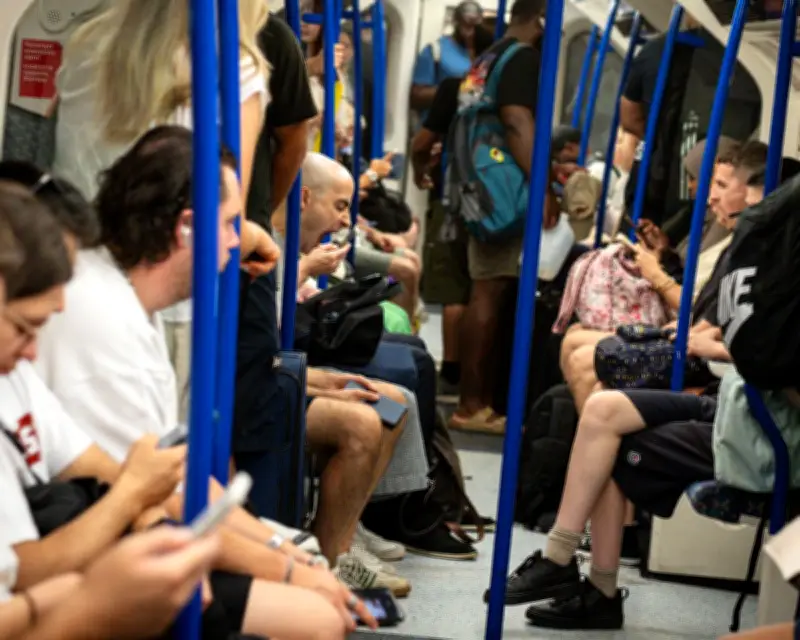
As the escalator descends below ground at King's Cross St Pancras station, the shift from the already hot station entrance to the furnace-like subterranean depths is perceptible. On the tube, conditions are worse: a man leans back in his seat, eyes closed, sweltering; people hold electric fans an inch away from their faces. London commuters, known for their stoicism, appear to accept the heat as another tribulation, but heatwaves in the capital are becoming routine.
Passengers Describe Sauna-Like Conditions
Anna, a passenger at Oxford Circus, says, 'We're quite lucky that this platform is almost empty, because when the platform gets packed it's [like a] sauna. When it's peak hours, it's quite difficult.' Anna usually adapts well to hot temperatures, but even she finds the heat on the platform hard to bear. Craig, another passenger, says he has to travel in gym clothes and change into his work clothes at the office because of the heat on the tube.
Sharmin, a barista at the Pret a Manger by the barriers at King's Cross St Pancras, has seen people faint in and around the station. She finds the heat so oppressive that she has asked to go home early during some of her shifts this week. 'I've felt like I was going to faint,' she says, wondering why there are no coolers or industrial fans set up near Pret or the barriers.

Temperatures Exceed Legal Limits for Cattle
A thermometer carried during an unscientific investigation showed the station at about 30C. On the platform and tube, it crawled up to 32C, and on the Victoria line platform at Finsbury Park, it hit 34C. In the UK, it is illegal to transport cattle above 30C; transporting people at 34C might be becoming the norm. The temperature underground was ten degrees higher than outside, according to an iPhone weather app. Between 8am and 9am, the thermometer showed readings of 34C on the Victoria line platforms at Finsbury Park, on the Victoria and Bakerloo line platforms at Victoria, and on the northbound Bakerloo line platform at Oxford Circus.
Aging Infrastructure Hinders Adaptation
London's underground is not adapted for the 30C+ heatwaves that have hit the city over recent summers. Lines such as the Victoria line – the deepest on the network – and the Bakerloo line – which Transport for London (TfL) says has some of the oldest trains in passenger use anywhere in the country – are particularly bad at withstanding the heat. Asher Minns, executive director of the Tyndall Centre for Climate Change Research, explains that tube tunnels are 'basically radiators', taking on the heat of the clay and concrete around them. The carriages, platforms, and surrounding tunnels are also warmed by the hundreds of kilowatts of heat the trains produce while braking. The warmer it is outside, the worse it gets underground.
Minns adds that the infrastructure is difficult to adapt because of its age and the surrounding clay. It will likely be years before the network is better suited to dealing with the heat, so for now the focus needs to be on reducing risks to passengers. 'It can't go on like this, and it's not going to get any better,' he says. 'The underground absolutely has to adapt to the impacts of climate change, but right now I think the focus has to be looking after passengers.' He suggests limiting the number of passengers allowed to travel when the temperature is above a certain limit, or reducing the number of tubes in service during heatwaves.
TfL's Response and Future Plans
Nick Dent, TfL's director of customer operations, said TfL was continuing to invest in making the network more resilient and comfortable as hotter summers become more common, as well as introducing new air-conditioned trains on the Piccadilly line and DLR. Dent added that the 'short-term and stop-start nature of funding over recent years has meant that TfL has had to carefully prioritise its investment and – while remaining open to measures that will help manage the impact of increasing temperatures due to climate change – has focused on programmes that will see the biggest benefits to customers.'