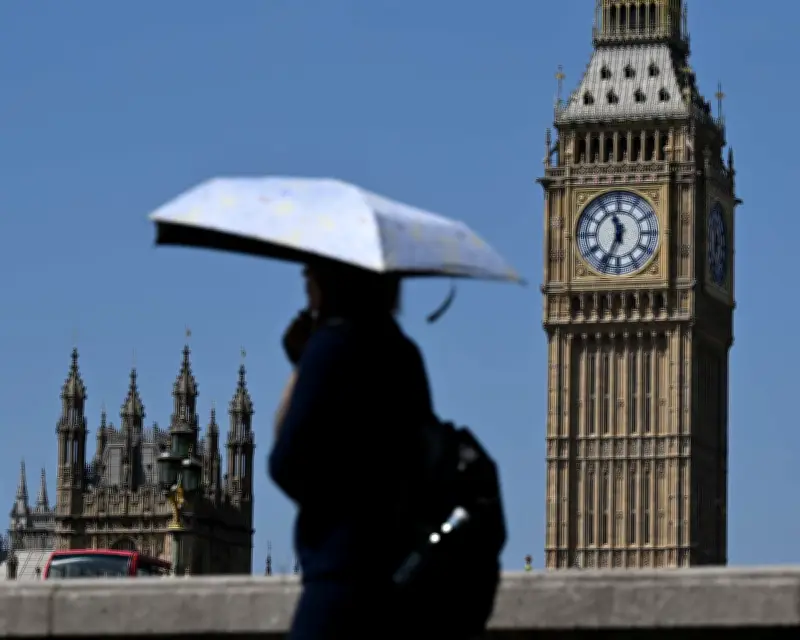
A brutal heatwave sweeping across the United Kingdom has left schools, hospitals, and transport networks struggling to cope as temperatures soared above 40°C for the first time on record. The extreme heat, which has shattered previous records, prompted emergency measures and widespread disruption.
Schools Forced to Close
Hundreds of schools across England and Wales shut their doors as classrooms became unbearably hot, with many buildings lacking air conditioning. The National Education Union reported that more than 1,000 schools were closed or partially closed, affecting over 500,000 students. In London, many schools sent children home early, while others moved lessons to cooler parts of the building.
Hospitals Overwhelmed
The National Health Service (NHS) faced unprecedented pressure, with emergency departments reporting a surge in heat-related illnesses. Ambulance services declared critical incidents as call volumes spiked. Dr. Katherine Henderson, president of the Royal College of Emergency Medicine, said: "We are seeing a significant increase in patients with heatstroke, dehydration, and exacerbations of chronic conditions. This is putting immense strain on an already stretched system." Hospitals cancelled non-urgent surgeries and discharged patients early to free up beds.

Transport Networks Disrupted
Rail services were severely impacted, with speed restrictions imposed across the network to prevent tracks from buckling. Network Rail reported that rails reached temperatures of 50°C, causing dozens of heat-related faults. Major lines, including the East Coast Main Line and parts of the London Underground, experienced delays and cancellations. Roads also suffered, with the AA reporting a 40% increase in breakdowns due to overheating engines and tyre blowouts.
Government Response
The UK government activated its emergency response, with the Cabinet Office holding crisis meetings. Prime Minister Boris Johnson urged the public to stay hydrated and avoid travel unless necessary. The Met Office issued its first-ever red warning for extreme heat, covering large parts of England. Climate scientists linked the event to global warming, with Dr. Friederike Otto of Imperial College London stating: "This heatwave would have been virtually impossible without human-caused climate change."
Impact on Vulnerable Populations
Elderly residents and those with pre-existing health conditions were particularly at risk. Local authorities opened cooling centers and checked on vulnerable individuals. The charity Age UK warned that many older people were struggling to cope in homes without adequate ventilation. Meanwhile, farmers reported losses of livestock and damage to crops, with the National Farmers' Union estimating agricultural losses in the hundreds of millions of pounds.
Looking Ahead
Temperatures are expected to remain high for the coming days, with the Met Office forecasting only a slight drop by the weekend. The heatwave has sparked renewed calls for the UK to accelerate its climate adaptation plans, including better insulation, green spaces, and infrastructure upgrades. As the country grapples with the immediate crisis, the long-term implications of a warming planet are becoming increasingly clear.