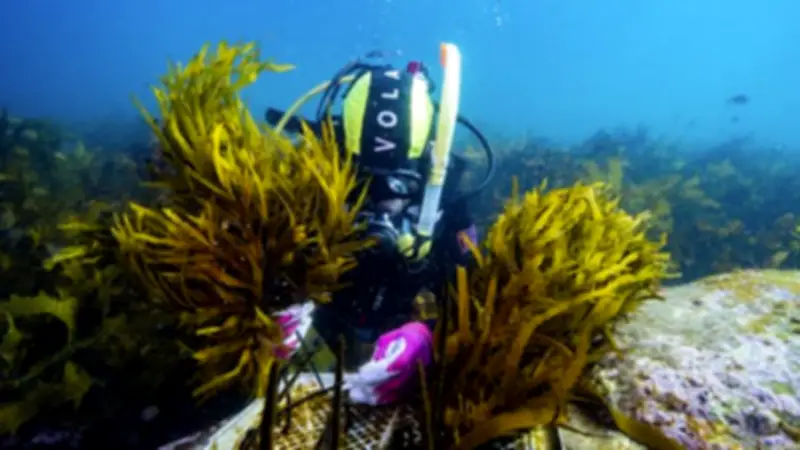
Australia's Great Southern Reef, stretching over 8,000 kilometres around southern Australia, is not built by coral but by seaweed. These underwater forests host more than 1,500 seaweed species and support seadragons, rock lobsters, giant cuttlefish, and southern blue devils, contributing billions to the economy annually. However, rising ocean temperatures and marine heatwaves are pushing these cold-water species beyond their survival limits, causing widespread decline.
Seaweed Forests Under Siege
Marine heatwaves, where temperatures spike and remain high for extended periods, have driven significant losses. In 2011, an extreme heatwave in Western Australia caused two common seaweed species to lose an estimated 30 to 65% of their genetic diversity. Such losses reduce the ability of these species to adapt to further environmental changes, threatening the entire ecosystem.
Seaweed forests are among the most productive ecosystems on Earth, providing habitat, shelter, and food for countless marine creatures. They underpin valuable fisheries such as lobster and abalone. When local populations are wiped out, unique genetic diversity is lost, which could have been crucial for adaptation.

The Promise of Cryopreservation
To protect these forests, researchers are turning to cryopreservation—freezing reproductive material at ultra-low temperatures (around –196 °C) to preserve genetic diversity. This technique is similar to seed banks used for land plants, but many seaweed species, known as fucoids, do not have a microscopic dormant stage. Instead, they release sperm and eggs directly into the water, making preservation more challenging.
Researchers led the first attempt to cryopreserve a key Australian seaweed, crayweed (Phyllosoma comosa). The study tested frozen crayweed sperm and germlings (baby seaweed) after thawing. While the sperm remained viable, the germlings did not survive, indicating that techniques need further refinement.
Operation Crayweed and Restoration Efforts
Golden-brown crayweed once formed extensive underwater forests along Sydney's coastline but disappeared in the 1980s, likely due to sewage pollution. Even after pollution levels fell, the seaweed did not return naturally. Over the past 14 years, Operation Crayweed has replanted the species around Sydney, leading to self-sustaining populations, including Australia's first named seaweed forest, Yanggaa, at Coogee Beach.
However, restoration may not be enough in a rapidly warming ocean. Research shows that separate crayweed populations harbour unique genetic diversity, with some individuals better equipped to tolerate heat. Planting germlings from these heat-tolerant individuals into vulnerable populations could boost survival chances.
Biobanks as an Insurance Policy
Existing kelp collections support research, aquaculture, and restoration globally, but they focus on true kelps, which have a microscopic life stage. Fucoids like crayweed, bull kelp (Durvillaea potatorum), Cystophora sp., and Scytothalia dorycarpa are more challenging to conserve. Cryopreservation offers a way to bank these species, similar to assisted reproduction methods used for humans, cows, and corals.
The ultimate goal is to develop proven methods that work across a broader range of Australian seaweed species. Preserving genetic diversity would allow these genes to be used for restoration and assisted gene flow, where individuals from better-adapted populations help vulnerable ones cope with warmer conditions.
Path Forward
Australia already has an impressive algal culture collection and is a global leader in coral cryobanking. However, developing methods for forest-forming seaweed species that rely on sexual reproduction requires further work. Researchers need to identify populations with unique or threatened genetic diversity, understand which are most vulnerable to climate change, and improve freezing and recovery techniques.

Choosing which species and populations to preserve should involve Indigenous custodians, governments, conservation organisations, and local communities. Cryobanking does not solve climate change or replace the need to protect habitat; it serves as an insurance policy for biodiversity. Much has already been lost, and preserving the remaining genetic diversity of seaweed forests may be critical to the survival of the Great Southern Reef.