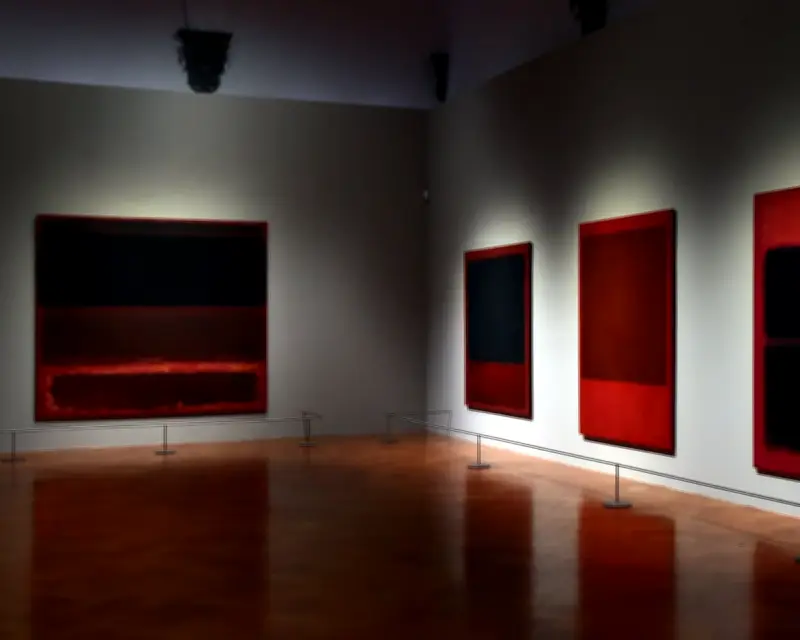
An exhibition in Florence that pairs Mark Rothko's giant canvases with Renaissance religious art brought a Guardian columnist to the edge of tears, offering what she describes as a perfect refuge from the infinite scroll of digital life.
Rothko's Spiritual Connection to Renaissance Art
Writing in the Guardian, Rhiannon Lucy Cosslett recounts her visit to the Palazzo Strozzi and other sites for the exhibition Rothko in Florence, curated by Rothko's son Christopher and curator Elena Geuna. The exhibition explicitly demonstrates how Renaissance art profoundly influenced Rothko's abstract expressionist works. Cosslett, an unbaptised agnostic, says the closest she comes to a spiritual experience is standing before an artwork, and this exhibition delivered that in spades.
Confronting the first large canvas, she felt tearful—an emotion of appreciation, astonishment, and gratitude. She writes: "I felt profoundly lucky to be there, in front of this painting, not long after a time in my life where for various reasons I had been not been feeling all that fortunate at all."

Art as Meditation and Secular Worship
The beauty of Rothko's art, she argues, lies in its ability to dissolve identity in contemplation, akin to religious art. At the former San Marco monastery, Rothko's works are paired with Fra Angelico's frescoes, highlighting a shared visual language and rationale. Rothko, overwhelmed when he saw these frescoes aged 47, wanted his colour field paintings to provoke similarly intense spiritual responses. Cosslett describes the experience as "art as meditation, as secular worship."
At San Marco, juxtapositions of Rothko's works with frescoes like Noli Me Tangere underscore a subtle shared aesthetic and purpose. Rothko spoke of a painting being an experience, emphasising quiet contemplation. The Rothko Chapel in Houston exemplifies this, but in Florence, on a smaller scale with uplifting colours, Cosslett found a kind of holiness. Her father, accompanying her, was similarly moved.
Younger Generations Embrace Rothko's Refuge
Despite Rothko's probable dislike of noisy school groups and phone screens at Palazzo Strozzi, Cosslett notes that younger people are embracing his works. A teenage boy remarked, "I love the yellow." She suggests Rothko offers a refuge from the visual bombardment of infinite scroll, but believes it goes deeper—a search for greater meaning. Cosslett admits she got Rothko wrong when young, once referencing Sartre's Being and Nothingness. Now, she finds a dissociative but wholeness-inducing joy, not nihilistic but beatific.
She challenges Rothko naysayers to stand before his monumental art: "Perhaps you won't feel as overcome as I did, but I can guarantee that you will feel something." After the exhibition, at the Duomo, she lit a candle for her brother, watching the flame blur with darkness—ancient, like the feeling Rothko evokes.