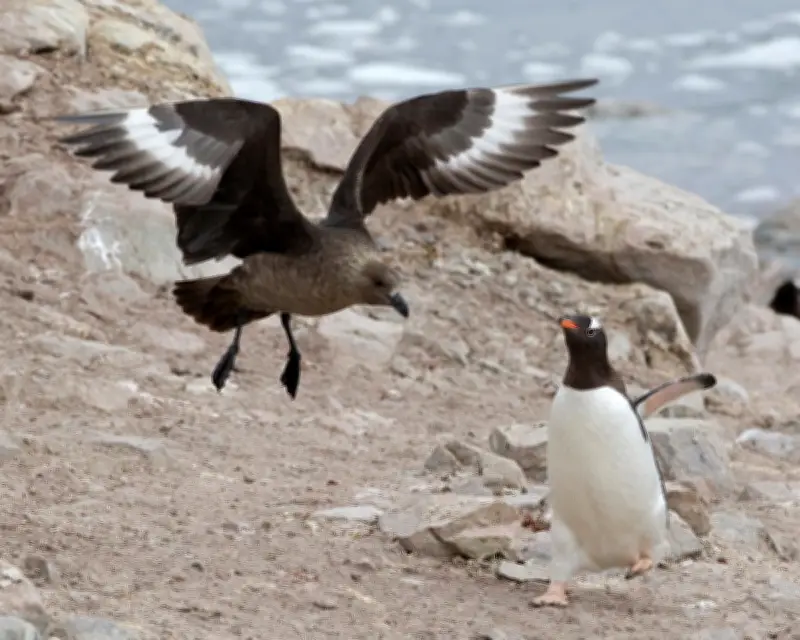
The deadly H5N1 bird flu strain has reached the Australian mainland, ending the continent's status as the only region free of the virus. Federal Agriculture Minister Julie Collins confirmed that a brown skua found sick in Western Australia's Cape Le Grand National Park died from H5N1, and a second bird, a giant petrel from the same area, is also likely infected.
What Is H5 Bird Flu?
H5 bird flu is a highly pathogenic avian influenza virus, meaning it is highly contagious and causes severe illness and death in birds and mammals. Dr. Ariful Islam, a veterinary epidemiologist at Charles Sturt University, describes it as a "panzootic" that has spread across multiple continents and affected many species. Since 2021, it has infected over 560 wild bird species and more than 100 mammal species, according to Wildlife Health Australia.
Origin and Global Spread
The specific strain, H5N1 clade 2.3.4.4b, originated in Asia and spread globally through Europe and the Americas from 2021, reaching Antarctica in the 2023-24 summer. Australian researchers estimate it arrived on Heard Island, an Australian territory 4,000 km southwest of Perth, in August 2025, killing over 13,000 southern elephant seal pups and hundreds of king penguins.

Arrival on the Australian Mainland
The brown skua, a subantarctic migratory bird, was found sick on June 14 and later died. Initial tests by Western Australian authorities and confirmation by the CSIRO's Australian Centre for Disease Preparedness confirmed H5N1. The giant petrel tested positive at a WA government lab, pending CSIRO confirmation. BirdLife Australia suggests both birds likely migrated from the subantarctic. Dr. Islam calls for further environmental sampling to understand the outbreak's extent.
Implications for Agriculture
This H5 strain differs from the H7 bird flu that caused outbreaks in Australian poultry farms in 2024-25, leading to mass culls. Dr. Michelle Wille from the University of Melbourne notes that in the US, over 200 million chickens have been culled since H5 arrived, impacting farmers and consumers. No poultry infections have been reported in Australia yet.
Human Health Risks
Bird flu infections in humans are rare but can be severe. The Australian Centre for Disease Control states that human cases are often mild but can cause death. Transmission occurs through contact with infected animals or contaminated environments. Dr. Matt Mason from the University of the Sunshine Coast says the public risk is low, with almost all human cases linked to exposure to infected poultry or dairy cattle. From 2003 to early 2026, there were 997 human H5 infections globally, 478 fatal, per the WHO.
Risks to Native Wildlife
Threatened Species Commissioner Dr. Fiona Fraser warns that if H5 becomes established in wildlife, little can be done to stop its spread. At-risk species include the Tasmanian devil, orange-bellied parrot, and Australian fur seal. Over 100 response plans have been developed for vulnerable species and sites. Jack Gough of the Invasive Species Council calls it a "genuine wildlife emergency," urging $200 million in federal funding for wildlife resilience. The Australian Marine Conservation Society fears extinction risk for the endangered Australian sea lion, with only 12,000 remaining.
Public Guidance
Avoid contact with dead or sick birds or marine mammals. Report sightings to the Emergency Animal Disease Hotline at 1800 675 888 or visit birdflu.gov.au.