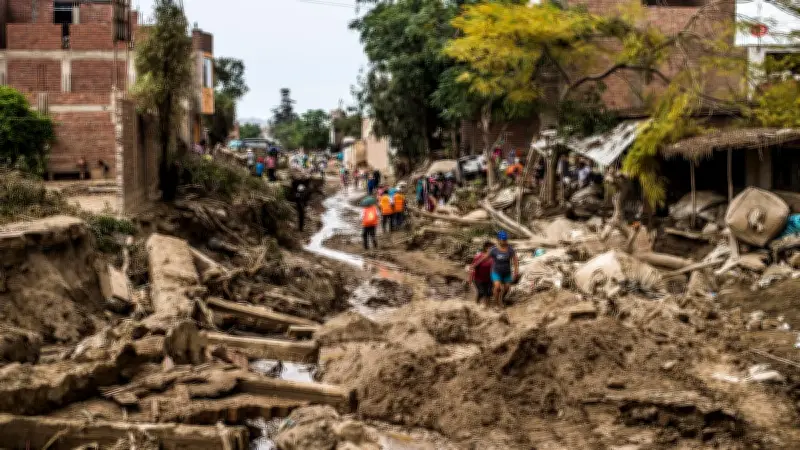
The United Nations' World Food Programme and Food and Agriculture Organization have issued their first joint appeal for funds to avert a global hunger crisis before it happens, as the return of El Niño threatens to compound existing vulnerabilities.
El Niño's Return and Potential Impact
The US National Oceanic and Atmospheric Administration confirmed El Niño conditions in the Pacific last week, with a 63% chance of being "very strong" by year-end. Australia's Bureau of Meteorology warned it would worsen extreme heat and wildfires. Scientists fear this El Niño could be a "super" or "Godzilla" event, pushing global heat higher amid already record-breaking temperatures.
El Niño is a natural weather pattern characterized by hot years and brutal extremes, first named by Peruvian fishers in the 1800s. Its global nature was understood only in the 1970s, when the 1972-73 event collapsed the world's largest anchovy fishery and brought harsh drought to south Asia, the Sahel, and parts of east Africa.

Historical Devastation
In the worst El Niño years of the 19th century, famines in India, China, and Brazil killed tens of millions. Some evidence links it to the French Revolution and the Spanish conquest of the Inca empire. Adugna Woyessa, an epidemiologist at the Ethiopian Public Health Institute, recalled the 1972-73 drought that turned his school into a grain store and later the 1982-83 El Niño that forced classmates to travel 150km for harvests. "We had two breads in the morning, and we were supposed to share our breakfast," he said of the subsequent famine.
Current Vulnerabilities
About half of the world's 68 poorest countries face debt distress or high risk, the International Monetary Fund warned in March. High energy prices and restricted fertiliser supplies from the Iran war have weakened buffers. The Famine Early Warning Systems Network projects 115-125 million people will need urgent food assistance by December, with famine risks in Sudan, South Sudan, and Somalia.
"My worry is not for the El Niño alone," said Sonali McDermid, a climate scientist at New York University. "I'm worried about the confluence of multiple stressors happening at the same time."
UN Appeal and Anticipatory Action
The UN agencies said they are $167m short of the $202m needed to help 8.8 million people with drought-resistant seeds, flood defences, water storage systems, and cash transfers. Research shows every $1 spent in "anticipatory action" saves $7 in humanitarian relief costs.
"El Niño is one of the most challenging climate phenomena," said Woyessa. "Nutrition is everything for your capacity to withstand the challenges of its negative impacts on human health."
Global Ripple Effects
El Niño brings stronger heatwaves and wider spread of vector-borne diseases even in wealthy countries like the US, Australia, Japan, and South Korea, according to a study in Nature Climate Change. A European Commission study warned of "compound and non-linear systemic impacts" from droughts, floods, and heat stress affecting agriculture, labour productivity, water availability, hydropower, and transport, leading to higher food and energy prices, inflation, and fiscal stress.
Climate campaigners call for debt cancellation and social protections funded by windfall taxes on oil and gas profits. "There's a lot of research showing that targeted social protection is way more effective than subsidising fossil fuels and fertilisers because it goes to the people who need it most," said Anne Jellema of 350.org.
The World Meteorological Organization urges building multi-hazard early warning systems, as only 128 countries report having them. UN Secretary General António Guterres has pleaded for an end to fossil fuel addiction. The world has warmed 1.3C since the Industrial Revolution, making even La Niña years hotter than past El Niños.
For Woyessa, rainfall patterns have shifted even in his childhood village. "The onset is totally changed compared with my childhood," he said.