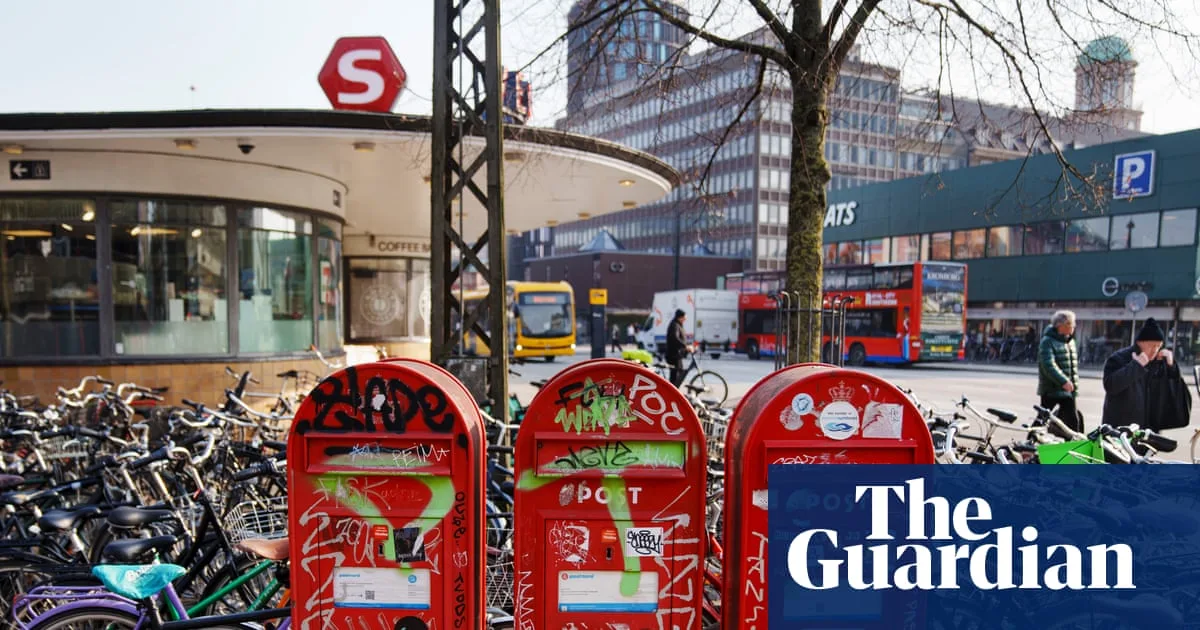
The Danish postal service will deliver its last letter on 30 December, ending a tradition that began in 1624. PostNord, formed in 2009 from the merger of Swedish and Danish postal services, announced the decision earlier this year, citing the 'increasing digitalisation' of Danish society. The company will cut 1,500 jobs in Denmark and remove 1,500 red postboxes.
PostNord described Denmark as 'one of the most digitalised countries in the world,' noting that demand for letters has 'fallen drastically' while online shopping continues to rise. The company will focus on parcel delivery instead. Within three hours of going on sale earlier this month, 1,000 of the distinctive postboxes were bought up, priced at 2,000 DKK (£235) each for those in good condition and 1,500 DKK (£176) for worn ones. Another 200 will be auctioned in January.
Danes will still be able to send letters through the delivery company Dao, which will expand its services from 1 January, increasing from about 30 million letters in 2025 to 80 million next year. Customers will need to go to a Dao shop to post letters or pay extra for home collection, with postage paid online or via an app. PostNord will continue delivering letters in Sweden and will refund unused Danish stamps for a limited time.

Letter-sending in Denmark has declined by over 90% in the last 25 years. However, research by Dao indicates a resurgence among younger people: 18- to 34-year-olds send two to three times as many letters as other age groups. Trend researcher Mads Arlien-Søborg attributes this to young people 'looking for a counterbalance to digital oversaturation,' making letter-writing a 'conscious choice.'
Under Danish law, the option to send a letter must exist, so if Dao were to stop, the government would appoint another provider. A source close to the transport ministry said there would be no 'practical difference' in the new year, as people can still send and receive letters through a different company; any significance is purely 'sentimental.' Magnus Restofte, director of the Enigma postal museum in Copenhagen, noted that with 97% of Danes aged 15 and over enrolled in the national digital ID system MitID, and only 5% opting out of digital post, the public has been 'quite pragmatic' about the change. He added that receiving a physical letter now carries 'extremely high' value, as it shows time and money were spent.