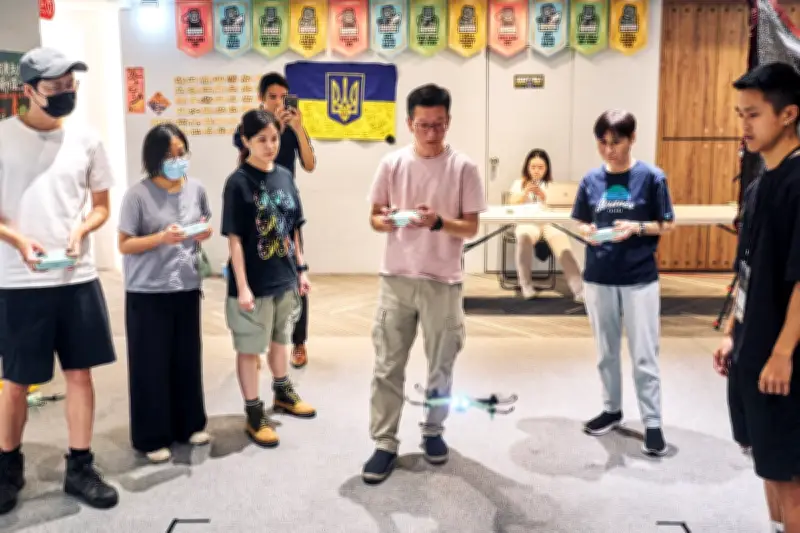
Amid escalating tensions with China, a growing number of Taiwanese citizens are enrolling in courses to learn how to fly and pilot drones. The surge in interest reflects a blend of civilian enthusiasm for drone technology and a pragmatic awareness of their potential defense applications.
Rising Demand for Drone Training
Drone training centers across Taiwan have reported a significant uptick in enrollment over the past year. According to the Taiwan Drone Association, the number of students completing certified drone pilot courses has increased by 40% compared to the previous year. Many of these students are motivated by the desire to gain new skills for recreational or commercial purposes, such as aerial photography, agriculture, and delivery services.
However, the geopolitical context has added an extra layer of urgency. China has repeatedly asserted its territorial claims over Taiwan, and military exercises in the Taiwan Strait have become more frequent. Some Taiwanese see drone piloting as a way to contribute to national defense in a non-conventional manner.

Government Support and Regulation
The Taiwanese government has taken steps to regulate and promote drone usage. In 2024, the Civil Aeronautics Administration introduced a new licensing system for drone operators, requiring training and certification for drones over a certain weight. The government has also provided subsidies for training courses, making them more accessible to the public.
Defense analysts note that drones have become a key component of modern warfare, and a pool of trained civilian pilots could be a valuable asset in times of conflict. The Ministry of National Defense has not officially commented on the trend, but it has been conducting joint exercises with civilian drone operators in recent months.
Voices from the Ground
Chen Wei-ling, a 32-year-old office worker from Taipei, enrolled in a drone pilot course after attending a national security seminar. “I never thought about flying drones before, but now I feel it’s a responsibility to learn. It’s not just about having fun; it’s about being prepared,” she said.
Lin Yu-hsiu, a retired military officer who now runs a drone training school in Kaohsiung, has seen a shift in his students’ motivations. “Previously, most of my students were hobbyists or professionals in photography and agriculture. Now, about half of them mention defense as a reason for taking the course,” he explained.
China’s Response
China has condemned the trend, accusing Taiwan of militarizing civilian activities. In a statement, the Chinese Foreign Ministry said, “Any attempts to turn civilians into combatants are dangerous and provocative. Taiwan is an inalienable part of China, and we will take necessary measures to safeguard national sovereignty.”
Despite the rhetoric, many Taiwanese remain undeterred. The drone pilot courses are often fully booked weeks in advance, and waiting lists are growing. For a growing number of citizens, learning to fly a drone is not just a skill—it’s a statement.