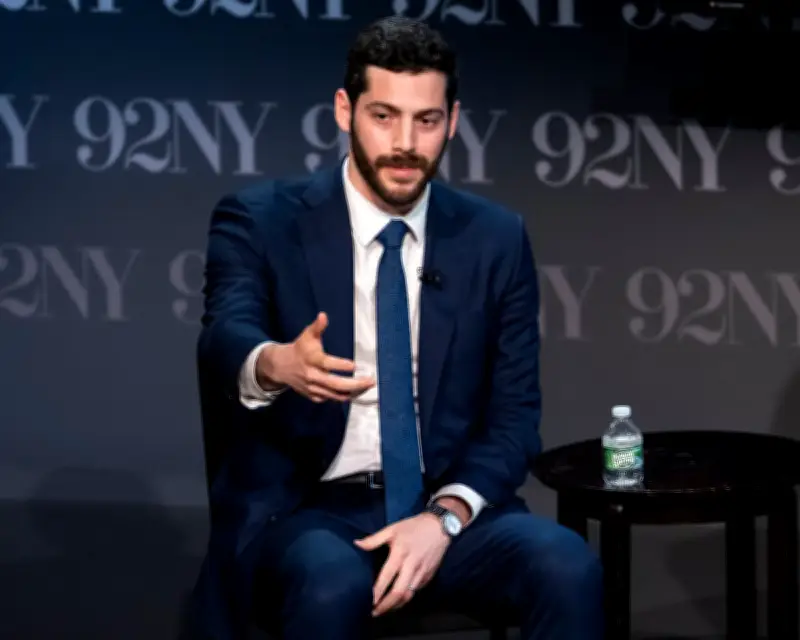
The artificial intelligence industry is pouring unprecedented money into the 2026 midterm elections, with New York City's 12th congressional district primary emerging as the central battleground. AI-focused Super Pacs have raised approximately $100 million this cycle, spending $44 million so far across dozens of House races nationwide. Nearly half of that spending—about $20 million—has converged on Tuesday's Democratic primary in NY-12, where Assemblymember Alex Bores faces a tight race against fellow Assemblymember Micah Lasher.
Proxy war over AI regulation
Bores, a former tech worker who authored the Raise Act—the second state law requiring AI developers to publish safety plans—has become the unlikely epicenter of a proxy battle between factions advocating for stricter oversight and those pushing for lighter regulation. The pro-AI Super Pac Leading the Future, through its affiliate Think Big, has spent $8.2 million attacking Bores via TV ads, texts, and mailers. The group is funded by just four donors: venture capitalists Marc Andreessen and Ben Horowitz, and OpenAI co-founder Greg Brockman with his wife Anna, according to Federal Election Commission data.
Leading the Future advocates for a federal AI regulatory framework rather than a patchwork of state laws, which tech firms warn could cede the AI race to China. However, its blitz triggered a counter-assault from Super Pacs pushing stronger safeguards, including You Can Push Back (funded by crypto billionaire Chris Larsen) and Jobs and Democracy, a subsidiary of Public First founded by former Democratic Congressman Brad Carson.

AI civil war escalates
“The message Leading the Future was sending: regulate AI, and we will find you, wherever you are,” Carson said. A former Andreessen Horowitz general partner echoed this in a New York Times op-ed, accusing the industry of intimidating those who engage “too aggressively” with AI governance. Leading the Future did not respond to a request for comment.
Public First’s funding is partly opaque: its dark-money backer does not disclose donors, but Anthropic has publicly contributed $20 million. Carson says Public First has raised another $45 million from various industries, including “people who actually are currently working at the labs, from OpenAI to Google DeepMind to X.” Combined, the tech-funded Pacs have spent $11 million on NY-12 to counter Leading the Future, with ads claiming “rightwing billionaires” are trying to buy the seat.
“This is the first congressional race in the country where the dividing line is: can we regulate AI at all?” Bores says in a campaign video. Once considered an underdog, polls now show him in a tight contest with Lasher, who also supports AI guardrails. “They’ve made Alex Bores into a national star,” Carson said.
Geography and voter anxiety
NY-12 leans heavily Democratic, while Leading the Future is led by Trump-aligned tech executives. Brookings has named New York City the most “AI-exposed” county in the US, where one-fifth of the workforce holds jobs AI could plausibly replace—predominantly white-collar roles like software developers, marketers, and financial analysts. Brookings calls such counties potential “hotbeds for some of the AI era’s most agitated voters.”
“Tech companies will say ‘this needs to slow down,’ and yet either they don’t feel like they can alone make that happen or there’s not really the political will,” said Henry Ajder, a generative AI expert. Even cautious executives face constant pressure to release new models quickly in the AI race, he added.
Beyond NY-12: National spending
Public First has also supported candidates advocating AI advancement beyond Bores. It gave nearly $1 million to Utah Republican Congresswoman Celeste Maloy, who pushed bipartisan deepfake legislation while lobbying for more datacenters. In Texas, it spent $1.5 million on House candidate Carlos De La Cruz, who vows to “win the AI race against China” and roll back green energy rules. It gave $800,000 to Oklahoma Congressman Kevin Hern—who also accepted money from Leading the Future.

Public First has spent heavily on candidates overseeing AI legislation: $1.6 million behind Representative Valerie Foushee, co-chair of the House Democratic Commission on AI, and $300,000 for fellow co-chair Representative Josh Gottheimer. Two-thirds of the Democrats’ AI policy leadership is now backed by a Super Pac funded primarily by Anthropic.
Both Pacs have targeted races in rural datacenter hubs like Utah, Texas, Ohio, Georgia, and Kentucky, despite local backlash. The playbook mirrors crypto’s 2024 campaign, where $200 million in Pac money helped crypto-aligned candidates win most targeted races—including the $40 million campaign that sank Senator Sherrod Brown in Ohio. However, AI lacks crypto’s grassroots investor base, and a recent YouGov poll found two-thirds of US voters believe AI is advancing too quickly, with only one in five expecting positive economic impact—views held evenly across party lines.
“The dynamics of Wall Street and the opaque sense of elites making decisions about us that don’t benefit us—I think AI companies are increasingly being seen in a similar light, whether you’re on the right or the left,” Ajder said.
On Thursday, a new AI-focused Super Pac, Guardrails Alliance, launched explicitly to counter Leading the Future. Its backers include labor unions and Chris Hyams, former Indeed CEO who stepped down over AI concerns. It will not accept corporate money, a spokesperson said.