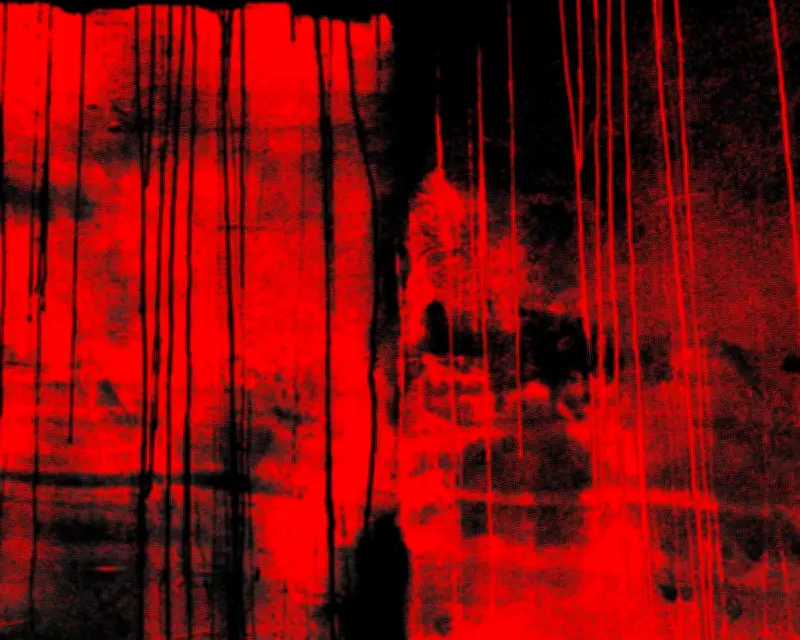
Japan House London is currently hosting a thought-provoking exhibition titled 'X Iwane', part of the Kyotographie festival, which delves into the intersection of artificial intelligence and traditional photography. The showcase features the works of renowned Japanese photographer Kawada Kikuji, whose career spans over six decades, and explores how AI is reshaping the medium.
Exhibition Highlights
The exhibition, running until September 2026, presents a series of black-and-white photographs from Kikuji's iconic series 'The Map' and 'Chizu', alongside new AI-generated images created by the artist in collaboration with technology. According to Japan House London, the display aims to provoke dialogue about authorship, memory, and the evolving nature of photographic truth in the digital age.
Kawada Kikuji's Vision
Kikuji, now 88, has long been fascinated by the atomic bombing of Hiroshima, a theme that permeates his work. In 'X Iwane', he uses AI to reinterpret his own archives, generating images that blend historical documentation with algorithmic abstraction. 'The camera records what is there, but AI can show what is not—or what might have been,' Kikuji stated in a press release.

Impact on Photography
The exhibition has drawn attention from critics and academics, with some praising its forward-looking approach. Dr. Yuki Tanaka, a photography scholar at the University of Tokyo, commented: 'Kikuji's work challenges us to reconsider the indexicality of photography. If an AI can produce a convincing image of a past event, what does that mean for our collective memory?' The show includes interactive elements where visitors can input prompts to generate their own AI photographs, further blurring the line between creator and tool.
Visitor Experience
Japan House London reports that the exhibition has attracted over 15,000 visitors in its first month, with many drawn by the novelty of AI art. The gallery has also hosted panel discussions featuring artists and technologists, addressing ethical concerns such as bias in training data and the potential for misinformation. 'This is not just an art show; it's a public forum on the future of visual culture,' said Sarah McDonald, director of Japan House London.
Broader Context
The exhibition is part of a larger trend in the art world, where institutions are grappling with AI's impact. Earlier this year, the Museum of Modern Art in New York held a similar symposium. Kikuji's work, however, stands out for its deep personal and historical resonance. His AI-generated pieces often incorporate elements of the Hiroshima bombing, creating surreal landscapes that question the reliability of photographic evidence.
As the exhibition continues, it remains to be seen how the public and critics will ultimately judge this fusion of human artistry and machine learning. For now, 'X Iwane' offers a compelling glimpse into a future where the line between reality and simulation is increasingly porous.