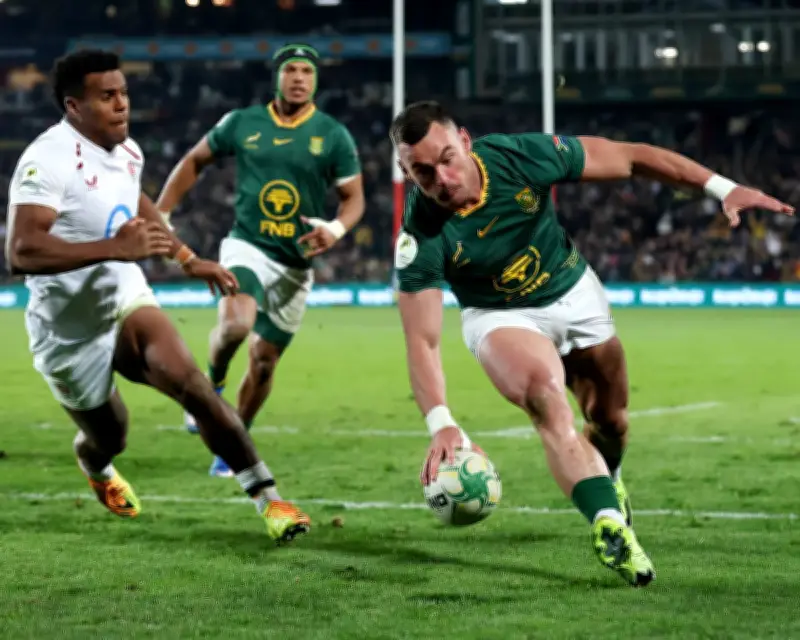
As the 2027 Rugby World Cup approaches, the question on every rugby fan’s mind is how to stop South Africa from achieving an unprecedented three-peat. The Springboks, winners in 2019 and 2023, have established a dynasty built on raw forward power, tactical kicking, and an unbreakable defensive system. Opponents and analysts alike are scrambling for answers.
The Springboks’ Formula for Success
South Africa’s recent dominance stems from a clear, well-executed game plan. Under coach Rassie Erasmus, the team has perfected a style that prioritizes set-piece dominance, a suffocating rush defense, and relentless pressure through contestable kicks. According to former All Blacks coach Steve Hansen, “They’ve taken the art of kicking and contesting to a new level. It’s not pretty, but it’s brutally effective.”
Statistics underline their supremacy: in the 2023 World Cup, South Africa won 92% of their own lineouts and 88% of scrums, while conceding an average of just 12 points per game. Their physicality, epitomized by players like Eben Etzebeth and Pieter-Steph du Toit, has bullied opponents into submission.

Key Areas to Target
To derail the Springboks, rivals must focus on three critical areas: disrupting their set-piece, matching their physicality, and exploiting defensive gaps. “You can’t beat them at their own game,” says rugby analyst John Mitchell. “You need to speed up the game and move their big forwards around.”
Teams like France and New Zealand have shown glimpses of success by playing at a high tempo and using offloads to break the defensive line. In their 2023 warm-up match, France beat South Africa 30-26 by keeping the ball alive and avoiding set-piece battles.
Lessons from History
History offers few parallels. No team has won three consecutive World Cups, but the Springboks’ 1995-2007 drought shows that dominance can be fleeting. However, the current squad’s depth is remarkable. Erasmus has built a 40-man roster with world-class talent in every position, making it difficult for opponents to exploit weaknesses.
“Their bench is as strong as their starting XV,” notes former England captain Martin Johnson. “That’s what makes them so hard to beat over 80 minutes.”
The Path Forward for Rivals
For Ireland, New Zealand, and France—the main contenders—the solution may lie in innovation. Ireland’s structured attack, New Zealand’s flair, and France’s physicality all offer different pathways. Yet, as the 2027 tournament draws nearer, the Springboks remain the team to beat. “We know everyone is gunning for us,” says Springboks captain Siya Kolisi. “That’s the challenge we embrace.”
Whether any team can solve the Springboks puzzle will define the 2027 Rugby World Cup. One thing is certain: stopping South Africa will require a near-perfect performance, tactical genius, and a little bit of luck.