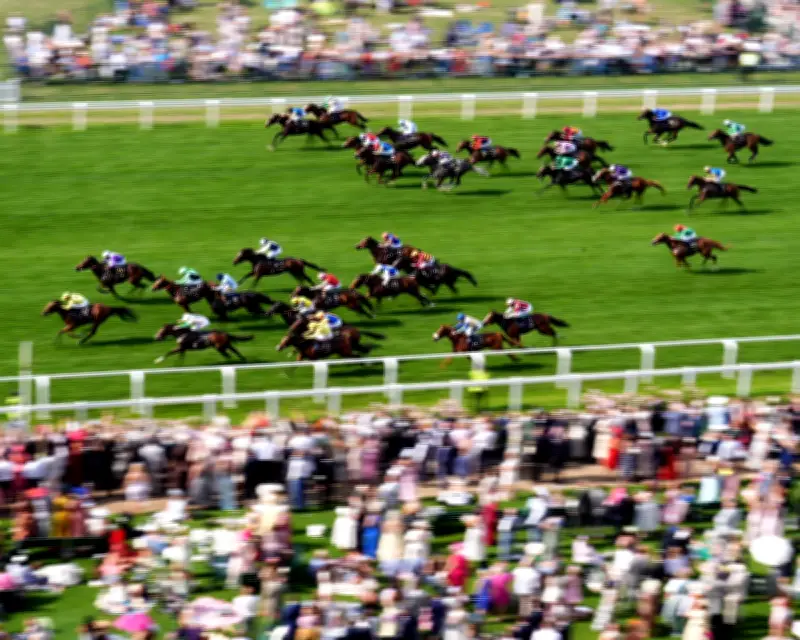
Royal Ascot's straight course draw bias left many horses with a raw deal during an otherwise stellar week, raising questions about the meeting's claim as the pinnacle of Flat racing. The first 11 horses across the line in the Britannia Stakes on Thursday were from the stands' side group, with nine of those drawn 22 or above. This pattern persisted throughout the week, as high-numbered stalls dominated the straight course, with winners powering up against the near-side rail.
Clear Advantage from Day One
The advantage towards the stands' side was apparent from the opening day. Simon Crisford highlighted the issue before watching his gelding Jazl finish 27th and last behind easy winner Bacio, who was drawn in stall 31 on Friday. “The bias has been shocking and it’s really disappointing because you want to be drawn high,” Crisford said. “It’s not right when you pay what you pay as an owner to come to Royal Ascot and not have a fair racing track.”
Attendances were up throughout the week by an average of 3.5%, leading to Saturday's annual sell-out. Aidan O'Brien became the first trainer to saddle 100 winners at the meeting when Scandinavia took the Gold Cup on Thursday. However, the draw bias overshadowed these achievements.

Impact on 18 of 35 Races
The bias affected 18 of the 35 races, particularly those on the straight mile. The Britannia Handicap was the most striking example: 30 runners split into two groups, 15 on each side. The first 11 finishers were from the stands' side, with nine drawn 22 or above. While draw biases are common at courses like Chester and Beverley, Royal Ascot's bias had no obvious reason, as the track was aerated and irrigated evenly.
Chris Stickels, Ascot's clerk of the course, acknowledged the problem on Saturday morning. “We work very hard at providing as fair a track as we can,” he told Sky Sports Racing. “We study the data, we aerate it evenly, we irrigate evenly. Yes, it does seem that the high numbers have been winning, but let’s be honest, not much has raced on that far rail.”
Punters vs. Owners
Smart punters can turn a draw bias to their advantage, but owners and trainers cannot. Crisford's comments reflect the frustration of those investing heavily in bloodstock. The yearling market has remained robust, partly due to the allure of Royal Ascot. If owners feel they are getting a raw deal, they may take their horses elsewhere.
Stickels noted that efforts were made to even out the track by adding more water to the near side in May, but they reached a stage where it seemed even. “It’s not easy to do because you’ve got to shut off one side and not another,” he said. A more determined effort may be necessary next year to ensure fairness.
Stellar Performances Amid Controversy
Despite the bias, the week featured high-class performances from well-backed favourites such as Bow Echo, Ombudsman, Scandinavia, and Venetian Sun. The Queen Elizabeth II Jubilee Stakes on Saturday provided a thrilling three-way photo-finish, with Almeraq edging out Satono Reve and Joliestar by a nose and a short-head. The draw played no part as the field came down the middle.
However, the bias remains a significant disappointment. As one observer noted, it is difficult for Royal Ascot to sell itself as the pinnacle of Flat racing if so many races appear skewed towards one side of the track. The BHA's stewards had deemed the Derby favourite a non-runner a fortnight ago for losing a length at the start, yet at Ascot, dozens of runners had their chances compromised through no fault of their own due to the draw.