Forgive me if I am not excited for the World Cup. After a heartbreaking loss for my beloved Arsenal in the Champions League Final, I would love a break from soccer. A respite from the drama and misery of the beautiful game would do a lot of good for my soul right now. But FIFA, the sport's sprawling governing body, does not have time for me to lick my wounds. They demand my wallet.
With the World Cup coming to North America, I have no chance of escaping the monstrous hype, even if I cannot imagine affording the exorbitant ticket prices. Thousands of seats remain available for the US's opening group stage match against Paraguay in Los Angeles, which was an unthinkable result when the competition was awarded to the US, Mexico, and Canada.
The last time the World Cup was hosted here was 1994, a time when soccer was about as popular as a free colonoscopy in this part of the world. Actually, considering the cost of healthcare in this country, the free colonoscopy might have had the advantage. Since 1994, the sport has claimed more than its share of eyeballs, thanks to cable TV, streaming, and the global village we call the internet.

The creation and expansion of a US/Canadian professional league called Major League Soccer (MLS) did not hurt either. We welcomed top-class players at the end of their careers: Robbie Keane, Carlos Vela, Gareth Bale, Lionel Messi, and most crucially, David Beckham, have all come to the US to play in MLS. Sure, the quality of play is still lacking compared to leagues in Europe and South America, but soccer is now a billion-dollar business here. Leave it to FIFA to see the opportunity to soak the new fans.
Political and Ethical Concerns
Keir Starmer has called FIFA's ticket pricing 'unacceptable', the attorneys general of New York and New Jersey have pushed back on 'impossibly high prices', and FIFA's boss, Gianni Infantino, has come under fire for an increasingly cozy relationship with Donald Trump. Infantino has fashioned himself something of a football tsar for the world, releasing a risible biography that paints him as the savior of the game from the disgraced FIFA president Sepp Blatter, who led FIFA as it grappled with corruption crises. From where I sit, soccer has never felt more tainted.
We are only four years removed from Qatar's World Cup, taking place in brutal heat, in stadiums built by migrant workers – many of whom lost their lives in the process. Unlike 2022, this World Cup cycle benefits from the ample existing facilities in the US, Canada, and Mexico. No new construction was required. But instead, it takes place under the shadow of the Trump administration's aggressive immigration enforcement and calls for ICE to round up attendees they deem illegal. Oh, and I should mention that before Qatar and North America, the 2018 World Cup was hosted by Putin's Russia. FIFA is on quite a run.
Meanwhile, Infantino, while acting as though he rescued soccer from a dark fate, invented a peace prize to give to the president a few months before Trump launched a bombing campaign against Iran. Iran now has to field a World Cup side in the very country they are at war with. Giving a peace prize to Trump is like giving Oedipus a 'World's Greatest Son' coffee mug.
Ticket Prices and Fan Experience
As odious as the current political situation around the World Cup might be, I would still consider attending the US group stage opener here in LA if the prices were even remotely reasonable. With massive amounts of inventory still floating around the market, the cheapest seat at the time of this writing is nearly $900 per seat. If I was going to spend that much money to part ways with my morals, I would rather use that cash on a Kalshi bet that the US will lose the match. At least I have a 50/50 chance of making a profit. Or I could throw nine $100 bills into a blender.
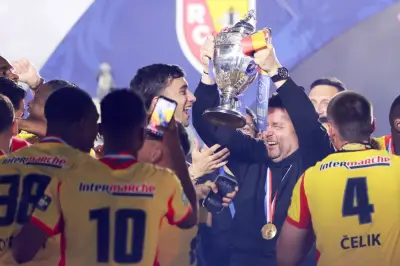
Despite all that, soccer is still one of the most spectacular sports to watch live. As sour as I am after Arsenal lost the Champions League Final, I can still dine out on their English Premier League championship. Watching them lift the Premier League trophy brought an unmatched ecstasy I can hardly describe. These are the kinds of highfalutin, outrageous statements no one but a soccer fan would utter in public. We love to toss around notions of the game's poetry, its searing human drama, and the poignance of the wins and losses.

One of the reasons I think it took so long for soccer to catch on in the US is because the announcers talk about a match like it is a production of Richard III at the Old Vic theatre. But it is not actually the florid, epic contest they like to claim. It is not elevated, literary, or particularly intellectual. It is big business. FIFA is rotten to the core, concerned first and foremost with profit.
I would like to find a glimmer of inspiration from the tournament. Many of the players, such as the England midfielder Bukayo Saka, are immigrants who come to countries like the UK hoping for a better life. As anti-immigrant rhetoric builds in the US and UK, I would hope the World Cup could remind us all that talent knows no borders and that our sporting heroes can come from anywhere. But I am struggling to find the uplifting messages under the piles of cash being dumped in front of FIFA headquarters.
Dave Schilling is a Los Angeles-based writer and humorist.