As the 2026 FIFA World Cup arrives in Canada, Mexico and the United States, one contest has already begun online: the fight over who sounds like a “real” soccer fan. Fans in the US have been mocked on social media for chants such as “I believe that we will win” and “U-S-A! U-S-A!” To some, they sound joyful. To others, especially those raised on older soccer traditions, they sound awkward, rehearsed or painfully unoriginal.
But this debate is about much more than whether one chant is better than another. Sports chants are cultural passports. They teach people how to belong – who counts as an insider – and whose version of soccer is “legitimate”.
Chants are older than TikTok
Soccer fans have been shouting, singing and chanting for well over a century. Early records of soccer cries and songs date back to the 1880s, while some club songs still used today emerged in the 1890s. By the 1960s, modern soccer chanting had become deeply tied to terrace culture, the supporter culture that grew from the sport’s standing sections. Fans borrowed tunes from pop music, hymns, folk songs and local jokes, then rewrote them for players, rival clubs and match-day drama. This is why the best chants often feel half familiar and half new. The tune may come from somewhere else, but the words belong to the crowd.

So what makes a good chant?
While there are numerous factors that contribute to the success of a soccer chant, a great chant will usually have five key ingredients.
- It is simple. People must be able to learn it in seconds.
- It is repeatable. It needs to survive noise, nerves, bad singing and thousands of people joining at slightly different times.
- It is shared. A chant only works when it stops being owned by one person and becomes the crowd’s voice.
- It is emotionally timed. It needs to land after a goal, during a tense defensive stand, when a rival is rattled, or when hope is fading.
- It is tied to identity. It says “this is who we are, this is where we are from, and this is who we are not”.
Think of Iceland’s “thunderclap” at Euro 2016. It was not lyrically complex. Its power came from timing, rhythm and unity. Then there’s “Will Grigg’s on fire”, which took a dance track and used it to turn a squad player into a tournament folk hero. Liverpool’s “You’ll Never Walk Alone”, which derives from a 1963 song by Gerry and the Pacemakers, works less as a chant and more as a shared emotional ritual. Great chants are not always beautiful. Many are blunt, funny, silly or rude. But they usually feel like they have come from the crowd – not been handed to the crowd.
Critics are calling US chants “cringe”, arguing that they tend to rely on simplistic American sports cheers recycled from other sports instead of authentic soccer traditions. European and South American fans in particular have said the US chants show a lack of depth, originality and creativity, and sound more like corporate promotions than passionate rally cries.
Chants turn spectators into participants
Chanting can become the mechanism that moves individuals from the role of a passive observer to a collective “off-field team”. Research has shown crowd behaviour can influence team performance by either boosting motivation through support, or undermining it through pressure, anxiety and distraction. By chanting non-stop throughout the match, a collective fan base can narrate the game, further contributing to the “us against them” mentality that defines the stadium experience. Loud crowd chants and cheers can also bias referee decision-making by acting as an auditory cue. A 2002 study found referees who watched game play footage with audible crowd noise were less confident in their judgements, and called 15.5% fewer fouls against the home team compared to those who watched in silence.

The line between banter and harm
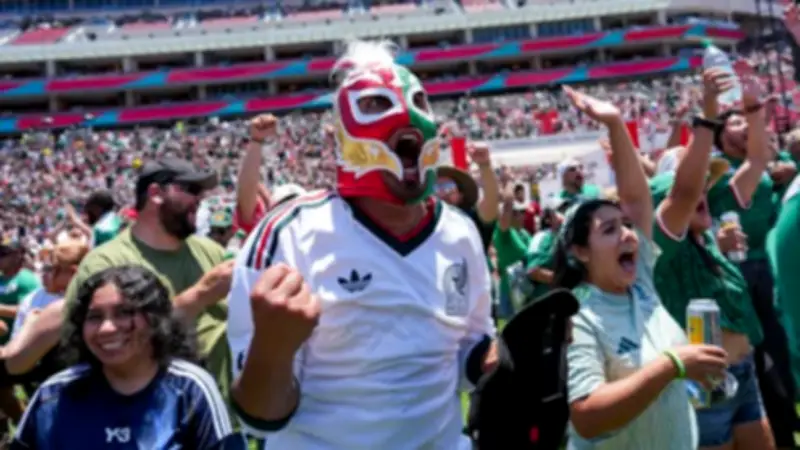
Soccer chants also have a darker side. Because they mark “us” and “them”, they can slide from humour into racism, homophobia, misogyny or tragedy abuse, where rival fans mock deaths, disasters or traumatic events connected to another club or community. FIFA and other soccer authorities have repeatedly punished federations and clubs over discriminatory chants. A prominent example is a long-running homophobic chant associated with some Mexico fans. Once dismissed by some as banter, it has brought repeated FIFA sanctions and stadium restrictions. This matters because chanting is never just background noise. It tells us what a fan base is willing to celebrate, tolerate or challenge. The best soccer cultures are not the ones with the loudest fans. They are the ones where fans create atmosphere without making other people feel unsafe.
A lesson for World Cup fans
So, should US fans throw out “I believe that we will win”? Not necessarily. Every soccer culture starts somewhere. A chant that sounds awkward today can become meaningful if people attach memories and emotions to it. But the online mockery does point to something real. The strongest chants do not just declare support. They reveal a story. They carry place, humour, history and timing. That is the challenge for every nation at this World Cup. Not just to copy the sound of other soccer cultures, but to create one. The chant that lasts will not be the most polished. It will be the one that thousands of people make their own.