Just a year ago, the notion of a filmmaker launching a wide-release feature from a YouTube channel was still a niche origin story. Siblings Michael and Danny Philippou had released Bring Her Back, the follow-up to their horror hit Talk to Me, to decent reviews and moderate box office. While they would continue working, the returns did not signal a YouTube explosion. Similarly, Chris Stuckmann's Shelby Oaks premiered in 2025 to lackluster reception; the former YouTube film critic's debut was seen as a clumsy found-footage pastiche lacking emotional depth.
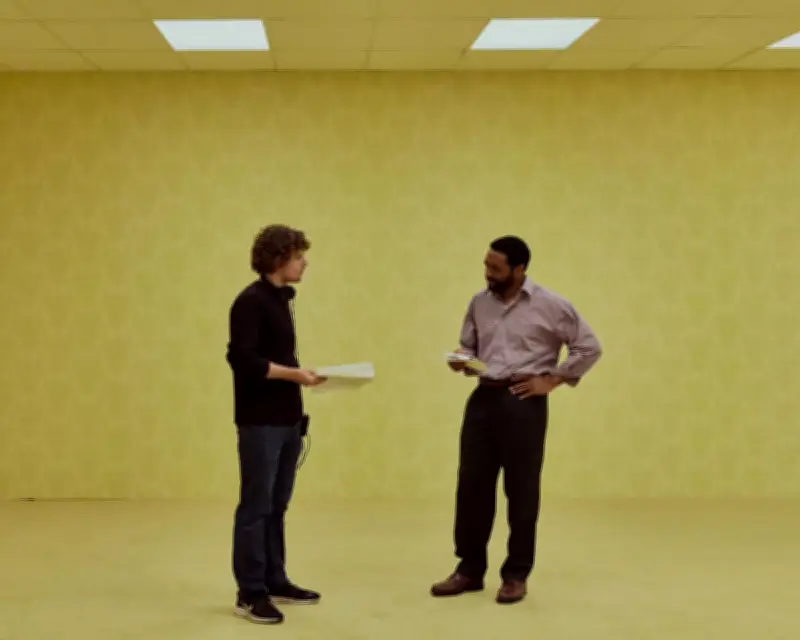
But in 2026, the landscape has shifted dramatically. In January, YouTuber Markiplier self-released his adaptation of the video game Iron Lung to theaters, outperforming many big-studio titles. Then Curry Barker, known for his YouTube comedy sketches, unveiled his feature debut Obsession. Made for under a million dollars, the film has become the summer's box office phenomenon, with its second and third weekends actually outgrossing the first—a virtually unheard-of feat. Obsession now shares multiplex space with Backrooms, directed by 20-year-old Kane Parsons, who previously brought the spooky internet meme to life in YouTube shorts. Despite its setting in purgatorial, fluorescent-lit liminal spaces, Backrooms topped the North American box office this weekend and is poised to become A24's biggest-grossing movie within days. It opened larger than starrier titles like Wuthering Heights, Scream 7, The Devil Wears Prada 2, and the latest Pixar film. This marks three YouTube-trained filmmakers behind some of the year's biggest hits, sparking debates that YouTube, not film school, provides the real training for tomorrow's directors.
Diverse Backgrounds, Common Horror Path
The nature of YouTube training varies widely. Parsons has a background in visual effects and the original Backrooms web series, akin to past feature directors from VFX or TV. Stuckmann is known for movie reviews, Barker for sketch comedy, and the Philippous for over-the-top effects and goofy comedy (their "Marvel vs. DC" video under RackaRacka is a prime example). Markiplier fits the stereotypical YouTuber mold, famous for play-through videos. Yet despite these diverse experiences, nearly every YouTube creator has entered features through horror—even if they didn't specialize in it on their platform. Barker's work feels related to Zach Cregger, a sketch comedian who pivoted to ambitious horror with Barbarian and Weapons. Obsession shares a hooky premise with thorny, darkly funny complications, a more natural progression than from gross sex jokes about Wonder Woman to exploring traumas in Talk to Me.

Why Horror? Marketability and Youth Appeal
Horror has been more marketable post-pandemic than comedy, which was already contracting in the late 2010s. Superhero movies once served as a comedy substitute, but now horror and comedy share that space, with horror thriving on lower budgets and up-and-coming voices outside Hollywood. Horror is youth-driven at the box office, and younger filmmakers better understand what resonates with their peers. However, this focus can lead to calculated rather than personal films—like the algorithmic geek show of Bring Her Back. Visually, Backrooms depicts a dreamlike atmosphere with unsettling accuracy, but Parsons struggles with convincing characters outside meticulously designed spaces. Obsession, the most lived-in of the bunch, still has baffling socioeconomic depictions, like characters paying rent from music retailer shifts.

YouTube as a New MTV?
Are these filmmakers learning insights or limitations from YouTube? It's hard to say. YouTube isn't a training system; it's a platform with endless passages, analogous to MTV in the 1980s and '90s, which gave filmmakers exposure through music videos. Just as MTV showcased what played well, YouTube teaches what attracts clicks, not filmmaking fundamentals. The filmmakers behind music videos often came from traditional backgrounds, with exceptions like Spike Jonze and Michel Gondry, who entered film from skateboarding photography and rock drumming. Interestingly, Boots Riley, with his I Love Boosters, feels more aligned with boundary-pushing sensibilities, but he is decades older and a Black man—highlighting that all these YouTube wunderkinds are white men except Markiplier, who has Asian heritage. YouTube opens doors for younger, scrappier filmmakers, but it's not revolutionary to see ambitious twentysomething white guys hurrying through. Starting a channel may cost less than film school, but it favors those with time and means, undermining the digital meritocracy ideal.
A Heartening Resilience
Yet a more heartening traditionalism lurks: the shift toward YouTubers directing features means they care to do it at all. During the pandemic, there was talk of younger audiences lacking patience for full movies. Phenomena like Backrooms and Obsession prove that assumption wrong. Backrooms could easily be replaced by online shorts, yet audiences turned up—the youth-culture equivalent of adapting a streaming series into a blockbuster. This doesn't mean these directors make better movies than those from theater, film school, or music videos, or that this new practice space will change filmmaking forever. But that Barker, Parsons, and Markiplier wanted to make movies, rather than grind through daily micro-content, is a testament to cinema's resilience. If YouTube is a new film school, it shows that for some, films are still worth learning about.