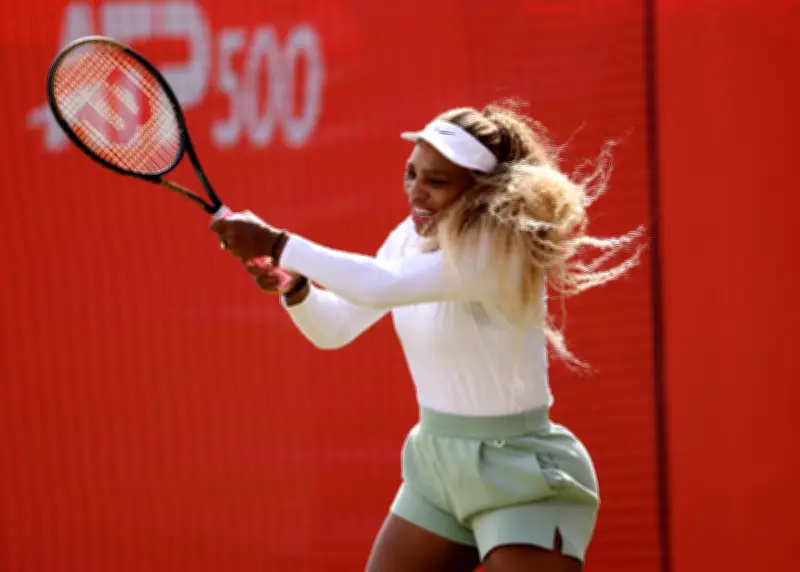
The women's tennis tournament at Queen's Club this year has drawn sell-out crowds and generated immense excitement, largely due to the appearance of Serena Williams and the impressive runs of Emma Raducanu and Katie Boulter. The event has arguably overshadowed the men's tournament, which suffered from a weakened field due to injuries.
Men's Event Struggles with Weak Field
The men's event at Queen's Club saw general sale tickets sell out in less than a day, yet its field was one of the weakest in recent memory, featuring only one top-10 player, Alex de Minaur. The absence of stars like Carlos Alcaraz and Jack Draper, along with injuries to Lorenzo Musetti, Rafael Jodar, and Holger Rune, diminished the draw. Additionally, the UK's tax laws for international players give an advantage to the Halle tournament, which boasted seven of the top 11 players this week.
Women's Tournament a Spectacular Success
In contrast, the women's tournament, held a week earlier, was a resounding success. It marked the return of Serena Williams to doubles after four years of retirement, alongside Victoria Mboko. Although Mboko suffered a torn medial collateral ligament in her first match, the tournament showcased British talent: Katie Boulter defeated world No. 2 Elena Rybakina to reach the semi-finals, and Emma Raducanu won two matches in a day to reach her biggest final since the 2021 US Open. Donna Vekic, a lucky loser, eventually defeated Raducanu to win the title.

Record Attendance and Atmosphere
The women's tournament sold over 70,000 tickets, operating at 98% capacity for the week and selling out on five of seven days. Up to 9,000 fans packed the stadium daily, even during work hours. The LTA increased prize money by more than a third to $1,915,000, making it the second-highest purse for a standalone WTA 500 event. In comparison, the German Open in Berlin, featuring nine of the top 10 players, had a prize pool of $1,206,446. The men's Queen's Club prize money stood at €2,583,330, a 2.4% increase in line with other ATP 500 events.
Future Prospects
The women's tournament, now in its second year, has established itself as a highlight of the British summer sporting calendar. The LTA faced challenges, including opposition from some Queen's Club members and concerns about London-centrism, but the success of the event has quelled doubts. With growing profile, the tournament aims to become a self-sufficient staple and one of the best WTA events on tour.