While the Bayeux Tapestry prepares for its blockbuster loan to the British Museum, with tickets at £33 for a 40-minute viewing, Britain's own medieval art treasures remain largely free and accessible year-round. From grotesque crypt carvings to soaring cathedral vaults, these works offer wonder without the queues or cost.
Canterbury Crypt's Grotesque Carvings
In the crypt of Canterbury Cathedral, a carved stone figure grimaces furiously as a man sits on his head, legs apart, holding a fish and bowl. Other stone column figures include a serpent-tailed creature wrestling a dog-like monster, a gryphon devouring a siren, and a horned devil carving. This nefariousness lurks beneath England's holiest shrine, free to view.
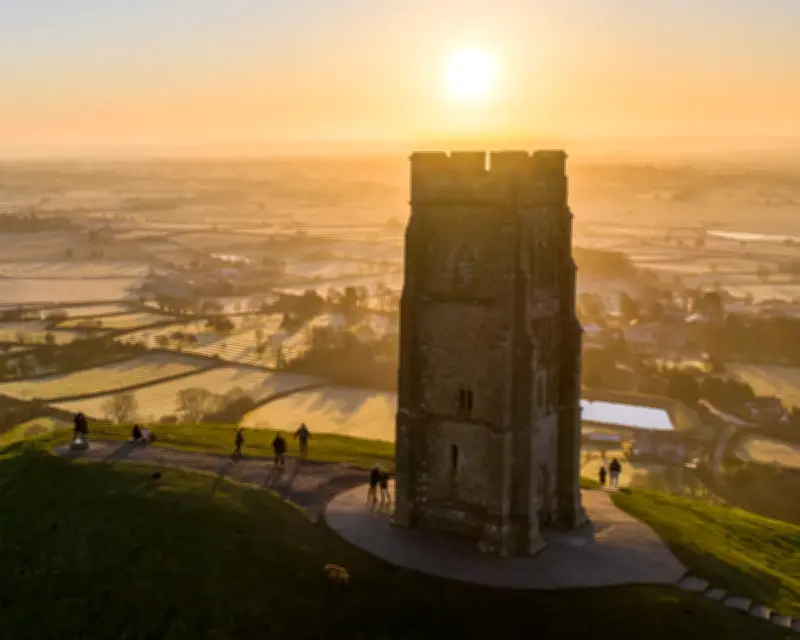
Glastonbury Tor and Conwy Castle
Glastonbury Tor, with its 14th-century church tower atop a steep hill, haunts imaginations as a possible site of King Arthur's death. Conwy Castle, designed by James of St George in the 13th century, perches strategically on a rocky outcrop, its towers and turrets dancing against mountains and sea. Both offer free views of medieval landscape mastery.

Durham Cathedral's Sublime Vista
Durham Cathedral's two square towers stand perfectly poised on a high promontory above the River Wear, commanding wooded landscape and bridges. JMW Turner painted sublime views of this and other medieval sites. Entry is free, with a suggested £5 donation; the museum displays St Cuthbert's relics.
Ely Cathedral's Lady Chapel
In Ely Cathedral's 14th-century Lady Chapel, blooms and grape-like seeds hang in steep-arched niches, creating a spring hedgerow effect. It is the visual equivalent of Chaucer's 'Whan that Aprill with his shoures soote'. The chapel's statues were smashed by Protestant iconoclasts, offended by its sculptural hymn of love to the Virgin Mary.
Salisbury Cathedral's Spire
Salisbury Cathedral's spire, the tallest in Britain, seems to spurt like a fountain from the building, providing a focus for Salisbury Plain. It channels the landscape into a single upward bolt of energy, connecting heaven and Earth.
King's College Chapel's Fan Vaulting
King's College Chapel, Cambridge, features fan vaulting, a uniquely English style. Its interior resembles a cluster of fairy mushrooms, with a near hallucinogenic canopy of exaggerated natural forms. This late gothic romance contrasts with Durham's tough-minded godly power.
Wilton Diptych and Trinity Altarpiece
The Wilton Diptych, painted for King Richard II in 1395-99, shows the king kneeling before the Virgin Mary and blue-and-white-winged angels. The play of blue against gold and the king's romanticised relationship with Our Lady marks a departure from Norman singlemindedness. The Trinity Altarpiece, commissioned from Flemish painter Hugo van der Goes in the 1470s, features organ-playing angels and a saint in shining armour. It is free at the Scottish National Gallery.
Other Free Treasures
The Lewis Chessmen, Scandinavian-carved ivory pieces portraying feudal society, are in the British Museum's free galleries. Norham Castle in Northumberland, with its towering keep, inspired Turner and is free entry. Flint Castle in north Wales, where Richard II was deposed, offers free seaside ruins. Beaumaris Castle in Anglesey seems a play castle with low towers and reflective water.
According to art critic Jonathan Jones, 'Medieval art came to Britain with the Normans. By 1066, continental Europe had crystallised into feudal societies, an artistic golden age. Immediately after the conquest, this style hit Britain, led by Lanfranc, the Italian monk who was made Archbishop of Canterbury by King William I.'
The Bayeux Tapestry tickets go on sale 1 July at the British Museum, but Britain's own medieval wonders remain free to explore.