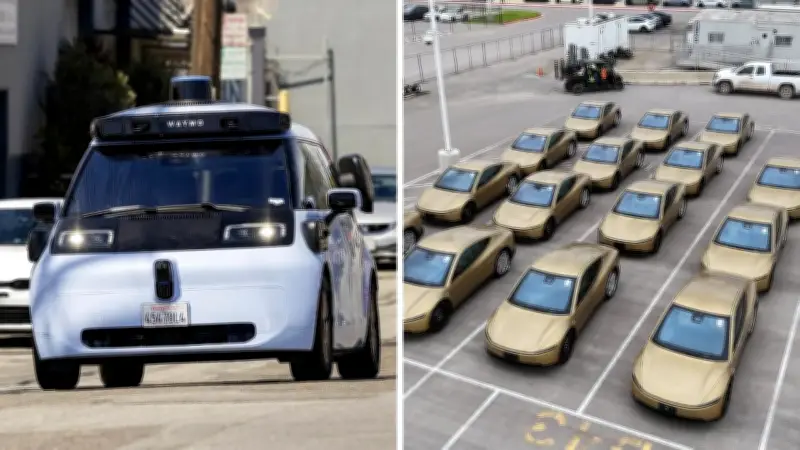
Waymo's self-driving taxis are increasingly likely to reach Australian roads, even if an official debut remains years away. A report in the Daily Telegraph, based on a freedom of information request, revealed that the NSW Government held secret meetings with Waymo executives about a local trial of driverless taxis on Sydney streets.
This follows earlier reports that Waymo quietly opened an Australian branch and met with car manufacturers about potential partnerships. Waymo, originally founded by Google, has completed over 20 million driverless taxi trips in the United States.
Safety and Controversies
Although Waymo claims to reduce the likelihood of crashes by more than 90%, the company has faced several controversies, including cars driving through police stand-offs and vehicles circling with passengers trapped inside.

Global Ambitions
Waymo has announced plans to enter right-hand-drive markets in London and Japan, among 20 regions it aims to tackle soon. Australia could be attractive due to its close association with Chinese cars, which have surpassed Japan, Thailand, and Korea as the top vehicle supplier to Australia.
Partnerships and Technology
Waymo has partnered with China's Geely and its Zeekr sub-brand to produce the next-generation Robotaxi, the Waymo Ojai, replacing aging Jaguar I-Pace models. The Ojai, pronounced “oh, hi,” is a basic electric van with a spacious interior, large digital displays, and sliding doors. It started carrying passengers in the US last week, powered by an updated version of Waymo's AI driving software, combining 13 cameras, six radars, and four Lidar units.
Competitors
Waymo is not alone in the driverless taxi race. Uber has invested in the technology and stated in 2025 that it is engaged with the right regulators in Australia. Tesla has also committed significant resources, first through its Autopilot driver assistance features and now with the Tesla Cybercab, which began small-scale production after its 2024 concept introduction, with a wider US launch expected later this year.
While the prospect of driverless taxis on Australian roads is exciting, experts caution that widespread adoption could still be years away, and the impact on local jobs remains a concern.