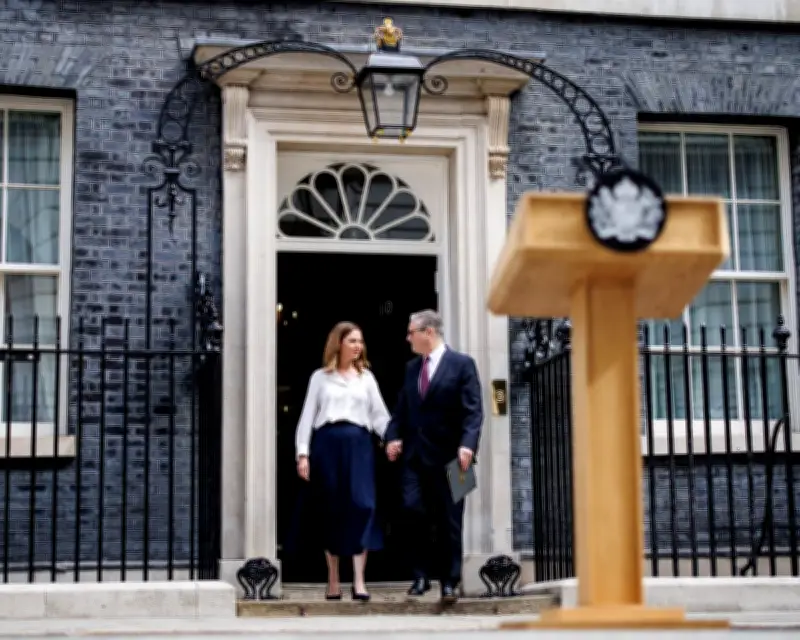
Keir Starmer has resigned as leader of the Labour Party following a dramatic revolt by MPs over his handling of Brexit and deep internal divisions. In a somber speech delivered outside his London home, Starmer acknowledged that his position had become untenable and that the party needed a fresh start. Here are the six key takeaways from his resignation address.
1. A Divided Party
Starmer admitted that Labour was 'more divided than ever' and that he had failed to unite the party around a clear vision. He cited the ongoing rift between pro-Remain and pro-Leave factions, which had paralyzed decision-making and damaged the party's credibility with voters. According to Starmer, the infighting had become 'a distraction from the real issues facing the country.'
2. Brexit Blame
Starmer placed significant blame on the Brexit process for his downfall. He argued that the party's ambiguous stance on Europe had alienated both Remainers and Leavers, leaving Labour without a coherent message. 'We tried to please everyone and ended up pleasing no one,' he said. He called for a 'fundamental rethink' of Labour's position on Europe.

3. Call for Unity
In his resignation speech, Starmer urged the party to come together and avoid a bitter leadership contest. He warned that prolonged infighting would only benefit the Conservatives. 'We must put the party before personal ambition,' he said. He endorsed a 'swift and orderly' transition to a new leader.
4. Legacy of Failure
Starmer acknowledged that his leadership had been marked by electoral failures, including the loss of key by-elections and poor polling numbers. He took responsibility for the party's performance, saying, 'I accept that I have not been able to deliver the change that the country needs.' He noted that Labour had been 'out of touch' with working-class voters.
5. Economic Agenda
Starmer used his speech to reiterate his belief in a 'radical' economic agenda, including higher taxes on the wealthy and increased public spending. He argued that the party must not abandon its socialist principles in pursuit of electability. 'We cannot win by becoming Tory-lite,' he said. He urged his successor to maintain a 'bold' vision.
6. Personal Reflection
Starmer ended his speech with a personal reflection, expressing regret for not being able to lead Labour to victory. He thanked his family and supporters, and said he would 'remain a servant of the party' in whatever capacity he could. 'I gave it my all, but it was not enough,' he said. 'I hope that whoever follows me can succeed where I have failed.'
The resignation has plunged Labour into yet another leadership crisis, with several potential candidates already positioning themselves to take over. The party faces an uphill battle to regain the trust of the electorate, with the next general election expected within two years.