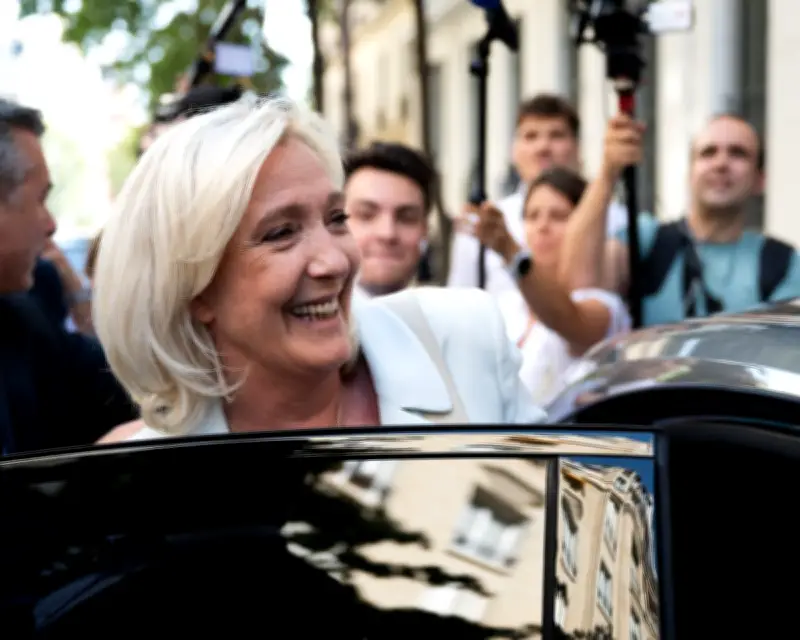
Marine Le Pen's conviction for embezzlement of European Union funds has been upheld on appeal, yet the far-right leader's popularity has surged in France, according to recent polls.
Court Decision and Public Reaction
The Paris Court of Appeals confirmed the original 2024 verdict, sentencing Le Pen to a three-year suspended prison term, a five-year ban from holding public office, and a fine of €300,000. The court found her guilty of using European Parliament funds to pay party staff between 2004 and 2016.
Despite the legal setback, a survey by Ifop for Le Figaro showed that 42% of respondents now have a favorable opinion of Le Pen, up from 36% before the appeal ruling. The increase was particularly notable among young voters and those in rural areas.

Political Ramifications
Le Pen's National Rally party denounced the conviction as politically motivated, with party spokesperson Julien Odoul stating, "This is an attack on democracy and the will of the people. Marine Le Pen is being persecuted because she is a threat to the establishment." The party has announced plans to appeal to the European Court of Human Rights.
Political analysts suggest that the conviction has galvanized Le Pen's base and attracted sympathy from undecided voters. "The 'victim effect' is strong in French politics," said Dr. Sophie Meunier, a political scientist at Sciences Po. "Le Pen is successfully framing this as a battle against the elite, which resonates with many voters who feel disenfranchised."
Impact on 2027 Presidential Election
The upheld ban from public office means Le Pen cannot run in the 2027 presidential election unless the ban is overturned on appeal. However, her rising popularity could influence the race, with some polls suggesting she would win the first round if she were a candidate.
President Emmanuel Macron's approval rating has remained stagnant at around 30%, and his party has struggled to counter the National Rally's momentum. The conviction has also sparked debate about the role of the judiciary in politics, with some critics arguing that the ban is excessive and undemocratic.
Le Pen herself has remained defiant, telling supporters at a rally in Marseille, "They can try to silence me, but they will never silence the French people. Our movement is stronger than ever."
International Reaction
The case has drawn attention from far-right leaders across Europe, including Italy's Giorgia Meloni and Hungary's Viktor Orbán, who have expressed solidarity with Le Pen. The European Commission has declined to comment on the specific case but reiterated its commitment to protecting EU financial interests.
As the legal process continues, the political landscape in France remains volatile. The National Rally is expected to use the controversy to rally support ahead of local elections in 2028, positioning itself as a victim of political persecution.