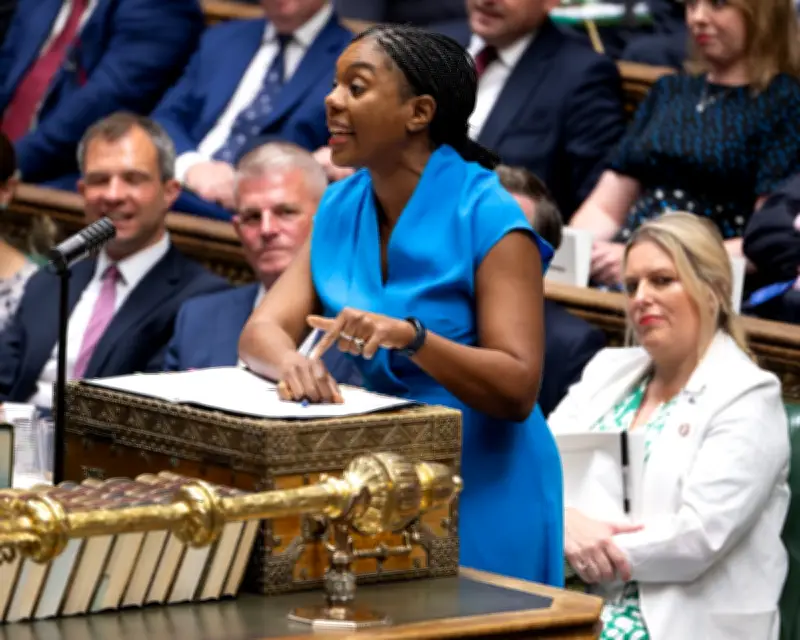
Labour has strongly criticised the language used by Conservative MP Kemi Badenoch during Prime Minister's Questions, accusing her of stoking division and employing rhetoric that undermines social cohesion. The exchange, which took place on Wednesday, saw Badenoch challenge the government's approach to immigration and British values, prompting a fierce response from Labour frontbenchers.
PMQs Confrontation
During the heated session, Badenoch, a prominent figure on the Conservative right, stated that the government's immigration policies were eroding national identity and that 'some cultures are simply incompatible with British values.' Labour MPs immediately condemned the remarks as 'divisive and dangerous,' with shadow minister for equalities, Sarah Jones, calling on the Speaker to intervene.
Labour leader Sir Keir Starmer responded directly, saying, 'This kind of language is not only irresponsible but also plays into the hands of extremists. We should be uniting communities, not pitting them against each other.' The comment drew cheers from Labour benches and sharp criticism from Conservative MPs who defended Badenoch's right to raise concerns about integration.

Political Reactions
The controversy has reignited debate about the tone of political discourse in Parliament. Several Labour MPs have called for a formal complaint to be lodged with the Parliamentary Standards Commissioner. Meanwhile, Conservative chief whip Chris Heaton-Harris defended Badenoch, stating that she was 'speaking honestly about issues that many Britons are concerned about.'
According to a spokesperson for the Labour Party, 'Kemi Badenoch's comments are a clear attempt to divide our society. We will not stand by while such language is used to attack minority communities. The Conservative Party must distance itself from this dangerous rhetoric.'
Broader Implications
The incident comes amid heightened tensions over immigration policy and national identity ahead of the next general election. Political analysts suggest that the exchange could further polarise the debate, with both parties seeking to mobilise their bases. A recent poll by YouGov indicated that 62% of Britons believe political discourse has become more divisive over the past year, with many citing language used by MPs as a contributing factor.
Labour has pledged to introduce a 'civility in politics' bill if elected, aimed at setting standards for respectful debate in Parliament. The party's deputy leader, Angela Rayner, said, 'We need to restore decency to our political system. The language used by some MPs is not just offensive; it is harmful to our democracy.'
The Speaker of the House, Sir Lindsay Hoyle, has not yet commented on the incident but is expected to issue a reminder to MPs about the importance of respectful language in parliamentary proceedings.