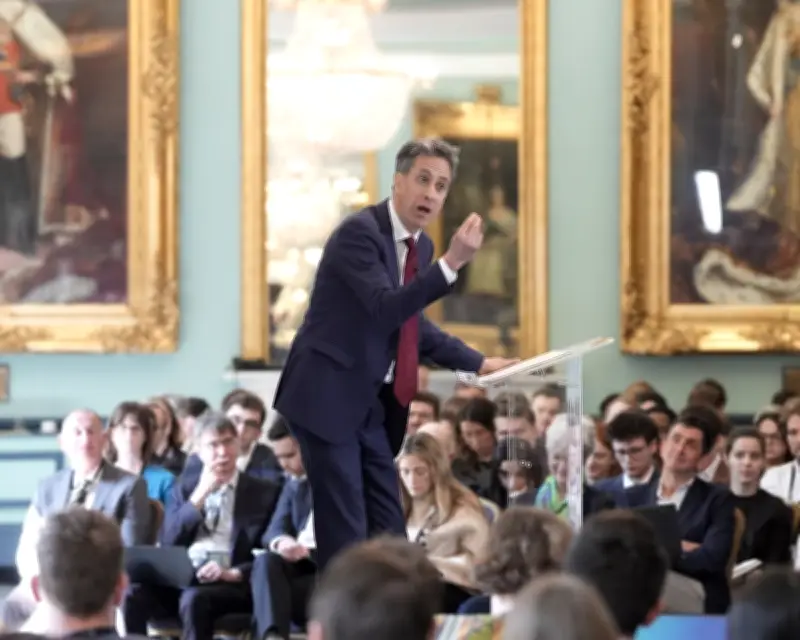
Ed Miliband is set to become the next Chancellor of the Exchequer, according to senior Labour sources, in a dramatic reshuffle that signals a sharp turn to the left on economic policy. The former Labour leader, who has served as Shadow Business Secretary, will replace Rachel Reeves, who is expected to take on a new role focusing on industrial strategy.
Reshuffle Details
The reshuffle, expected to be announced later this week, is part of Prime Minister Keir Starmer's effort to reinvigorate his government after a series of disappointing by-election results. Miliband's appointment is seen as a reward for his loyalty and his prominent role in shaping Labour's green investment plans. A senior Labour figure told the Guardian: 'Ed has been instrumental in developing our economic vision. He brings both experience and a fresh perspective.'
Economic Implications
Miliband's chancellorship is likely to herald a more interventionist approach to the economy, with a focus on state-led investment in green technology and infrastructure. He has been a vocal advocate for a 'green industrial revolution' and has called for a significant increase in public spending to tackle climate change. Markets reacted cautiously, with the pound dipping slightly against the dollar amid uncertainty about Labour's fiscal plans.

According to a source close to Miliband, 'Ed believes that the Treasury must be a driver of change, not a brake on it. He will prioritize long-term investment over short-term austerity.' The move has been welcomed by Labour's left wing but has sparked concern among centrists who worry about the party's electoral appeal.
Reactions and Analysis
Conservative MPs were quick to criticize the appointment, with one calling it a 'return to the failed policies of the 1970s.' However, Labour strategists argue that Miliband's experience and communication skills will help sell the party's economic message to voters. Political analyst Professor Jane Smith of the University of Oxford said: 'This is a bold move by Starmer. It could energize the Labour base but also risks alienating swing voters in key marginals.'
The reshuffle also sees several other changes, with Angela Rayner reportedly taking on a beefed-up role as Deputy Prime Minister with responsibility for levelling up, and Yvette Cooper remaining as Home Secretary. The full cabinet is expected to be announced on Friday.