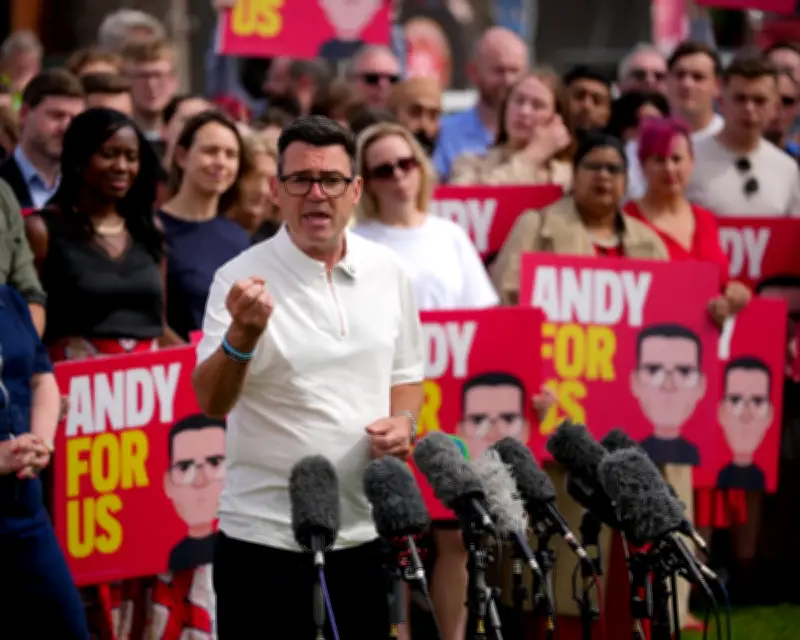
Andy Burnham's decisive victory in the Makerfield byelection has intensified speculation about a potential Labour leadership challenge, with readers offering sharply contrasting views on the implications for Sir Keir Starmer.
Burnham's Return to Westminster
Burnham, the former Greater Manchester mayor, secured a resounding win over Reform UK in the 19 June byelection, returning to Parliament as MP for Makerfield. His victory has been interpreted by some as a signal of discontent with Starmer's leadership, while others caution against destabilising the government.
Hannah Clay of Lewes, East Sussex, expressed admiration for Burnham but warned against a leadership challenge. "Many of us voted Labour in 2024 because we wanted stability after years of political turmoil," she wrote. "We were not looking for a political celebrity; we were looking for someone serious, competent and resilient enough to govern in difficult circumstances."

Starmer's Record Defended
Clay defended Starmer, noting his measured approach amid challenges. "He inherited sluggish growth, overstretched public services and a volatile international situation. Yet he has remained measured and steadfast in the face of pressure from both political opponents and sections of his own party." She recalled his involvement in the McLibel case and his calm response at a Pride in Place event in Hastings as evidence of his commitment to justice.
However, Christopher Rainger of York argued that Starmer lacks a genuine mandate. "People voted for Labour despite their dislike of him, in the hope that the promised change would be delivered," he said. "The Reform victories in local elections show just how disappointed and desperate voters are." He suggested Starmer should resign with dignity, potentially becoming foreign secretary.
Electoral Implications and Hypocrisy Concerns
Lawrence Hardy of Norwich raised the issue of democratic legitimacy, arguing that if Labour changes leader, a general election should follow promptly. "Not to hold a general election within a short period would be seen as the height of hypocrisy and give ammunition to opposition parties," he wrote, noting Labour's past demands for elections when Conservative leaders changed.
Wendy Churchman of Birmingham drew parallels to recent Tory leadership, cautioning against "prima donnas" in power. "Does encouraging groupies, calling oneself 'King of the North', changing policy to suit the moment, remind one of a recent Tory PM?" she asked.
Celebrating Defeat of Reform UK
Adrian Cosker of Hitchin, Hertfordshire, urged focus on Burnham's defeat of Reform UK and Restore, which together polled less than Labour. "The Labour party should not allow itself to be pushed into what I suspect may turn out to be its Liz Truss moment," he warned, emphasising the damage of 14 years of austerity and Brexit.
Lyn Dade of Twickenham called for electoral reform if Burnham becomes leader, citing the 59% turnout in Makerfield as a democratic concern. "It would help foster inclusion if any legislation were preceded by a 'national conversation' about the benefits of proportional representation," she said.
Counterpoint: Majority vs. Byelection Win
Aurelia Maynard of Camberley, Surrey, dismissed the logic that a 9,231-vote majority in a byelection warrants leadership change, contrasting it with Starmer's general election majority of about 170 seats. "Please rise above the clamour, for a change, and let Starmer get on with his job," she urged.
The letters reflect a divided Labour Party, with Burnham's win serving as both a personal triumph and a catalyst for broader debate about the party's direction under Starmer.