The resignation of UK Defence Minister John Healey has sent shockwaves through the political landscape, revealing deep-seated issues within the AUKUS security pact. Healey's departure, triggered by internal disagreements over the handling of the trilateral agreement between Australia, the United Kingdom, and the United States, has exposed the arrangement as a fragile political stunt rather than a robust strategic alliance.
Healey's Resignation and Its Implications
John Healey, who served as the UK's Defence Minister, stepped down following a series of contentious debates regarding the direction and transparency of AUKUS. His resignation letter cited concerns that the pact was being used for political gain rather than genuine security cooperation. This development has raised questions about the long-term viability of AUKUS, especially in light of Australia's significant investment in nuclear-powered submarines.
Political Stunt or Strategic Necessity?
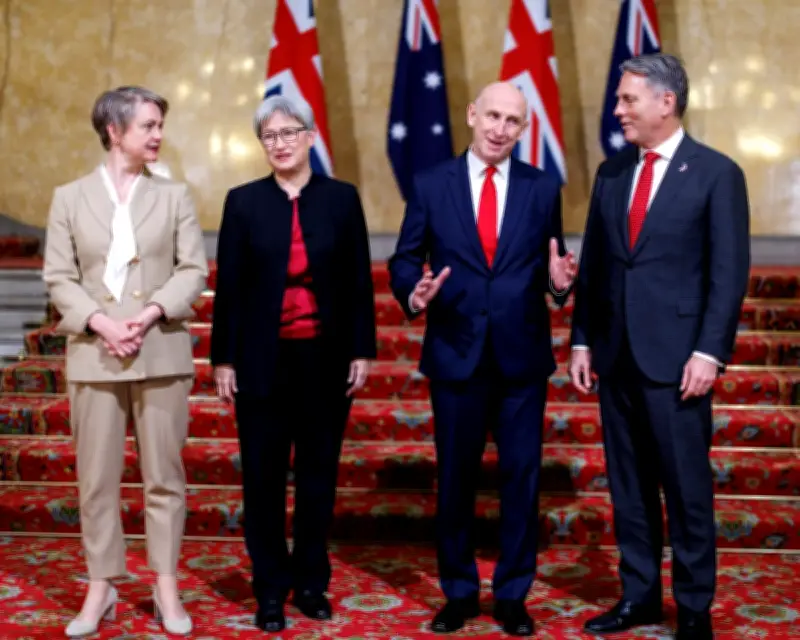
Critics argue that AUKUS has been marred by political posturing from its inception. The agreement, announced in 2021, was hailed as a landmark defence partnership aimed at countering China's influence in the Indo-Pacific. However, Healey's resignation suggests that internal fractures are more severe than publicly acknowledged. Australian Defence Minister Richard Marles and Foreign Minister Penny Wong have been forced to defend the pact amidst growing scrutiny.

Political analysts note that Healey's departure could undermine confidence in the UK's commitment to the alliance. The resignation comes at a critical time when Australia is grappling with defence budget pressures and strategic uncertainty. The opposition has seized on the news, calling for a parliamentary inquiry into the handling of AUKUS.
Reactions from Australian Officials
Richard Marles and Penny Wong have expressed disappointment over Healey's resignation but reaffirmed Australia's commitment to AUKUS. Marles stated that the partnership remains strong and that the UK's political turmoil does not affect the operational aspects of the deal. However, Wong acknowledged the need for greater transparency to restore public trust.
Future of the AUKUS Pact
Experts warn that the resignation could delay key milestones, including the delivery of nuclear submarines to Australia. The UK's internal political strife may hamper its ability to meet commitments, forcing Australia to reconsider its reliance on the pact. Some suggest that Australia should diversify its defence partnerships to mitigate risks.
Healey's resignation also highlights broader issues within the UK's defence establishment, which has faced criticism over budget cuts and strategic missteps. The incident serves as a cautionary tale for Australia, emphasizing the importance of robust, transparent agreements over political theatrics.
As the dust settles, the AUKUS partners will need to address the underlying tensions to ensure the pact's survival. For now, Healey's resignation stands as a stark reminder that even the most ambitious alliances can be undone by political expediency.