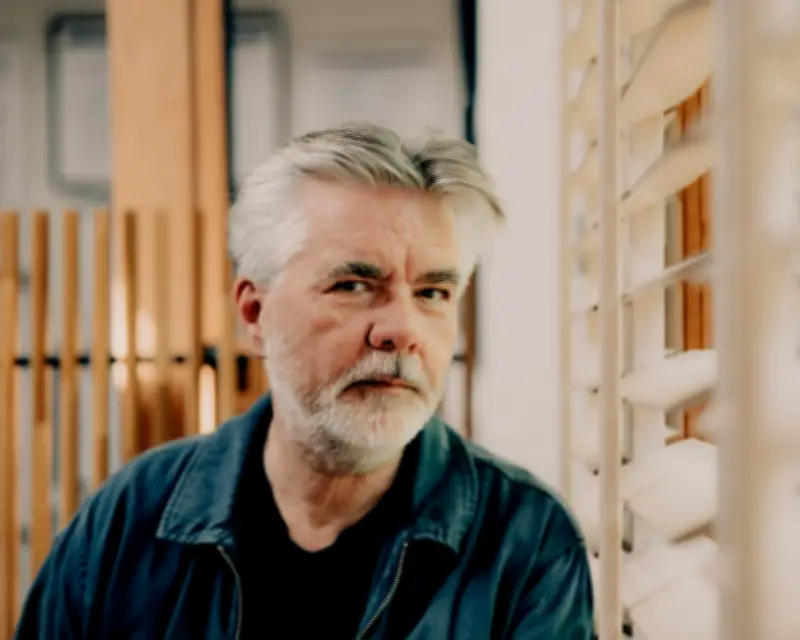
When Mike Bell was 61, he saw a new consultant after eight years of living with a Parkinson's diagnosis. Despite ongoing pains, tingling, tremors, and skin problems, Bell had stopped taking his prescribed medication and his symptoms had not worsened. Further brain scans were arranged—'everything, in every possible position'—after which Bell was 'de-diagnosed'. He still felt unwell with unexplained pains, but he did not have Parkinson's. In that moment, he says, he 'lost his roadmap', his sense of community with others he had met with the same illness, and his work campaigning for better understanding of the condition.
A Diagnosis That Changed Everything
Bell was 53 and a freelance show designer for corporate clients when he was diagnosed. 'I was working long hours, seven days a week, from my shed,' he says. 'All those things we worry about now with working from home were hitting me. The loneliness.' Sitting in the doctor's office after being told he had Parkinson's, Bell felt relief. 'I thought: OK, it's got a name. Therefore, I can take drugs. Therefore, we can control it.'
He developed what he calls his 'Parkinson's filter'—activities that kept him healthy. He embraced creative projects, writing a poem a day, calculating that by the time he had written his 10,000th verse, he would be in his 80s. He wrote a children's novel and meticulously researched musicians' careers, then plotted them, complete with details of releases and session musicians, in the style of a tube map. He joined a community of people with Parkinson's, attended the World Parkinson Congress in Spain, advocated and fundraised with sponsored walks and a parachute jump. His second marriage ended and the freelance work became scarcer, but he focused on keeping going.

The Shock of De-Diagnosis
When he was de-diagnosed last June, Bell's three adult children were relieved—but his immediate response was that he 'felt like an impostor'. His campaigning now seemed fraudulent. The poetry ground to a halt. Bell's medical team have suggested other diagnoses, such as fibromyalgia or chronic fatigue syndrome, but he still does not know for certain what illness he has. In a sense, he says, he lost the thing that was 'driving me to do things and to engage'. He re-examined his life.
Bell's father was a police officer, his mother a nurse. The third of four boys, he grew up with the sense that he was an 'accident'; the feeling this gave him perhaps was not a million miles from feeling like an impostor. He now thinks he always worked long hours to 'prove my worth. It's like: I'm here. This is me.' He finished school at 18, having 'cocked up my A-levels'. He went to work for a music staging company at the film studios in Shepperton, Surrey, near where he lived. David Bowie wandered across the loading dock one day. Bell had a brief stint as a roadie with Simple Minds, working his way home from France. In his 20s, he began to work in corporate production: installations for live events and conferences. Eventually, he began designing them himself. 'I loved organising things, managing the resources, getting things happening … scheduling, spreadsheets, worrying about this, worrying about that.' In a sense, he always liked roadmaps.
A New Path at 62
A year on from his de-diagnosis, alongside the feeling of relief, Bell has had a kind of accidental reset and found himself on a different path: 'It's like living a new life.' But how to navigate it? 'It's been a year getting my head around the de-diagnosis,' he says. 'I'm still dealing with it, adjusting.' Having lost his sense of belonging to the Parkinson's community, he has had to figure out where he fits in. He has made lifestyle changes: he drinks less, eats better, and fasts from 5.30pm. He has met someone new and fallen in love. And he has started to think that, 'at 62, I can start a new career. I can do band merch.' This year, he has supplied his foldout tube maps to the country singers Dierks Bentley, Lainey Wilson, and Cody Johnson to sell as tour merchandise.

'The band maps take me all the way back to the beginning again, when I could pack a truck with flight cases all the way to the hilt,' he says. 'It was an art.' Now, though, it is the data and the research depths that excite him—tracking the intersections of artists' careers, plotting how all the connections fit together. In doing so, he is becoming his own mapmaker, finding a place for himself. In this new role, he tells himself, 'you can re-enter rock'n'roll'.