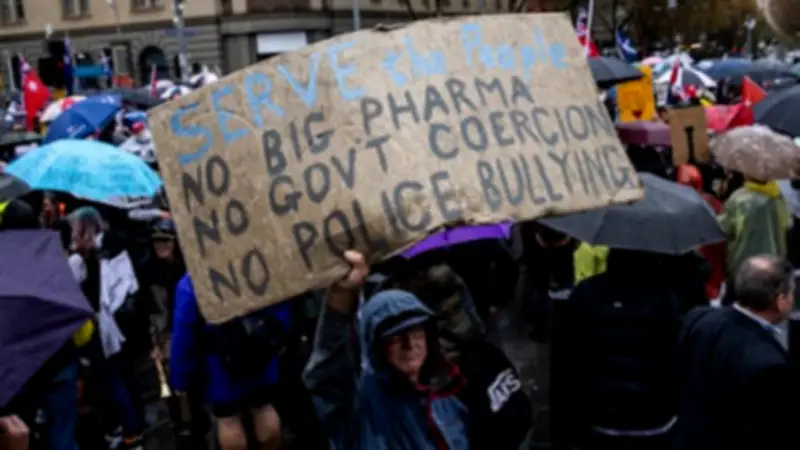
Childhood vaccination rates have slumped globally, and vaccine hesitancy is on the rise. Populist political actors promote distrust of government and scientific institutions, while the disinformation economy erodes consensus on policy facts. Did COVID vaccine mandates—legal limits on where unvaccinated people could go or work—cause this mess? Some US scholars think so, and Australia's COVID inquiry found mandates drove hesitancy and scepticism, linking them to mistrust in government and medical science. However, it is difficult to establish mandates as entirely to blame, given other coercive policies like lockdowns and border closures.
The After-Effects of Vaccine Mandates
My colleagues and I are evaluating the effects of COVID vaccine mandates through the ongoing MandEval project. We have interviewed over 130 senior government and policy officials in Australia, the UK, Europe, and California to understand why decision-makers deemed mandates necessary. Although analysis is unpublished, each jurisdiction had its own reasons. Leaders anticipated backlash, including from those complying with other prevention policies, and feared future distrust of vaccinations. Yet they believed mandates were necessary to protect lives. The policies boosted vaccination rates, but at a cost: childhood vaccination coverage in Australia is now sub-optimal, more parents succumb to misinformation, and adolescent and adult vaccination uptake is even more worrying. However, disgruntled individuals are not driving all these changes; less direct mechanisms also contribute.
Reactance and Polarisation
COVID vaccine mandates have contributed to "reactance," where people push back against limits on freedom. Mandates also worsen political polarisation on vaccination, dividing political "camps" over safety and benefits. This is dangerous because high vaccination rates rely on bipartisanship. Influencers follow financial incentives in the disinformation economy, and foreign actors use bots to fuel debates for destabilisation. Populist politicians capitalize on low trust. Yet these problems also plague countries that largely avoided vaccine mandates.

Distrust in Government
Distrust of vaccines is linked to distrust in government and healthcare institutions. Concerns about safety or efficacy reflect deeper worries about expert systems. COVID vaccine mandates have eroded perceptions of government. My team's research in Western Australia found that people who refused COVID vaccines already viewed government negatively, but mandates made them feel morally punished, leading some who had previously vaccinated to vow never to do so again. In Fremantle, deep distrust caused potential participants to decline involvement in our study or be sparing in disclosures.
What Next?
If vaccine mandates are to be used in future, communities must be engaged differently before the next emergency outbreak. Building trust requires transparent communications about benefits, risks, and uncertainties, as well as accessible programs. Governments should establish citizen panels to comment on proposed policies, question experts, and recommend communications. The reasoning behind mandates must be clearly communicated, including ethical reasoning and public benefit. Finally, accessible and fair compensation schemes for rare vaccine injuries are crucial. Australia's scheme was short-lived and difficult to access, with very few claims paid, according to the COVID inquiry. Without such schemes, disgruntled consumers learn to distrust government motives, threatening vaccination programs beyond the pandemic.
I acknowledge feedback from Chris Blyth, Amy Thomasson, Jane Williams, and Chas Dolphin, and recognize the wider MandEval team's contributions.