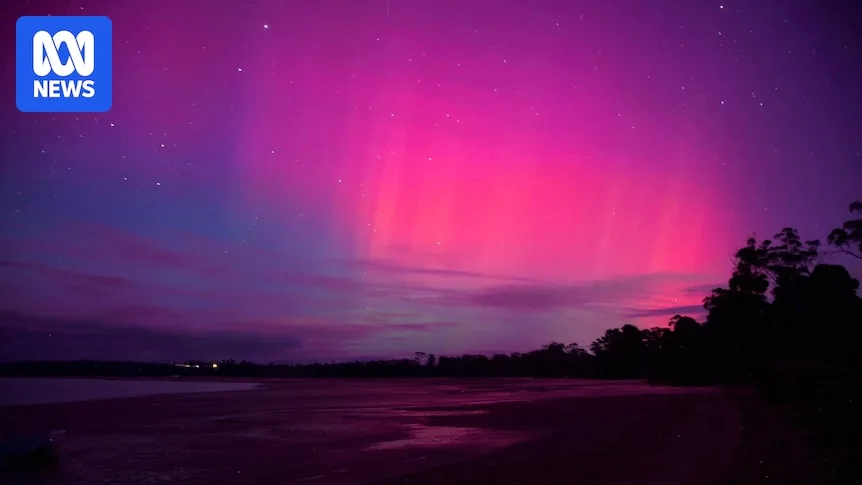
The Bureau of Meteorology (BOM) has confirmed that the southern lights, or aurora australis, should be visible again tonight following a weekend of spectacular displays. The geomagnetic storms responsible for the show are forecast to continue, offering another chance for skywatchers across Australia.
University of Tasmania physics professor Andrew Cole advises looking as soon as it gets dark after sunset, finding an area free from obstructions on the southern horizon and away from city lights. ANU astrophysicist Brad Tucker notes that the aurora have been extreme, with visibility extending as far north as Queensland, which is rare.
The Australian Space Weather Alert System explains that coronal mass ejections from the Sun, consisting of large clouds of plasma and magnetic field, cause geomagnetic storms when they hit Earth. These storms result in natural light displays of bright colours and shapes in the sky.

The BOM reports that the current storm is at a G5 or extreme level globally, the last such event occurring in October 2003. Over Australia, geomagnetic conditions are at a G3 (strong) level. The Sun is approaching the peak of its 11-year solar magnetic activity cycle, increasing the frequency of such events.
For viewing, experts recommend getting away from city lights and using a phone camera with night-vision mode, which can capture more than the naked eye. For DSLR users, a tripod, wide-angle fast lens (10mm-35mm), slow f-stop, and ISO settings of 800-2,500 are advised.