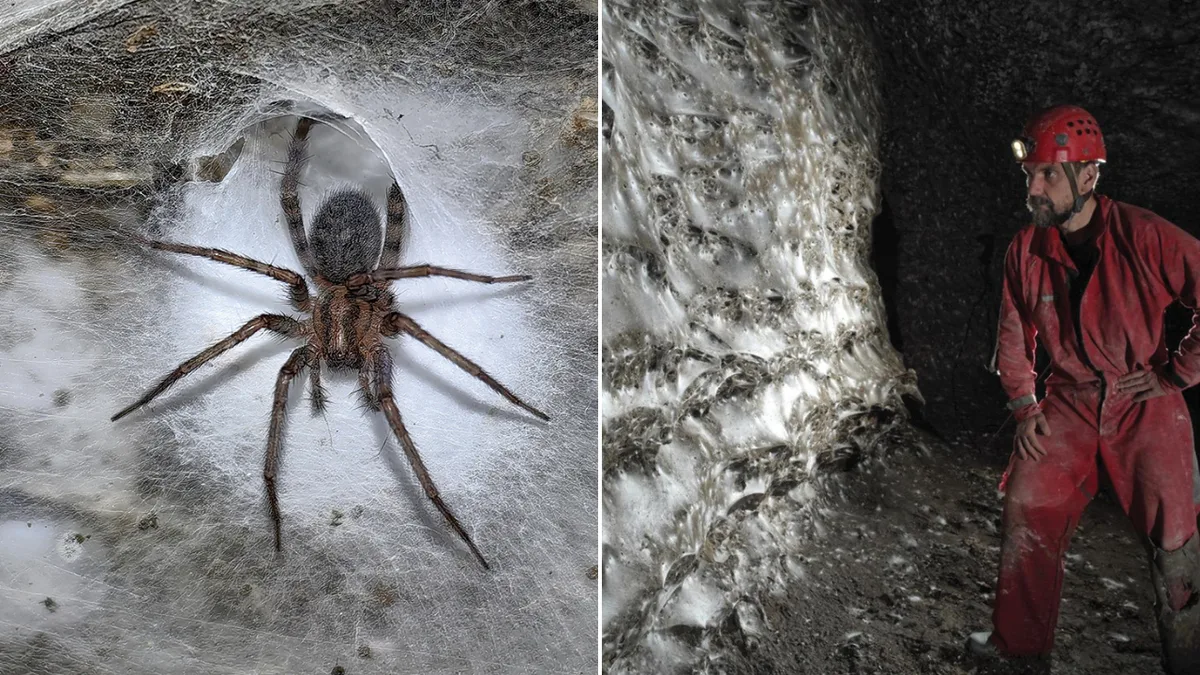
A team of scientists has discovered an 'extraordinary' colony of more than 110,000 spiders in a cave spanning the border of Greece and Albania. The findings, led by biologist István Urák, were published on October 17, detailing the massive web covering over 100 square meters.
The web is primarily built by about 69,000 common barn funnel weavers and 42,000 dwarf weavers (Prinerigone vagans). Typically, funnel weavers prey on dwarf weavers, but researchers believe limited light in the cave may contribute to their peaceful coexistence.
The cave's ecosystem is sustained by a simple food chain: microbial biofilms oxidize abundant sulfur, which is digested by larvae of non-biting midges. These midges then grow and become food for the spider colony.

A third spider species, the shaded orb weaver, was also found in the cave but lives solitarily, not part of the main colony. Urák expressed gratitude and respect for the discovery, noting that the natural world 'still holds countless surprises for us.'