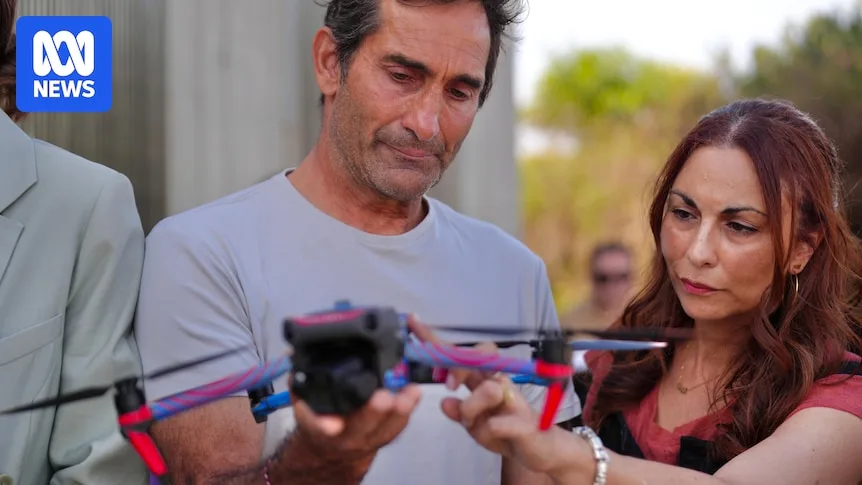
The family of shark attack victim Mercury Psillakis has welcomed a new initiative to train surfers to operate drones for beach surveillance. Mike Psillakis, Mercury's twin brother, said if there had been a 'drone in the sky' on that fatal day, his brother would still be alive.
The training has started in Sydney's Northern Beaches and will later be rolled out to beaches in New South Wales's north and south. By the end of winter, it is expected there will be 125 new drone pilots and an extra 60 drones, emblazoned with a message to Merc, in skies between Newcastle and Wollongong.
Mercury Psillakis, a renowned surfer, died a day before Father's Day in 2025 from catastrophic injuries after being mauled by a great white shark at Long Reef Beach. He was 57 years old. His brother described the incident as 'extraordinary' and appreciated the moves to protect surfers.

The initiative is an expansion of NSW's $30 million Shark Management Program, in partnership with Surfing NSW, and taps into its $650,000 funding package from the Minns government. It complements the work of Surf Life Saving NSW but will fill gaps by operating beyond the end of patrol season, recognizing that clubs run events year-round.
Training will also focus on helping pilots identify high-risk species, with protocols in place for shark sightings, including pausing events for a minimum of 30 minutes. Maria Psillakis, Mercury's widow, said it was an honour that so many people cared about her husband and wanted to uphold his legacy, adding that he would be proud to be responsible for extra safety on beaches.
Minister for Agriculture and Regional NSW Tara Moriarty said the government had embraced the technology as it meant beaches did not have to be closed all day. Mike Psillakis called for an end to shark nets, saying they didn't work, and advocated for AI drone technology from sunrise to sunset, fully automated.