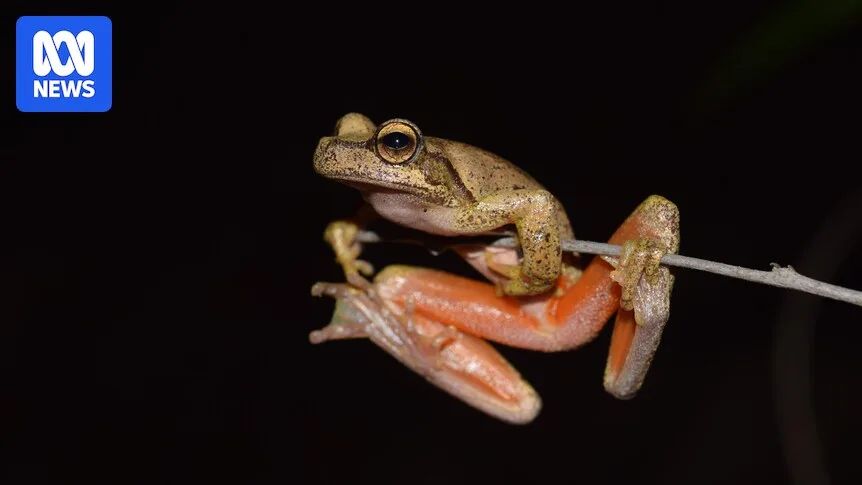
Conservation scientists at the University of Newcastle have successfully bred the endangered Littlejohn's tree frog in captivity for the first time, a breakthrough in efforts to save the species. The tiny brown amphibian, known for its striking orange-patterned inner legs, exists in only three isolated populations in New South Wales: the Watagan Ranges, the Blue Mountains, and the Woronora Plateau near Wollongong.
After three years of attempts, researchers replicated the frog's natural habitat by placing two pairs in outdoor breeding tanks. The cold temperatures and environmental triggers led to each pair producing about 200 eggs, resulting in 90 healthy tadpoles. Conservation biologist Kaya Klop-Toker said they finally 'cracked the code' by providing the frogs with the conditions they needed.
In addition to captive breeding, the team created 40 new ponds to connect two sub-populations living two kilometres apart in the Watagan Ranges. Assistant director Alex Callen explained that these 'aquatic stepping stones' have linked populations that were previously isolated from each other.

However, scientists warn that a proposed renewable energy project threatens these gains. The Hunter Transmission Line Project, a state government initiative, plans to build a 110-kilometre overhead power line from Bayswater power station near Singleton to Olney in the Lower Hunter Valley. The preferred route would cut through known frog habitat, with a switching station proposed on top of breeding ponds.
Dr Klop-Toker urged EnergyCo, the state's energy body, to move the switching station footprint. 'There's no alternative conservation that's better than protecting the habitat that's there,' she said. EnergyCo stated it is committed to working with ecologists to assess and mitigate impacts on sensitive species, but conservationists stress that habitat protection is irreplaceable.
Public submissions on the Environmental Impact Statement for the project close on September 24.