Western Australia has officially abandoned efforts to eradicate the polyphagous shot hole borer, a tiny beetle that has devastated thousands of trees across Perth since its detection in 2021. The decision, made by a national pest control committee last month, comes after a $57 million eradication program funded by state, territory, and commonwealth governments failed to contain the pest.
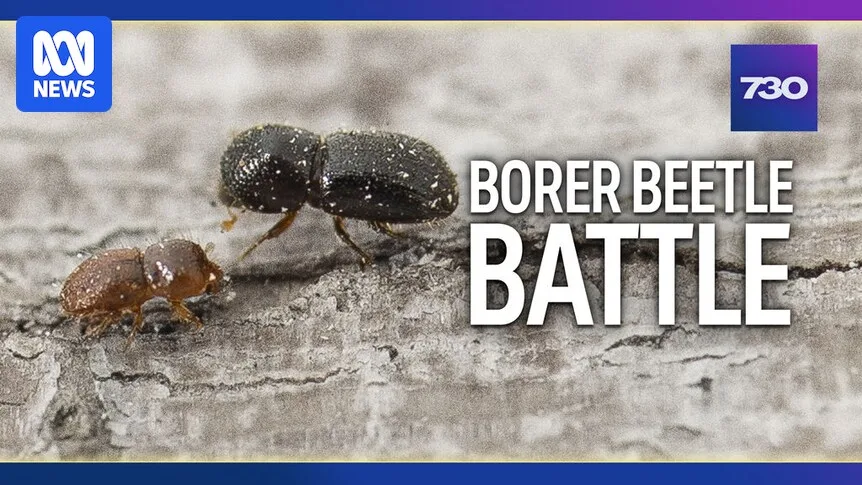
The beetle, about the size of a sesame seed, burrows into trees and cultivates a fungus that kills them. It has already wiped out nearly 5,000 trees in Perth, including Port Jackson figs, Moreton Bay figs, and London plane trees—species critical for shade in cities like Melbourne, Adelaide, Brisbane, and Sydney. Experts warn the beetle could also threaten fruit crops such as mangoes, avocados, apples, and pears, and may spread into native forests.
First detected in 2021 in East Fremantle, the beetle is believed to have arrived via wood packaging on a cargo ship. It has since spread across metropolitan Perth and reached Rottnest Island. The pest spreads through garden waste, mulch, and firewood, as it cannot fly far. No chemical treatment is available to eradicate the beetle, and destroying infested trees has been the only approved method.

Vincent Lanoiselet, chief plant biosecurity officer at WA's Department of Primary Industries and Regional Development, said the eradication program was the largest ever undertaken in the state. However, he noted that the decision to transition to management was based on evidence that eradication was no longer technically feasible. 'We were at the point where the cure was worse than the borer,' he said.
Federal MP Kate Chaney, whose electorate of Curtin has lost more than 3,000 trees, criticized the government's response. She cited delays of several months between identification and treatment, and called for faster research into chemical and other solutions. 'We needed rapid responses and better data sharing,' she said.
Perth already had the lowest urban tree canopy of any Australian capital city before the beetle arrived. Bruce Webber, an invasive species expert at the University of Western Australia, emphasized the economic and environmental stakes. 'South Africa has done a cost-benefit analysis on the beetle's impact, and it's a stark warning for Australia,' he said.