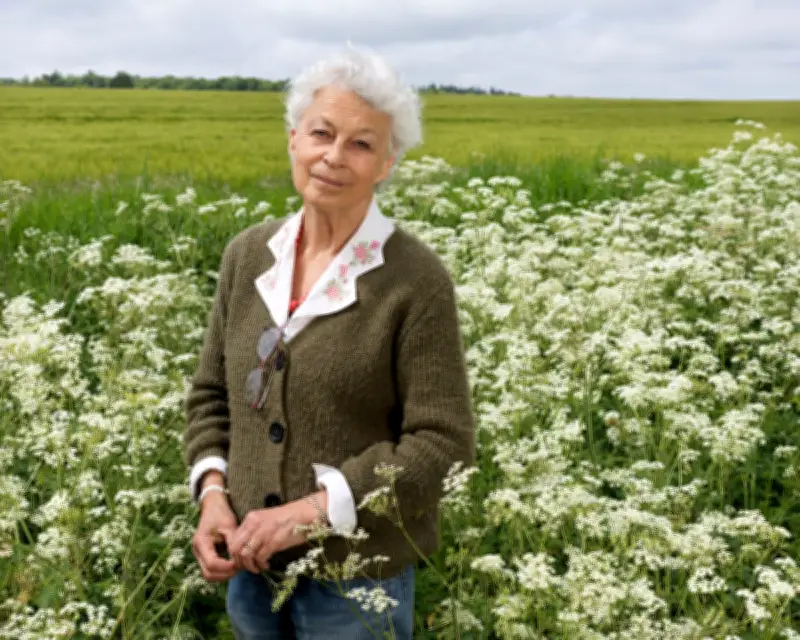
When Sarah Geeson-Brown retired in 2022, she envisioned a future filled with travel alongside her husband, Michael. But six months later, Michael suffered a stroke, then another. After a fall that broke his hip, a third stroke left him a wheelchair user. By the time he left the hospital, Geeson-Brown had become his full-time carer.
Their plans for Interrailing were replaced by a world that now ended at the garden fence. Even the upstairs of their home in Oxfordshire, England, became inaccessible. Geeson-Brown, then 67, found herself endlessly looping the ground floor. 'We both had to deal with a lot of grief,' she says. 'There was lots of saying goodbye to things … Being out and about. And, of course, sharing a bed.'
Her waking hours were governed by a relentless routine: 19 pills a day, hoists, washing, dressing, trying to eat, and medical appointments. Even with professional care workers, the days were unrelenting, and the nights were frequently interrupted.

'The word “care” comes from the old English, caru, which means sorrow, anxiety, grief, trouble,' Geeson-Brown explains. 'So, you know, that’s quite a package.' The loneliest moment was 'going up to bed on my own each night … knowing it was never going to get better.'
Initially, she tried to cheer her husband up. 'Your legs don’t work,' she would say, 'but that doesn’t make you a lesser man.' But she soon realized that the emotional toll was harder to address than the physical demands. She could manage his hygiene and incontinence, but 'the mental side, that was the tough bit.'
Over time, she discovered that 'what helped most was to say, “Yes, this is a crap situation”, and to cry with him. Quite often we would cry, and then we’d laugh.' She learned to 'align with him,' lying beside him to talk at the same height, reminding herself 'that we were still a couple – not a patient and carer.'
Gradually, she noticed that although their world had shrunk, it had also expanded in unexpected ways. 'We had care workers of different nationalities,' she says. 'I learned about Pakistan, Nigeria, South Africa, Namibia … countries we hadn’t visited. It was a privilege to hear about their lives, families, backgrounds. I had this sense that, oh, maybe we are travelling in a sort of vicarious way.'
Sarah and Michael met in Hong Kong in 1988. He was a lawyer, and she had left her publicity job at the National Gallery in London to travel. 'There wasn’t a thunderclap,' she recalls. 'But I liked him and he liked me. We found that we could talk to each other. And that didn’t stop for 38 years.' They married and raised two sons in England.
Geeson-Brown believes that talking about love can 'sound so Hollywood, or trite.' Yet, while caring for her husband, she became intensely observant and attuned to his needs, which made her love feel stronger. Under constant examination, she was 'given the opportunity not to take it for granted, but to see it for what it was.' Their love felt alive, a 'gift' she drew on daily.
Small moments brought immense joy: watching clouds, his hand reaching for hers, cooking his favorite dishes, organizing feasible adventures like lemon meringue pie, singing lessons, and wheelchair walks.
When Michael died in January, 'everything felt a bit unreal.' By March, heavy rains fell, and 'I went into a slump,' says Geeson-Brown, now 70. 'I thought: “You’ve still got life in you, and you’ve got to find meaning in it.”' She decided to help people care for their gardens, finding solace in nature’s rhythms and applying 'the patience and acceptance' she had learned while caring for Michael.
Becoming a carer was the toughest experience of her life, but she discovered 'a duality': appreciation alongside sorrow, gratitude for what she lost, and grief. 'You can choose [how] to look at things,' she says. The small things remain vital: 'Human kindness, raindrops on a window pane, the burst of a robin’s song.'