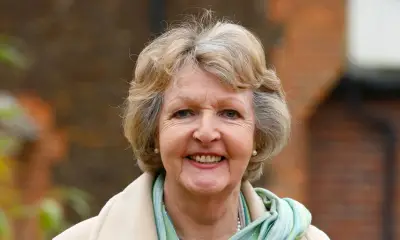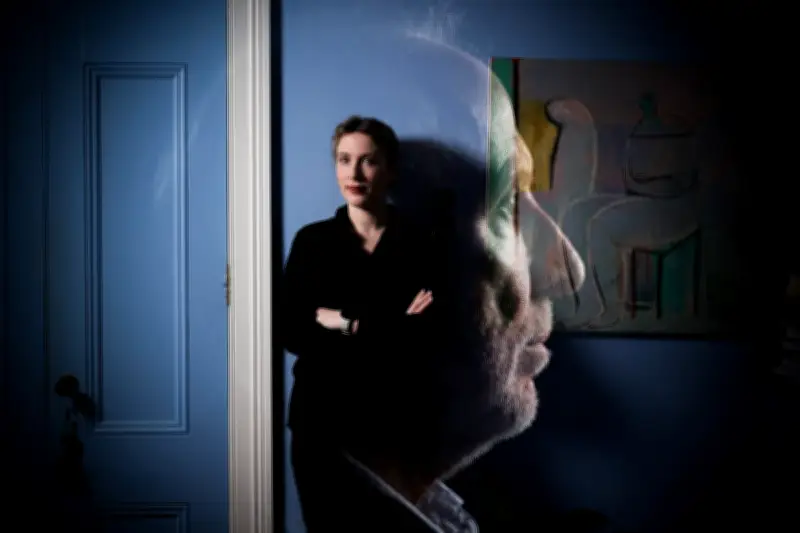
Rachel Ross Menzies, a prominent psychologist and author, has released a new book titled 'Being' that brings together insights from leading psychologists to tackle some of humanity's most profound questions: the meaning of life, free will, and how to navigate existence. The book, published this month, features contributions from experts in clinical psychology, philosophy, and neuroscience, offering a multidisciplinary approach to understanding what it means to be human.
Exploring Stoicism and Modern Psychology
One of the central themes of 'Being' is the ancient philosophy of stoicism and its relevance to modern psychological practice. Menzies, who has written extensively on existential psychology, argues that stoic principles can help individuals cope with anxiety, uncertainty, and the inevitability of death. The book includes chapters on how to apply stoic techniques in daily life, such as focusing on what one can control and accepting what cannot be changed.
According to Menzies, 'Stoicism is not about suppressing emotions but about understanding them and choosing how to respond. It's a tool for resilience.' The book draws on the works of Marcus Aurelius and Epictetus, reinterpreted through a contemporary psychological lens.

The Debate on Free Will
A significant portion of 'Being' is dedicated to the contentious topic of free will. Menzies and her contributors present evidence from neuroscience and psychology that challenges the notion of free will as traditionally understood. They argue that while our choices may be influenced by genetics, environment, and unconscious processes, we still possess a degree of agency that is essential for mental health and ethical responsibility.
Dr. Sarah Thompson, a clinical psychologist featured in the book, states: 'The illusion of free will is necessary for social cohesion and personal accountability. Even if our decisions are determined, believing in free will leads to better outcomes.' The book explores the implications of this for therapy, law, and everyday life.
Finding Meaning in a Chaotic World
Another key focus of 'Being' is the search for meaning in an increasingly complex and chaotic world. Menzies draws on existential psychology, particularly the work of Viktor Frankl, to argue that meaning can be found even in suffering. The book offers practical exercises for readers to identify their values and purpose, emphasizing that meaning is not a fixed destination but an ongoing process.
'Meaning is not something we find; it's something we create,' Menzies writes. 'It's about how we choose to engage with the world, even when faced with adversity.' The book includes case studies from therapy sessions where clients have successfully reframed their experiences to find deeper significance.
Practical Applications for Mental Health
Beyond philosophical discussions, 'Being' provides actionable advice for improving mental health. Chapters on mindfulness, cognitive reframing, and acceptance and commitment therapy (ACT) offer readers tools to manage stress, depression, and anxiety. Menzies emphasizes that the book is not just for academics but for anyone seeking a richer, more fulfilling life.
Early reviews have praised 'Being' for its accessibility and depth. The book has already climbed bestseller lists in Australia and the UK, with readers appreciating its blend of scientific rigor and human warmth. A reader from Sydney commented: 'This book made me think deeply about my own life. It's both challenging and comforting.'
Impact on the Field of Psychology
'Being' has sparked discussions among psychologists about the need to integrate philosophical questions into clinical practice. Menzies argues that modern psychology has become too focused on symptom reduction and has neglected the existential concerns that underlie many mental health issues. The book calls for a more holistic approach that addresses questions of purpose, mortality, and freedom.
Professor John Harris, a psychologist at the University of Melbourne, says: 'Menzies has done a great service by bringing these big questions back into the conversation. This book will likely influence how therapists train and how they approach their clients.' The book also includes contributions from international experts, giving it a global perspective.

With 'Being', Rachel Ross Menzies has created a work that is both intellectually stimulating and practically useful. It invites readers to reflect on their own lives while offering concrete strategies for living more authentically. As Menzies puts it: 'The goal is not to have all the answers but to be comfortable with the questions.'