The Definitive Ranking of George Orwell's Novels
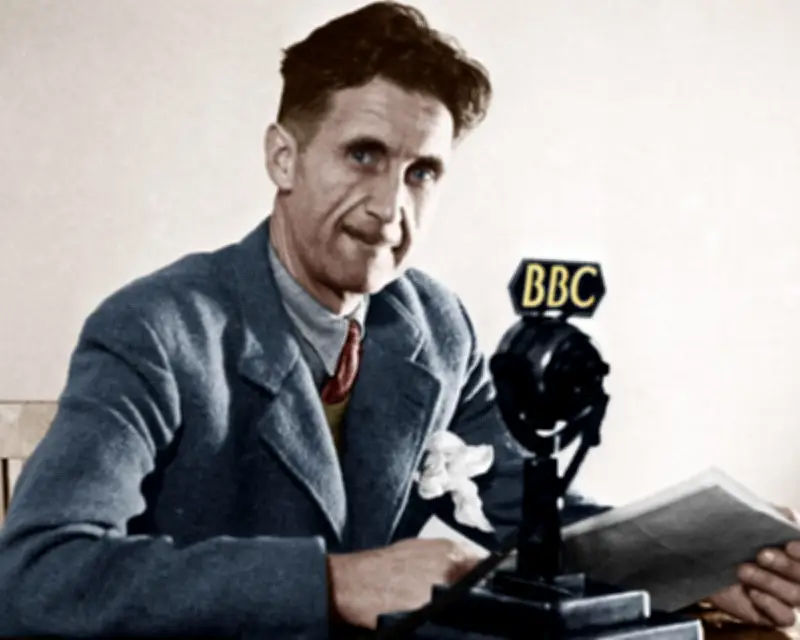
George Orwell, born Eric Arthur Blair, remains one of the most influential writers of the 20th century. His works, spanning from his early experiences in Burma to his dystopian masterpiece Nineteen Eighty-Four, have shaped political thought and literature. This ranking, compiled by literary critics and scholars, places his novels in order of their literary achievement and cultural impact.
10. Keep the Aspidistra Flying (1936)
Orwell's semi-autobiographical novel about a struggling bookseller and poet, Gordon Comstock, who rebels against the 'money-god' of commercialism. While it captures the grimness of 1930s London, critics often find it too bleak and less polished than his later works. According to literary scholar John Rodden, 'It is a necessary stepping stone in Orwell's development, but not his finest hour.'
9. A Clergyman's Daughter (1935)
This experimental novel follows Dorothy Hare, a clergyman's daughter who suffers from amnesia and experiences life among the poor. It is notable for its use of stream-of-consciousness and collage techniques, but many feel it lacks cohesion. The novel sold fewer than 1,000 copies in its first year, reflecting its mixed reception.

8. Coming Up for Air (1939)
A nostalgic look at pre-war England through the eyes of insurance salesman George Bowling. The novel contrasts the idyllic past with the encroaching modern world and looming war. It is often praised for its vivid descriptions of rural life but is considered less politically incisive than Orwell's later works.
7. Burmese Days (1934)
Orwell's first novel, based on his time as a police officer in Burma, is a scathing critique of British imperialism. It exposes the racism and hypocrisy of colonial rule. The novel was banned in Burma for decades. Despite its powerful themes, some critics argue it is too reliant on stereotypes. Nonetheless, it remains a key text for understanding Orwell's political awakening.
6. The Road to Wigan Pier (1937)
Though technically a work of non-fiction, this book is often included in discussions of Orwell's oeuvre. It documents the living conditions of the working class in northern England and includes a long autobiographical essay. It is praised for its empathy and reportage, though some find the second half's political musings dated.
5. Homage to Catalonia (1938)
Another non-fiction work, this account of Orwell's experiences in the Spanish Civil War is considered a masterpiece of war reporting. It details the infighting among leftist factions and the rise of Stalinism. According to historian Paul Preston, 'It is the most honest and moving account of the Spanish Civil War ever written.' The book sold poorly initially but has since become a classic.
4. Down and Out in Paris and London (1933)
Orwell's first published book, a memoir of his time living in poverty. It combines vivid storytelling with social commentary. The book was a modest success, selling around 3,000 copies in its first year. It established Orwell's voice as a chronicler of the underclass.
3. Animal Farm (1945)
A satirical allegory of the Russian Revolution and Stalinist era, this novella is one of the most widely read books in the world. It has sold over 40 million copies and is taught in schools globally. Its simplicity and power make it a timeless warning against totalitarianism. Orwell wrote it in just a few months, but it was rejected by several publishers for its anti-Soviet stance.
2. Nineteen Eighty-Four (1949)
Orwell's dystopian masterpiece has defined our understanding of surveillance, censorship, and political manipulation. Phrases like 'Big Brother', 'doublethink', and 'thought police' have entered the lexicon. The novel has sold over 30 million copies and continues to resonate in the age of data collection and fake news. Orwell wrote it while dying of tuberculosis, finishing it just months before his death.

1. Essays (various)
While not a single novel, Orwell's essays are often considered his greatest achievement. Works like 'Politics and the English Language', 'Shooting an Elephant', and 'Reflections on Gandhi' showcase his clarity, wit, and moral seriousness. Critic Christopher Hitchens called him 'the finest essayist of the 20th century.' His essays continue to be studied for their style and insight.
This ranking reflects the consensus among literary critics, but Orwell's legacy is ultimately that of a writer who used his craft to speak truth to power. As he wrote in 'Why I Write', 'The opinion that art should have nothing to do with politics is itself a political attitude.'