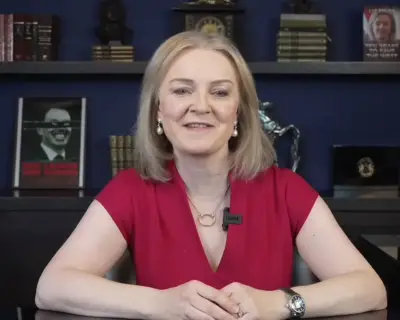
Helene von Bismarck's new book, 'Fantastic Kingdom: An Outsider's Guide to British Politics,' provides a unique lens through which to view the often baffling world of UK governance. Published on June 23, 2026, the work combines personal memoir with sharp political analysis, drawing on the author's experience as a German-born historian who has lived and worked in Britain for decades.
A Fresh Perspective on British Institutions
Von Bismarck, a descendant of the famous Prussian statesman Otto von Bismarck, uses her dual identity to highlight the peculiarities of British political culture. She argues that many aspects of the system, from the unelected House of Lords to the arcane rules of parliamentary procedure, appear absurd to outsiders but are cherished as traditions by insiders. The book dissects key events such as Brexit, the COVID-19 pandemic response, and the recent political upheavals under Conservative and Labour governments, offering insights that might escape native commentators.
Memoir Meets Political Analysis
The narrative is interwoven with von Bismarck's personal journey, including her arrival in the UK as a student, her academic career at Cambridge, and her eventual role as a political commentator. She recounts attending Prime Minister's Questions for the first time, describing it as 'a cross between a pantomime and a gladiatorial contest.' The book also features interviews with prominent figures, including former Prime Minister Theresa May, who reflects on the challenges of leading a divided nation. According to von Bismarck, 'The British political system is a masterpiece of improvisation, but it is also a relic of a bygone era.'

Critique of Westminster's Culture
One of the book's central themes is the insularity of Westminster. Von Bismarck contrasts the professionalisation of politics in other European countries with the UK's reliance on generalists and 'gentleman amateurs.' She notes that only 7% of MPs have a background in science or engineering, compared to 30% in Germany, arguing that this hampers effective policy-making on issues like climate change and technology. The author also criticises the adversarial nature of the House of Commons, which she claims encourages short-termism and partisan point-scoring over long-term solutions.
Brexit and the British Identity
A significant portion of the book is dedicated to Brexit, which von Bismarck describes as 'a trauma that exposed the fault lines in British society.' She argues that the Leave campaign's victory was not just about Europe but about a deeper crisis of identity and trust in institutions. The book provides a detailed analysis of the referendum aftermath, including the chaos of the May government and the eventual departure under Boris Johnson. Von Bismarck writes, 'Brexit was not an end but a beginning—a painful reckoning with Britain's place in the world.'
Reception and Relevance
'Fantastic Kingdom' has been praised for its accessibility and wit, with critics noting that it serves as both a primer for foreigners and a mirror for Britons. However, some have questioned whether von Bismarck's outsider status gives her a truly objective view, or if she is too embedded in the elite circles she critiques. The book has sparked debate on social media, with #FantasticKingdom trending on X (formerly Twitter) for several hours after its release. According to a review in The Times, 'Von Bismarck's book is a timely reminder that sometimes the best view of a landscape is from the outside.'
Conclusion: A Valuable Contribution
Overall, 'Fantastic Kingdom' is a compelling read that offers a nuanced understanding of British politics. It does not provide easy answers but encourages readers to question assumptions and consider alternative perspectives. For anyone trying to make sense of the UK's political maze, von Bismarck's guide is an invaluable companion.