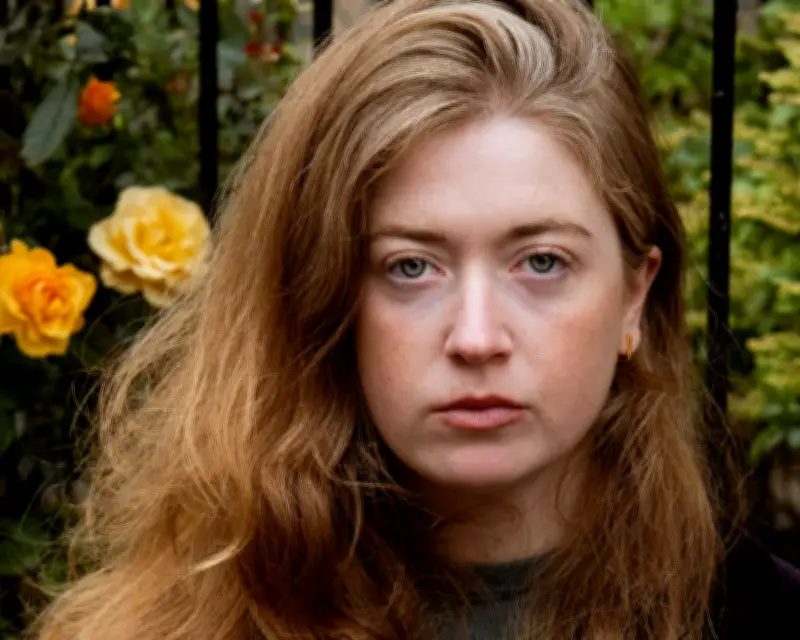
Fiona Mozley, the historian and novelist, once acknowledged that the city of York profoundly shaped both her careers. In a 2018 Guardian piece, she noted that growing up in a place steeped in time can create a conflict between “the desire to live in the past and the need to extract oneself from it.” Her latest novel, Awake Awake, follows her Booker-shortlisted Elmet (2017) and Hot Stew (2021), delving into two intertwined types of memory: the personal and the historical. They are not at odds, but they feed on each other in a complex, entangled relationship.
Narrator Mary Mooney and Her Unreliable Memories
The narrator, Mary Mooney—also a novelist from York whose first book is shortlisted for a major prize—recounts her mental illness. Or she seems to. She begins in childhood, introducing her parents and their friends, religious academics in York; her home in Cathedral Close; school and her school friends, with whom she remains in contact. Life is a round of family occasions, church events, and church politics, spiced with adventure in the countryside and mischief in the classroom. Detail is piled upon detail with photographic clarity, from her father’s “large, pointed nose and grey eyes that looked greener than usual when he was outside in the vegetable patch” to the fall of the Twin Towers, which she recalls seeing “on a television in the school staff room … looking through the door from the outside and glimpsing it on the tiny screen.”
False Memories and Hitchcockian Uncertainty
But though persistent, some of her later memories—especially those tied to her literary success—are false. Some people she remembers are, according to friends, family, doctor, and therapist, unreal. She has never met them. They are “wraiths,” she concludes, “who came to me with news. Recollections of their own fabulous tales.” Hitchcockian uncertainty pervades the narrative from the moment we understand this.

Mary admits she is the most unreliable of narrators. She is determined to be honest and hastens to clarify her confusion. She is on anti-psychotic medication. Yet we sense the artfulness of the novelist in her narrative. She holds back, especially regarding the one detail we want to know: who were the mysterious men she believes she met at a literary dinner? What were they trying to tell her about her Nobel prize-winning Jewish grandfather and his obscure but pivotal role in ending World War II? What is real and what is not? What is the difference between telling stories and “telling stories”?
Blurring Lines Between Reality and Fiction
Soon our own memories begin to seem unreliable. Has a minor character appeared before without our noticing? Or are they a kind of unsignalled prolepsis, a flicker of the future? Perhaps they are simply the product of Mary’s illness, the disarray of the time stream following a psychotic break.
Two novelists are at work here, and the artfulness persists until the end. Even then, while Mozley sketches a conclusion, assurances are not offered. Her teasing, consciously unstable play of fictional autobiography against fictitious autofiction flips between everyday language and the flattened delivery used to describe the aggressively misogynist and racist denizens of the “false” memories. If we did not recognise the settings, we would think them pure Lynchian invention.
Memory, History, and the Nature of Reality
“We dwell deep within our memories,” Mozley has Mary conclude. “They are in us and we are within them.” Even now, remembering her younger self watching the towers fall—an event mythologised even as it happened—she is “no longer clear whether this memory relates to reality or has been constructed.” History and memory converge. Similar processes work on both. In the age of conspiracy theory and made-up news, fiction is never far behind. This understanding constantly undermines her attempts to build a “teleology” of the more corrosive events of her existence.

Her father, having fallen out with the dean of the minster after a superficial disagreement about a memorial service, has his own awakening and leaves the church for gnosticism. In a moment, the material world slips away from him; he glimpses beneath what Mary describes as “the thin film of perception we call reality.” Whoever we are, whatever our memories, this seems the best we can expect.
A Clarion Call and Philosophical Engagement
Awake Awake is, on one hand, a clarion call—a clear-eyed view of contemporary moral and political failure in the UK—and on the other, an assembly of engrossing philosophical and metaphysical engagements with the nature of memory. Its barely resolved uncertainties make it a fascinating read, but in the end you are not sure it was meant to be quite so strange.
Awake Awake by Fiona Mozley is published by John Murray (£20).