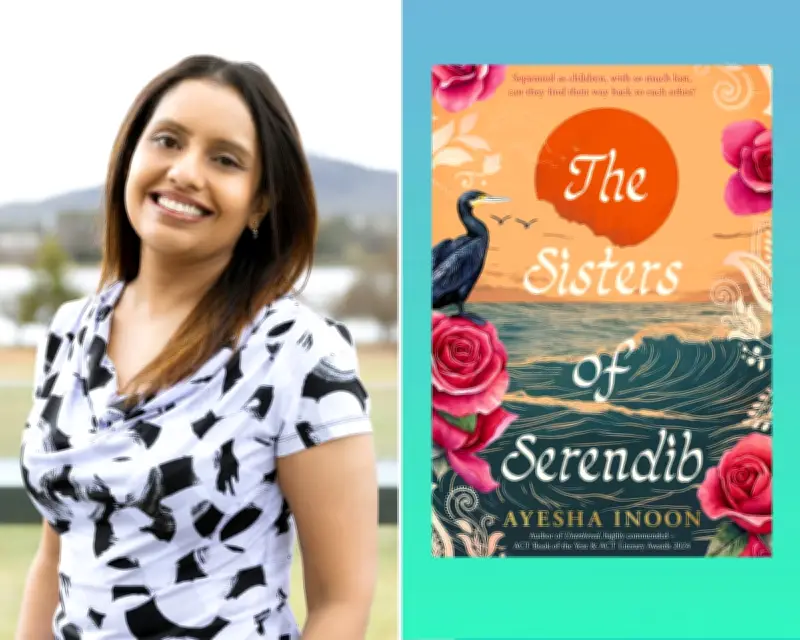
The second novel from Sri Lankan Australian writer Ayesha Inoon, The Sisters of Serendib, begins on a boat in the open ocean. After a Tamil militant organisation orders seven-year-old Janu and her family to leave their home in Jaffna, Sri Lanka's Northern Province capital, they flee across the Indian Ocean to Australia, hoping for a safer life. To Janu, the central character, the journey seems endless.
When their mother dies on the boat, Janu and her two younger sisters are separated, each informally adopted by different adults aboard. While the Sri Lankan civil war triggers the plot, the novel is set mostly in Australia and focuses on the personal lives of Janu and her sisters, as well as the wider Sri Lankan community there.
Three Sisters, Three Paths
Maryam, the youngest, has always known she was adopted, “chosen” and loved. “Too little to know what she had lost and what she had gained,” as a baby she is “the luckiest of the three.” But as an adult, she struggles in a controlling marriage and finds it hard to express herself.

Samar, the middle child, believes she is the biological daughter of Huda, the young mother who adopted her. Though Huda speaks Tamil with her, teaches her the right spices, and dresses her in Sri Lankan fashion, Samar often feels like the black sheep. Still, she knows she is loved.
Janu, the eldest, is eight when she arrives in Australia—old enough to remember her former life and family. She is adopted by a man with no family, no children, and a different religious background. At his hands, Janu endures 18 years of sexual abuse.
Finding Strength and Reunion
Told through alternating perspectives of Janu, Samar, Maryam, and Huda, the story explores what happens after Janu finds a way to freedom. As their lives unfold, the sisters channel pain into unique strengths and eventually find their way back to one another. Maryam has a gift for words; Samar begins dancing, “the way she let life express itself through her.” But Janu has something more—she can see the past and flashes of the future, knowing what people's lives will become.
Drawn to the south coast of New South Wales, Janu sets up a seaside shop called “Serendib,” after the ancient Persian name for Sri Lanka. There, she hopes people will come to find love and healing, and perhaps she might find her sisters.
A Focus on Hope Over Darkness
Though some themes are very dark, the finer points are rarely detailed. “Where there was darkness, [Janu] also saw light … she tried to balance those, to always give hope,” Inoon writes. The book follows this path, making for an easily digestible and often uplifting story, but it also leaves some confronting scenes underexplored. Extreme and violent moments—including child sexual assault, domestic violence, and war trauma—are glossed over to make way for saccharine descriptions of Janu's beachside shop and unfolding romance, somewhat undermining their emotional significance. This isn't the book for readers seeking in-depth engagement with politics or history; The Sisters of Serendib is about finding hope, not about the past.
Community and Connection
The characters are many and varied, and as Janu and her sisters are drawn together, we see how gender and culture shape their experiences of migration, family, and belonging. Although men loom large—some violent, some controlling, some loving—the focus is on three women carving out lives in the spaces available to them and finding safety in each other's arms. Inoon is at her best when exploring social ties of obligation, culture, and power, and how they bind people together and tear them apart.
While the novel's treatment of suffering can feel glib, its optimism is sincere and often moving. The Sisters of Serendib may not satisfy readers looking for a nuanced exploration of war or trauma, but it succeeds as a compassionate story of community and the bloom of new life.