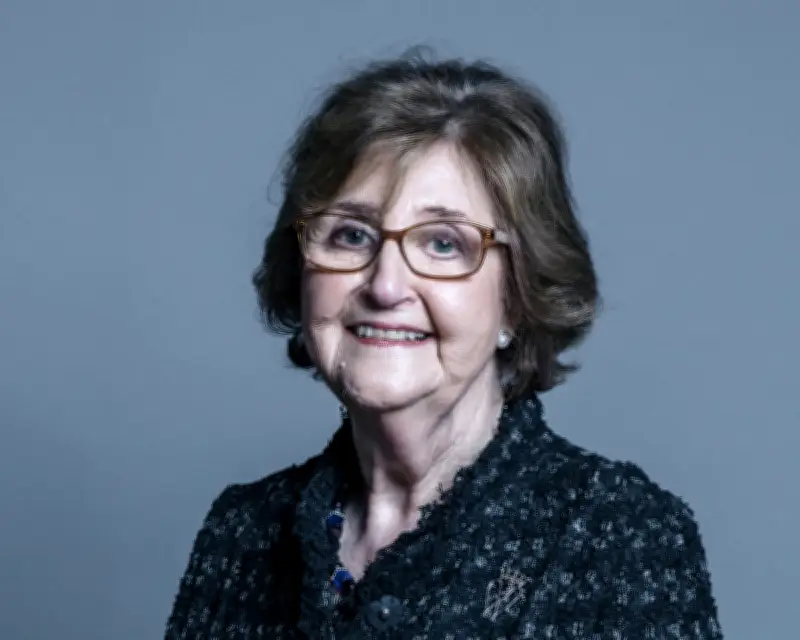
Meta Ramsay, the spy who perhaps should have been appointed the first woman to lead the Secret Intelligence Service (MI6), has died at the age of 89. She described herself in later years as an “international affairs consultant,” while her former career was summarised in Who’s Who as membership of HM Diplomatic Service. In reality, Ramsay was the most high-ranking woman in MI6 upon her retirement in 1991, yet it would take more than three decades for the first female “C” to be appointed, with Blaise Metreweli achieving that distinction only last year.
A Career Marked by Misogyny
Ramsay’s 22 years as an intelligence officer coincided with a period of profound misogyny in MI6 appointments. “The most serious problem was the fact that I was a woman,” she said in a rare interview. She became one of only two women to rise to a senior rank during her operational career. She was angered that women, despite being widely deployed as agents in World War II, were often downgraded to clerical roles in the latter half of the 20th century, becoming the forgotten women of British intelligence.
The Moscow Watch and the Gordievsky Escape
Ramsay was assigned to the Stockholm station in 1970, three years after being recruited, and later ran the Helsinki station from 1981 to 1985. Both posts were significant for what was known as the “Moscow watch.” The only operation she ever acknowledged was the successful exfiltration of double agent Oleg Gordievsky, a former KGB colonel, through Helsinki in 1985. He had been betrayed by CIA traitor Aldrich Ames. Ramsay later opposed Gordievsky’s participation in a 1990 BBC Panorama interview, believing the security service should remain secret and have no contact with the press.

Early Life and Education
Born Margaret in Langside, Glasgow, she was an only child. Her father, Alexander Ramsay, was an engineering pattern-maker, and her mother, Sheila, was the daughter of a Jewish refugee from Ukraine. She attended Battlefield primary school and Hutchesons’ girls’ grammar school before studying at Glasgow University. There, she was part of a “golden generation” that included John Smith, Donald Dewar, and Menzies Campbell. In 1958, she became the first woman president of the Students’ Representative Council and later the first female president of the Scottish Union of Students.
International Work and MI6 Recruitment
From 1960, she worked for three years in the co-ordinating secretariat of students’ unions in Leiden, Netherlands, countering communist influence. She then managed the fund for International Student Co-operation for four years. It was during these roles that she likely attracted the attention of MI6, which she formally joined in 1969. She also graduated from the Institute of International Studies in Geneva.
Later Career and Politics
After field service, she worked at MI6 headquarters from 1987 to 1991 as a Foreign Office counsellor, heading the counteraction department. She later described having “blood on her hands” over the first Gulf War, believing the US pulled out too soon. She supported the 2003 Iraq war. After leaving MI6, she worked in hostage rescue for Control Risks consultancy until John Smith appointed her as his foreign policy adviser. After Smith’s death, she became an adviser to Robin Cook. She entered the House of Lords in 1996 on Tony Blair’s recommendation and served as a government whip and frontbench speaker until 2001. Her proudest achievement was co-chairing the constitutional convention that established the Scottish Parliament.
Committee Work and Jewish Affairs
Ramsay served on the intelligence and security committee and the joint committee on national security strategy. She was involved in international political and security organisations and received several honorary degrees. She spoke out against antisemitism, which she said was “creeping out of its hiding place again.”

Personal Life and Legacy
Ramsay was known for being professionally uncompromising, smart, and great company. She often wore amethyst silk jackets with matching nail polish, which she would drum on the table to make her point. Like many of her generation in intelligence, she never married, as marriage would have meant leaving the service until 1973. She once commented that it would be difficult to explain broken fingernails from “things that you do with machinery or guns.” She considered being an educational psychologist and described the job of an intelligence agent as “tricky,” like being an actor and a cross between a priest and psychiatrist. She saw herself as a public servant “just doing the best for your country” and wanted to achieve something positive for democratic socialism.