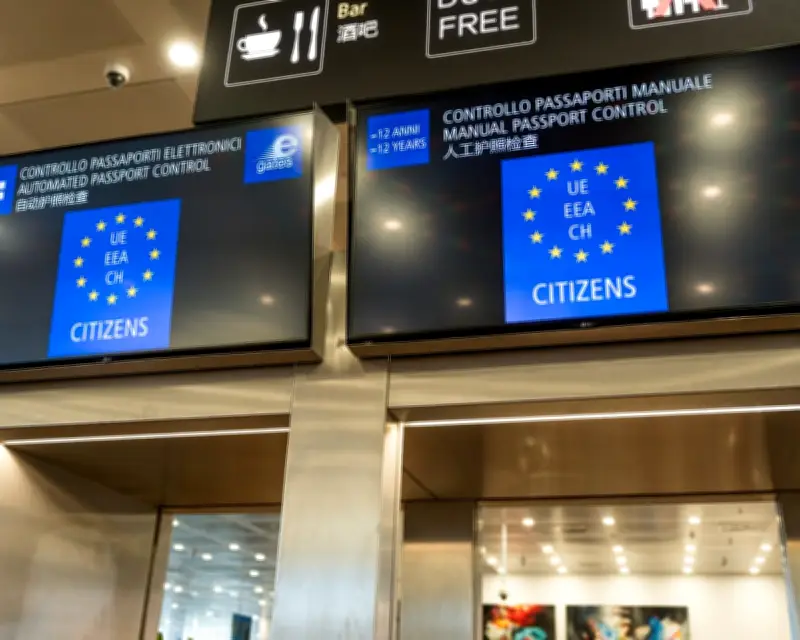
Rome's main airports have threatened to suspend the rollout of the European Union's new biometric passport system, warning that it could cause severe disruptions during the peak summer travel season. The Entry/Exit System (EES), which requires non-EU travellers to register fingerprints and facial scans upon entry, is set to be implemented across the bloc later this year. However, airport operators in Rome say the system is not ready and could lead to chaos at terminals.
Operators Raise Alarm Over Readiness
In a letter to Italy's interior ministry, Aeroporti di Roma, which manages Fiumicino and Ciampino airports, stated that the EES infrastructure is incomplete and untested for high passenger volumes. They warned that forcing the system into operation this summer would result in hours-long queues, missed flights, and potential safety hazards. The airports handle over 40 million passengers annually, with summer traffic peaking at 150,000 travellers per day.
According to the letter, the Italian government has not provided sufficient funding or technical support for the necessary equipment. Airport officials estimate that implementing EES would require at least 200 additional kiosks and 300 staff, none of which are currently in place. "We cannot risk turning Rome's airports into a bottleneck for European travel," said Marco Troncone, CEO of Aeroporti di Roma. "The system is not ready, and we will suspend its use if it threatens to paralyse operations."

EU Mandate vs Local Reality
The EES is an EU-wide initiative aimed at enhancing border security and tracking overstays. It replaces manual passport stamping with automated checks, but its rollout has faced delays due to technical and logistical challenges. The European Commission has set a deadline of November 2025 for all member states to implement the system, but Italy has yet to finalise its deployment plan.
Rome's airports are not alone in their concerns. Similar warnings have been issued by airports in Paris, Madrid, and Amsterdam, where trials revealed significant processing delays. A study by the Airports Council International found that EES could increase border processing times by up to 300% during peak hours, potentially causing a domino effect of delays across the continent.
Impact on Summer Travel
If Rome airports follow through on their threat, it could create a two-tier system where some ports of entry use EES while others revert to manual checks. This would confuse travellers and undermine the system's purpose. The Italian government is under pressure to find a solution, with tourism officials warning that any disruption could deter visitors. Italy's tourism sector contributes over 13% to GDP, and summer months account for half of annual arrivals.
"The situation is unsustainable," said a spokesperson for the Italian Association of Travel Agents. "We are already seeing a surge in bookings, and any additional delays at airports will damage Italy's reputation as a travel destination." The association urged the government to delay the EES rollout until all airports are adequately prepared.
Next Steps
The interior ministry has acknowledged the concerns and is in talks with airport operators and EU officials. A decision on whether to proceed with the summer implementation is expected within weeks. Meanwhile, Aeroporti di Roma has stated it will only comply with the EES mandate once the system is fully operational and tested under real-world conditions.
"We are not opposing the system in principle, but we refuse to be a guinea pig for a flawed rollout," Troncone added. "Our priority is the safety and convenience of passengers, and we will act accordingly."