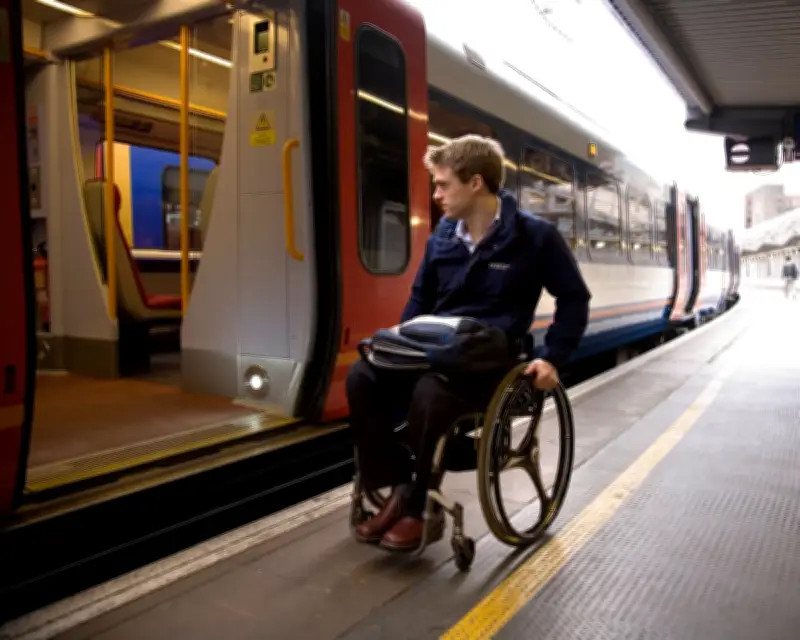
A new report has revealed that making public transport fully accessible could add £24 billion a year to the UK economy. The study, conducted by the transport consultancy Steer and commissioned by the transport accessibility charity Transport for All, highlights the significant economic benefits of removing barriers for disabled people and others who face difficulties using public transport.
Economic Impact of Inaccessible Transport
The report estimates that the current lack of accessibility costs the UK economy £24 billion annually in lost productivity, reduced employment opportunities, and additional spending on alternative transport. According to the research, disabled people are 28% less likely to use public transport than non-disabled people, and one in five disabled people say they have turned down a job because of transport difficulties.
Caroline Stickland, chief executive of Transport for All, said: “This report proves what disabled people have known for years – that inaccessible transport is not just a social injustice, it’s a huge drain on the economy. Every time a disabled person can’t get on a bus or train, the economy loses out.”

Barriers to Access
The report identifies several key barriers, including insufficient step-free access at stations, lack of audio and visual announcements, poorly designed platforms, and inadequate staff training. It notes that only 20% of train stations in Great Britain have step-free access, and many buses still lack ramps or priority seating.
Disabled people also face challenges with information: 40% of disabled passengers report difficulty understanding travel information, and 30% say they have missed a journey because of poor communication.
Recommendations for Change
To unlock the economic potential, the report recommends a national accessibility strategy backed by £5 billion in investment over five years. Specific measures include retrofitting stations with lifts and tactile paving, mandating audio-visual announcements on all public transport, and ensuring all new vehicles are fully accessible.
The report also calls for a legal duty on transport operators to report on accessibility improvements, and for the creation of a dedicated accessibility regulator. Stickland added: “We need a government that is serious about inclusion and willing to invest. The £24 billion figure shows that accessibility is not a cost – it’s an investment that pays for itself many times over.”
Government Response
A Department for Transport spokesperson said: “We are committed to making public transport accessible for everyone. We have already invested billions in improving stations and trains, and we will consider the recommendations of this report carefully. We want to build a transport system that works for all passengers.”
The report comes as the government faces increasing pressure to address the cost-of-living crisis and boost economic growth. Campaigners argue that improving transport accessibility could help achieve both goals by enabling more people to work, access services, and participate fully in society.