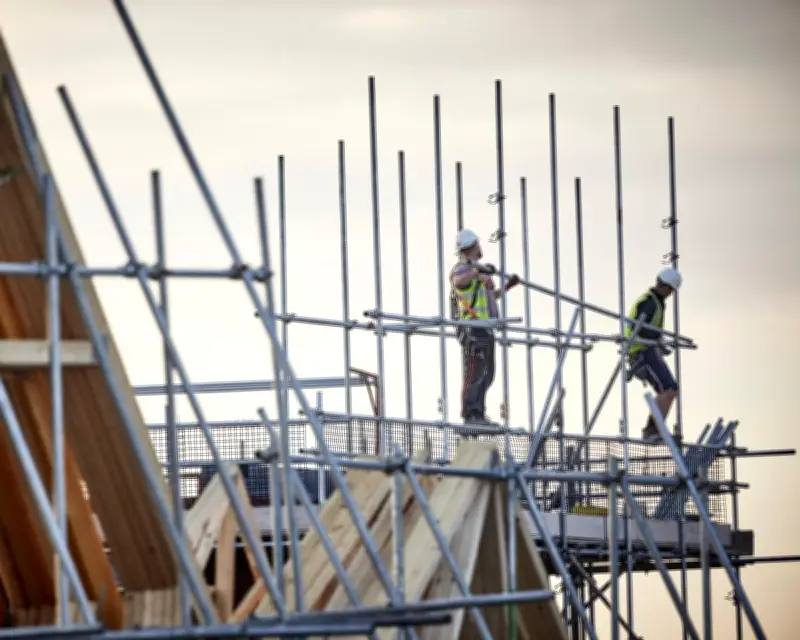
Apartment dwellers are increasingly finding themselves powerless to stop developers from constructing additional floors on top of their buildings, a practice that can strip them of natural light, privacy, and views. According to a report in The Guardian, this trend is driven by planning policies that prioritize housing density over existing residents' rights.
The Planning Loophole
In many jurisdictions, planning laws allow developers to add storeys to existing blocks of flats without the consent of current owners. This is often justified by the need to increase housing supply in urban areas. For instance, in England, permitted development rights enable upward extensions under certain conditions, bypassing full planning permission. A spokesperson for the Ministry of Housing, Communities and Local Government said, "We are committed to building more homes, and these measures help deliver that."
Impact on Residents
Residents like Sarah Jones, a flat owner in Manchester, have experienced this firsthand. She told The Guardian, "They started scaffolding three weeks ago. We had no warning. Now our living room is dark all day, and we can see workers peering into our windows." The loss of amenities can also reduce property values, with some estimates suggesting a 10-15% drop for affected flats.

Legal Recourse Limited
Legal options are scarce. Most leasehold agreements do not grant flat owners control over the building's airspace. The Leasehold Advisory Service notes that "unless the lease explicitly reserves rights over the roof, the freeholder can often grant permission for development." Campaign group HomeOwners Alliance has called for reform, stating, "It is unfair that people can lose their home's character and value without any say."
Growing Frequency
Data from the Royal Institution of Chartered Surveyors shows that planning applications for vertical extensions have risen by 40% in the past three years. This is partly due to the government's target of building 300,000 new homes annually. Critics argue that this approach prioritizes quantity over quality and ignores the wellbeing of existing communities.
Calls for Change
Some local councils are pushing back. The London Borough of Camden has introduced a policy requiring developers to mitigate impacts on existing residents, such as providing compensation or alternative solutions. However, without national legislation, such measures remain piecemeal. A spokesperson for the National Housing Federation commented, "We need a balanced approach that respects existing homeowners while addressing the housing crisis."
In the meantime, affected residents are left with little recourse but to lobby their local representatives or seek legal advice, often at significant cost. As one resident put it, "We feel completely abandoned by the system."