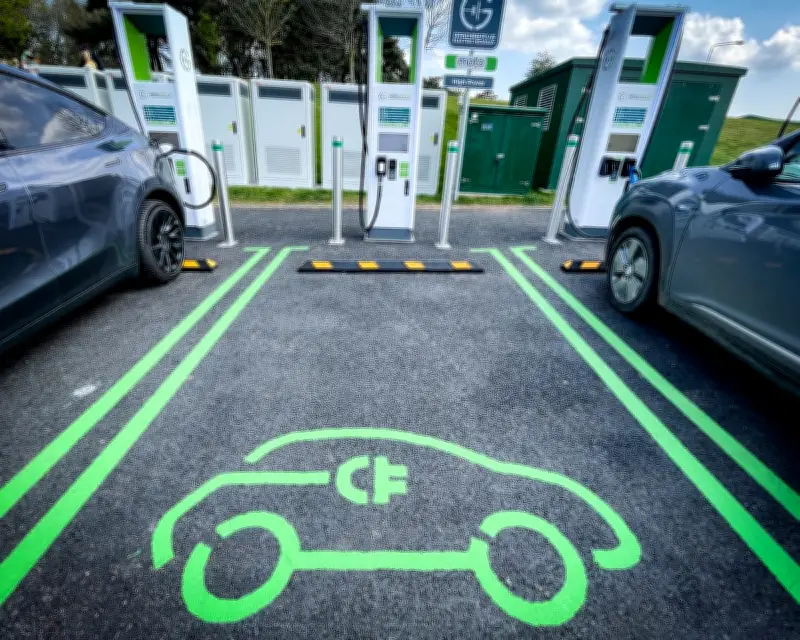
The pace of installing electric vehicle (EV) chargers across the United Kingdom has decelerated markedly in the first six months of 2026, raising concerns about the country's readiness for the planned ban on new petrol and diesel car sales in 2030.
According to data from the chargepoint mapping service Zapmap, only 4,200 new public charging devices were installed between January and June 2026, a 30% drop compared to the 6,000 units installed during the same period in 2025. As of the end of June, the UK had a total of 58,000 public EV chargers.
Industry blames planning delays and grid connection issues
Industry bodies have attributed the slowdown to a combination of factors, including lengthy planning permissions, delays in connecting to the electricity grid, and a shortage of skilled installers. The UK government had set a target of 300,000 public chargepoints by 2030, but current installation rates suggest the country is on track to fall well short of that goal.

"The slowdown is a clear warning sign that the UK's EV charging infrastructure is not keeping pace with demand," said Melanie Shufflebotham, co-founder of Zapmap. "Without urgent action, we risk undermining consumer confidence in electric vehicles."
Government response and funding initiatives
The Department for Transport acknowledged the slowdown but insisted that the government remains committed to expanding the charging network. A spokesperson said: "We have allocated £1.6 billion to support the rollout of EV chargers, and we are working with industry to streamline planning and grid connection processes." However, critics argue that funding alone is insufficient without tackling bureaucratic hurdles.
The Local Government Association, which represents councils in England and Wales, has called for more resources to handle the surge in planning applications for charging hubs. It noted that some councils are struggling to process applications due to staff shortages.
Regional disparities in charger distribution
Data reveals significant regional disparities, with London and the southeast accounting for nearly half of all new installations. Rural areas and northern regions continue to lag, exacerbating concerns about an 'infrastructure divide' that could deter drivers outside major cities from switching to EVs.
In Scotland, the rollout has been more robust, partly due to dedicated funding and streamlined processes. However, even there, the pace has eased compared to previous years.
Impact on EV adoption and targets
The slowdown comes at a critical time for the UK's EV market. Sales of new electric cars have also dipped in 2026, with a 5% decline in the first half of the year compared to the same period in 2025, according to the Society of Motor Manufacturers and Traders (SMMT). Industry analysts warn that if charging infrastructure does not expand rapidly, the government's 2030 ban on new internal combustion engine vehicles could face political and practical obstacles.
"The charging network is the backbone of the EV transition," said Mike Hawes, chief executive of the SMMT. "We need a concerted effort from government, local authorities, and industry to accelerate installations and restore momentum."