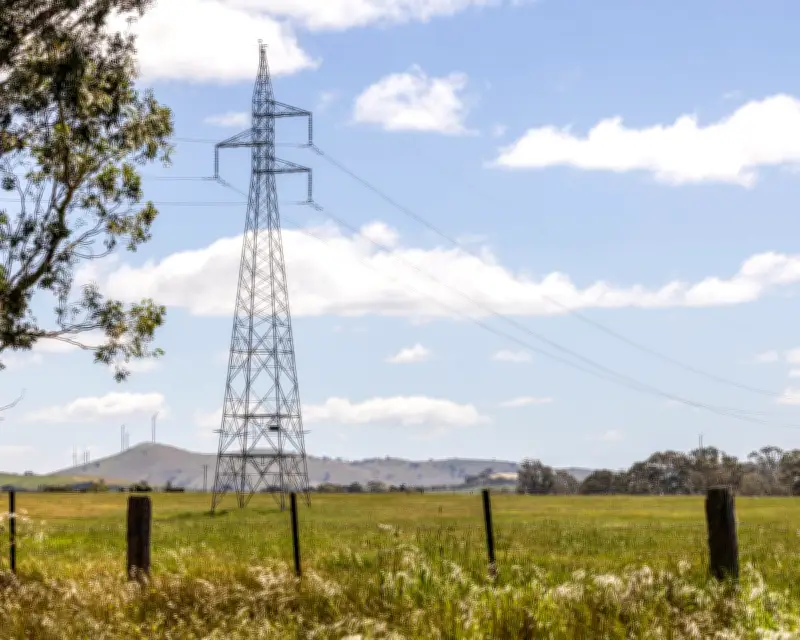
The Australian Energy Market Operator (Aemo) has released its integrated system plan, forecasting that electricity use in Australia will nearly double by 2050. However, the rise of battery storage has led the market operator to reduce the amount of new transmission lines it believes will be necessary to distribute energy across the country.
Blueprint for the Future Grid
Aemo's plan, updated every two years, serves as a blueprint for the optimal future grid. It again found that the least-cost system would be powered by renewable energy supported by energy storage—batteries and pumped hydro—alongside new transmission lines. Fast-start gas plants would be activated as backup when needed.
Since the last blueprint in 2024, solar energy and batteries have become cheaper, while wind and transmission costs have increased. Aemo stated that under its main "step change" scenario, approximately 6,000km of new transmission would be required by 2050. However, 1,680km of potential transmission identified in 2024 would no longer be needed due to investments in generation and storage, as well as policy changes.

Cost and Investment
The plan would involve about $106bn in annualised capital investment, including $6bn for new transmission lines—down from $16bn two years ago. Aemo's chief executive, Daniel Westerman, said: "Over the forecast period, Australia's ageing coal-fired power stations will close … At the same time, consumers are continuing to invest in rooftop solar and home batteries. [That] benefits all consumers by reducing the need for grid-scale investment."
Impact of Renewable Energy and Storage
The updated plan reflects the rapid decline in costs for solar and battery technologies, which are driving changes in the energy landscape. The reduction in required transmission lines highlights the growing role of distributed energy resources like rooftop solar and home batteries in meeting future demand. Aemo's analysis underscores that a renewable-based grid with storage is the most economical path forward for Australia.