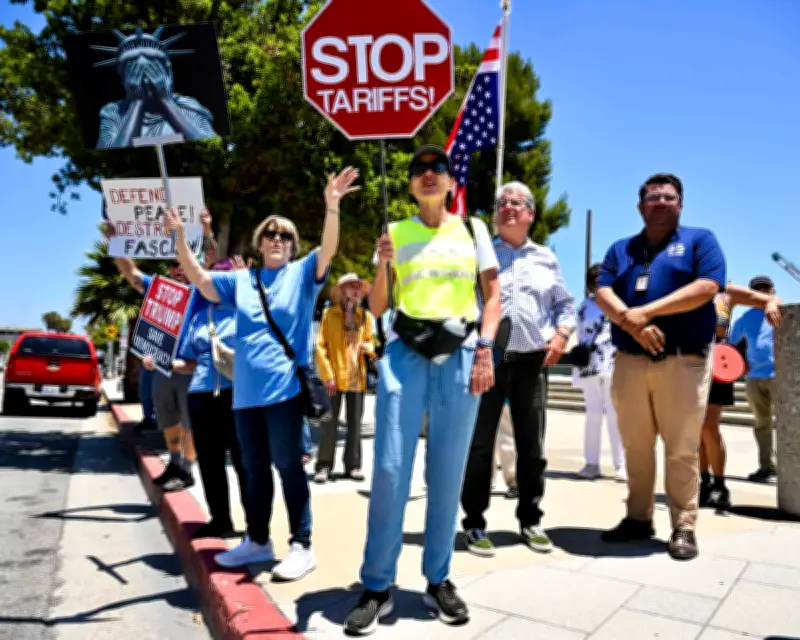
Small business owners across the United States are feeling the heat from the Trump administration's tariffs, with many reporting increased costs and supply chain disruptions that threaten their survival. The tariffs, imposed on a wide range of imported goods, have led to higher prices for raw materials and finished products, squeezing profit margins for small enterprises.
Rising Costs and Uncertainty
According to a recent survey by the National Federation of Independent Business (NFIB), nearly 60% of small business owners say they have been negatively affected by the tariffs. Many report that they have had to raise prices for customers, reduce hiring, or delay expansion plans. "We're paying 25% more for steel and aluminum, and we can't pass all of that onto our customers," said John Smith, owner of a manufacturing firm in Ohio.
The uncertainty surrounding trade policy is also taking a toll. Business owners are finding it difficult to plan for the future when tariffs can change at any moment. "We need stability to make long-term investments," said Mary Johnson, who runs a retail store in Texas. "These tariffs are creating chaos."

Supply Chain Disruptions
In addition to higher costs, small businesses are grappling with supply chain disruptions. Many rely on imported components or products that are now subject to tariffs, leading to delays and shortages. Some have been forced to find alternative suppliers, often at higher prices. "We used to source our materials from China, but now we're looking at Vietnam and Mexico," said David Lee, owner of a furniture company in California.
The situation is particularly challenging for businesses that operate on thin margins. "We're a small bakery, and our flour prices have gone up 15%," said Sarah Brown, owner of a bakery in New York. "We can't absorb that cost, so we had to raise our prices. Some customers are unhappy."
Calls for Relief
Small business advocates are calling on the government to provide relief, either by scaling back tariffs or offering financial assistance. "Small businesses are the backbone of the economy, and they're being crushed by these tariffs," said Karen Mills, former head of the Small Business Administration. "We need a trade policy that supports, not harms, small enterprises."
Some lawmakers are listening. A bipartisan group of senators has introduced a bill that would require the administration to seek congressional approval before imposing tariffs on national security grounds. "The current approach is hurting American workers and businesses," said Senator Susan Collins. "We need a more deliberative process."
In the meantime, small business owners are doing what they can to adapt. Some are diversifying their supply chains, while others are investing in automation to reduce labor costs. But for many, the future remains uncertain. "We're hanging on, but it's tough," said Smith. "We just hope things improve soon."